
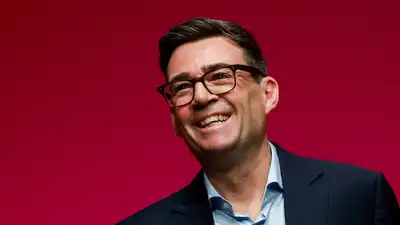
Burnham unveils bold plans for Britain
United Kingdom Prime Minister Andy Burnham on Tuesday unveiled an ambitious reform agenda, promising a “new social contract for the 21st century,” changes to the electoral system and a reset in a ties with Britain’s European neighbours. But Burnham acknowledged that his plans would involve difficult financial choices and could carry political risks.
To help fund the service, he said the government would change the pensions triple lock from 2030, after the next general election. The current system guarantees annual pension increases based on whichever is highest among inflation, average wage growth or 2.5%. Economic pressures are also looming ahead of Treasury chief John Healey’s budget on October 28. Diesel prices in Britain reached a record high of just under £2 a litre on Monday, according to figures compiled by the Royal Automobile Club. The next general election does not have to be held until 2029, although Labour’s improved fortunes have prompted speculation about an early poll.
They were released on bail Monday as police continued investigating possible links to a hostile state.
“Small things will not get us through what are difficult times,” UK PM said in a tough-love speech at the centre-left Labour Party’s annual conference in Liverpool. Anticipating criticism, Burnham said: “I have given you what you often say is missing from politics: Honesty, ideas and a clear direction for the country we all love. A major part of Burnham’s agenda is the creation of a “national care service” that would be free at the point of use and funded through taxation, similar in principle to the National Health Service. “I accept I may pay a political price,” he said. At the same time, he said the government would “stick to our fiscal rules to get borrowing and debt down. “I would love to go quicker, but I have to be honest about what the country can afford,” Burnham said. Burnham said Labour would contest the next general election on a promise to replace Britain’s winner-takes-all electoral system with a form of proportional representation. He also called for a rethink of Britain’s relationship with the European Union , saying “Brexit has done more harm than good” and that the UK needs “clarity about our position and the future of the continent that we live in. The party’s conference is being held under the slogan “Hope again”, with delegates appearing more optimistic than at last year’s gathering. Burnham has said he will not call one early. John Curtice, professor of politics at the University of Strathclyde, said Burnham had given Labour “a halo effect from a popular leader. “But the challenge for this party now is to change that halo effect from the leader to the party,” Curtice said.
He promised more social housing, improved education and more affordable care for the elderly, while warning that the government would have to make difficult decisions on welfare and pension spending to fund some of the reforms. “But someone has to go through the pain barrier and rip the plaster off. Burnham also pledged to tackle street homelessness, reduce youth unemployment and give the government greater control over privatised utilities. Burnham’s first conference speech as prime minister came as Labour sought to project a more upbeat image. However, the government is facing significant challenges, including security concerns and a difficult economic backdrop. Five men were arrested Sunday on suspicion of explosives and terror offences outside RAF Fairford in western England. The arrests prompted questions at the conference about security and potential threats from countries including Iran and Russia. The conflict involving the US and Iran has disrupted shipping through the Strait of Hormuz, contributing to higher oil prices and inflation. “This party needs to make much more progress before it can contemplate the prospect of an election. You use AI every day. Now get your AI Quotient. Take the AIQ test.
Burnham became emotional while speaking about his own experience of the care system with his father, Roy, who died earlier this month.
Burnham said his broader aim was to “move beyond a decade of drift and division” and address the economic and political uncertainty that has followed the 2016 Brexit vote.