
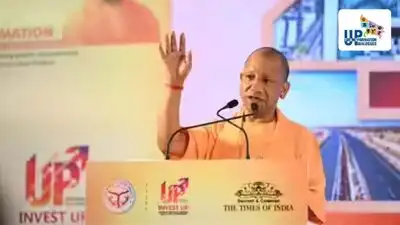
The growing presence of Bareilly’s products at the Uttar Pradesh International Trade Show (UPITS) 2026 in Greater Noida is a visible symbol of how the district’s economy has evolved over the last nine years.
The growing presence of Bareilly’s products at the Uttar Pradesh International Trade Show (UPITS) 2026 in Greater Noida is a visible symbol of how the district’s economy has evolved over the last nine years. The fourth edition of UPITS, being held from September 25 to 29 at India Expo Centre & Mart, has brought more than 2,400 exhibitors together with domestic and international buyers. The event specifically provides a platform for Uttar Pradesh’s MSMEs, traditional industries, startups and ODOP products to access wider markets. For Bareilly, this wider exposure is particularly significant. The district’s traditional economic strengths—Zari-Zardozi, bamboo products, wooden products and goldsmith work—are increasingly being connected with modern branding, market access, common facilities and entrepreneurship. The transformation reflects a broader socio-economic change in which traditional skills are becoming part of a more organised MSME and export-oriented economy. A stronger economic base
The district’s Gross District Domestic Product increased from Rs 38,280 crore in 2020-21 to Rs 57,088 crore in 2023-24, according to figures reported from the Uttar Pradesh Economic Survey. During the same period, per-capita annual income increased from Rs 63,265 toRs91,511. The district recorded annual GDDP growth of around 12 per cent in 2023-24.
Bareilly has emerged as one of the important economic centres of western Uttar Pradesh. These numbers indicate the expansion of economic activity beyond traditional agriculture and small-scale manufacturing. Trade, services, construction, transport, healthcare, education, retail and small enterprises have all contributed to the changing economic profile of Bareilly. The district’s importance is also reflected in its position within the Rohilkhand region. With a large urban market and extensive rural hinterland, Bareilly functions as a commercial, educational, medical and service centre for surrounding districts. ODOP giving traditional artisans a larger market One of the most visible changes has been the strengthening of the traditional artisan economy. Bareilly’s Zari-Zardozi is its principal ODOP product, while bamboo, wooden products and goldsmith work are also recognised under the district’s product portfolio. The state’s ODOP platform describes Bareilly as a centre of skilled artisan communities and traditional industries whose products are increasingly being connected with domestic and international markets. The importance of this transformation lies not merely in increasing sales. For artisan families, access to organised markets can create opportunities for better product design, packaging, branding and diversification. A craft that was traditionally dependent on local traders and limited markets can increasingly reach institutional buyers, urban consumers and export-oriented channels. The establishment of a Common Facility Centre for Zari-Zardozi in Bareilly represents another step in this direction. The centre is intended to provide common infrastructure and training and to strengthen the value chain for ODOP manufacturers and MSME units, including support for quality improvement and market and export readiness. From local craftsmanship to organised enterprise
The significance of Bareilly’s participation in UPITS 2026 goes beyond exhibition space. More than 550 international buyers from 85 countries are expected at the 2026 edition, making such platforms important for enterprises seeking markets outside their traditional geographical base. A changing identity for Bareilly The Bareilly of 2026 presents a more diversified economic identity than the Bareilly of a decade ago.
The stalls displaying Bareilly products at UPITS 2026 in Greater Noida therefore carried a larger message. A six-lane widening and strengthening project has been taken up for the Bareilly-Bada Bypass to Satellite area, while an eight-lane road project connecting Satellite to the airport has also been reported. You Can Also Check: Gold Rate in Lucknow | Silver Rate in Lucknow | Bank Holidays in Lucknow | Public Holidays in Lucknow | Lucknow AQI | Weather in Lucknow | Petrol Price in Lucknow | Diesel Price in Lucknow | CNG Price in Lucknow | LPG Price in Lucknow Stay updated with the latest Lucknow news.
The trade show is designed to connect manufacturers, MSMEs, artisans, exporters and startups with buyers and investors. For Bareilly’s entrepreneurs, this creates an opportunity to present traditional products in a contemporary format. Zari-Zardozi can move beyond conventional garments into fashion accessories, home furnishings and lifestyle products. Similarly, bamboo and wooden products can be adapted to changing consumer preferences. This gradual movement from craft to commercial enterprise is an important element of the district’s socio-economic transformation. Better connectivity strengthening the economic ecosystem Infrastructure has been another major component of Bareilly’s changing economic landscape. Air connectivity has improved the district’s links with major urban and commercial centres. Bareilly airport is now part of Uttar Pradesh’s operational airport network, while expansion plans have progressed with land acquisition for a larger terminal and associated facilities. Road infrastructure is also being upgraded. For a district whose economy includes manufacturing, wholesale trade, handicrafts and services, better connectivity can reduce travel time, improve movement of goods and expand the potential customer base. Social transformation alongside economic growth The socio-economic transformation of Bareilly is not confined to GDDP figures. Greater economic activity has created new opportunities for young people, women, artisans and small entrepreneurs. The expansion of MSMEs and service-sector activity provides opportunities beyond conventional government or agricultural employment. Women working in handicrafts and home-based production can potentially benefit from organised marketing and digital platforms, while younger generations can combine traditional family skills with modern design, e-commerce, packaging and entrepreneurship. The growing emphasis on entrepreneurship also changes the social perception of traditional occupations. Zari work, woodworking, bamboo crafts and jewellery making can increasingly be viewed not merely as hereditary occupations but as market-oriented enterprises capable of generating income and employment. Its traditional strengths remain important, but they are increasingly being combined with infrastructure, services, organised MSME support, improved connectivity and wider markets. They represent an economic transition in which local skills are being connected with national and international demand. UPITS itself has evolved into a platform bringing traditional products, MSMEs, startups, exporters and emerging industries together, with ODOP forming a central part of the showcase. Over the last nine years, Bareilly’s development can thus be seen as a movement from a predominantly regional market economy towards a more diversified and market-connected economic system. Its rising GDDP and per-capita income, expanding infrastructure, strengthened artisan ecosystem and growing exposure to national and international buyers together point towards a district increasingly confident about taking its traditional products to larger markets. Download the TOI App.