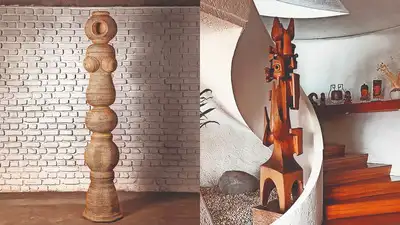
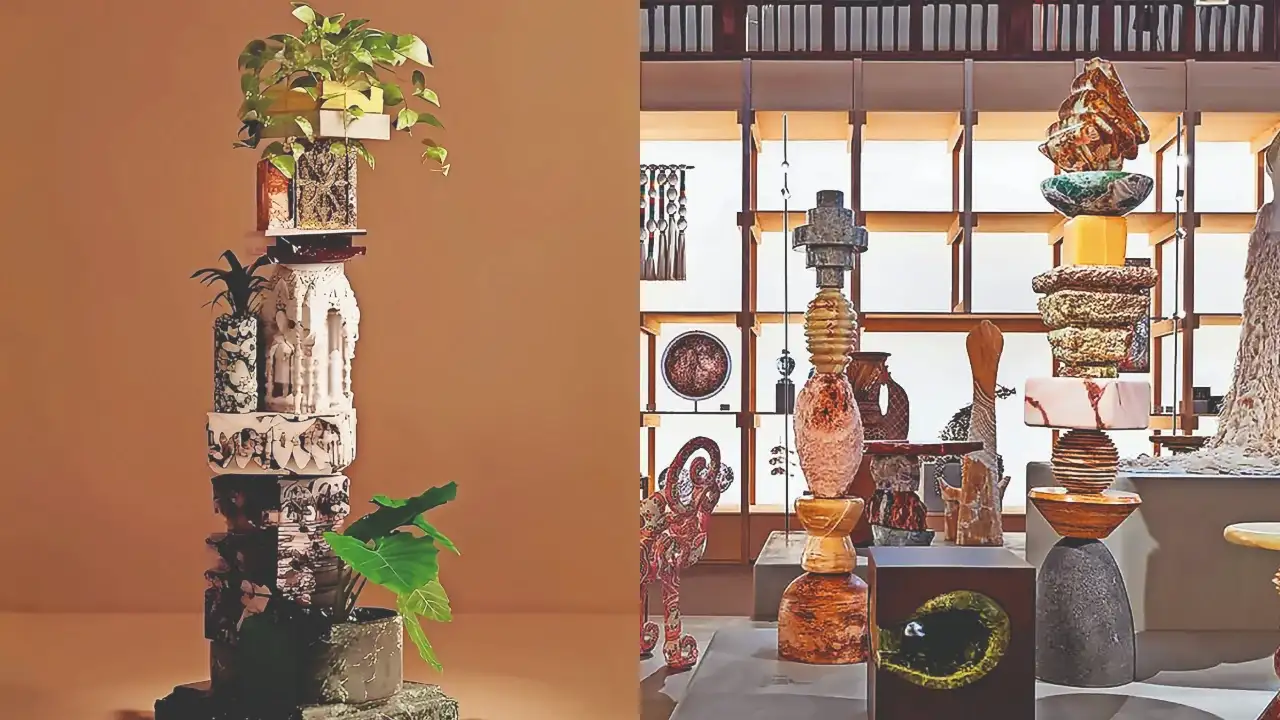
Showcased at Homo Faber, Gunjan Gupta’s handwoven cane and bamboo stools form a totem representing the female form & Nicolas Flachot’s wooden totem placed in a Mexican home
At Homo Faber in Venice, artist-designer Gunjan Gupta is showcasing The Pot is ‘Her’, a cane totem that reinterprets the feminine form through a series of stacked, functional, handwoven stools that nest precisely within one another. Her work comes at a time when the totemic form is finding renewed expression in contemporary interiors and collectible design. A recent analysis by French design publication MUUUZ describes the contemporary totem as occupying an intermediary space between furniture and architecture, a focal point that can bring individuality and structure to a space without requiring changes to its architecture. (L) Inspired by Jain temple architecture, the JinaShilp marble totem was created by Karan Desai in collaboration with Serafini ‘Totems break linearity and give an excuse to look up’
Natasha advises homeowners to consider proportion before simply opting for the tallest piece. “A floor-standing totem needs breathing space around it – beside a console, in a corner, along a passage or near a large window. Timber can bring warmth, while monochrome finishes create a sharper, more graphic effect. The key is not to overcrowd it. You use AI every day. Now get your AI Quotient. Take the AIQ test Get the latest Lifestyle News and more. Download the TOI app.
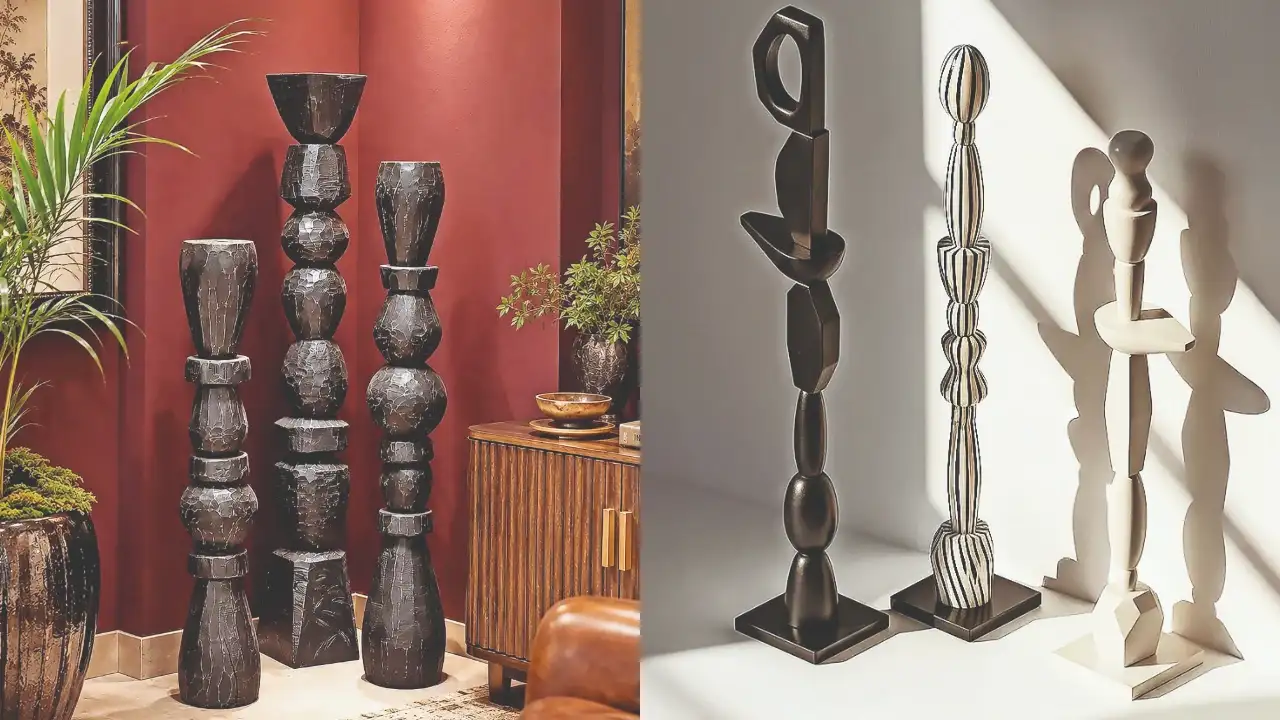
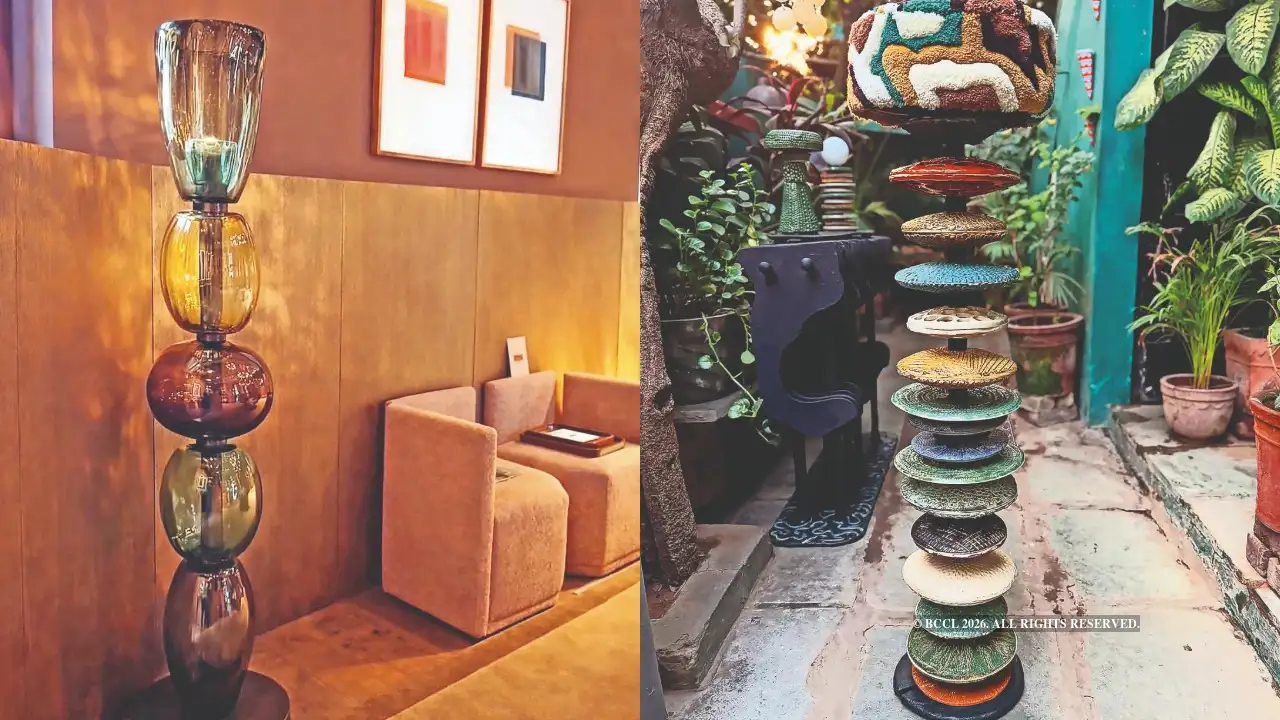
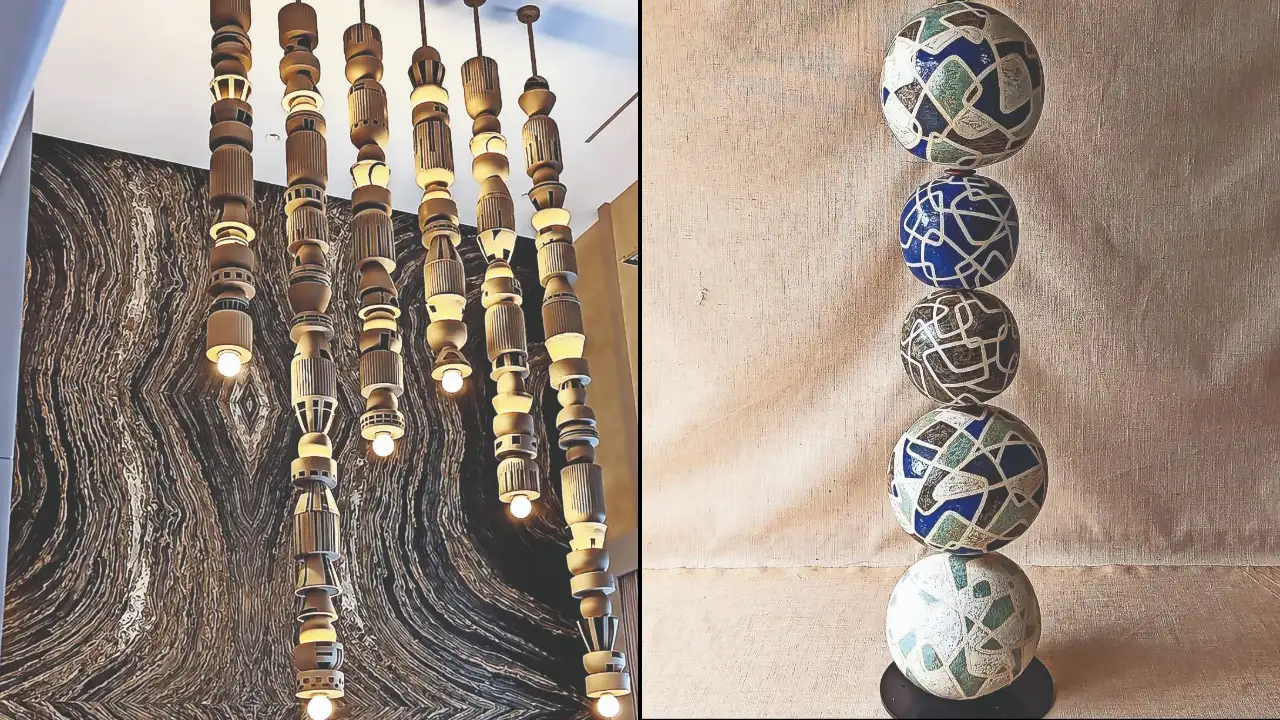
“In a home interior where almost all furniture lines up at eye level, a totem will break the linearity and give an excuse to look up,” says interior designer Punam Kalra, creative director of I’m the Centre for Applied Arts. Sculptural yet understated, they can bring character to an otherwise forgotten corner without the need to over-dress it,” she says, adding, “Placed beside a console, in a living room or an empty nook, a totem can add height, texture and artistry while keeping the space uncluttered. ” Placed beside a console, in a corner, the wooden totem set by Pallavi Sethi adds character to the space [Pics: @indevafurnituredesign and @bentchair] Natasha Jain, co-founder of Bent Collective, says their verticality gives them an advantage over conventional sculpture. “A totem can also break the horizontality of sofas, consoles and tables, introducing height and an unexpected sculptural moment into the room,” she says. “There is also an interesting crossover between tribal references and mid-century modernism,” she says, pointing to the appeal of contrasts such as organic and geometric forms, monochrome and natural wood, and ancient sculptural references interpreted in contemporary ways. Harshita Jhamthani, founder of Harshita Jhamtani Designs, says, “For me, a totem is the most honest form there is. Harshita Jhamthani crafted this six-column ceramic totem installation for a private residence and Bharati Pitre’s totem poles with stacked ceramic stoneware spheres Coloured and textured glass is particularly effective, with shades such as Prussian blue and chartreuse green enhancing its interaction with light,” says Punam. About how these work in contemporary Indian homes, Harshita says, “Totems feel deeply familiar as we think of temple pillars, stepwells, stacked brass vessels and stone shrines.
For interior designers, part of the appeal lies in the way a totem disrupts the familiar visual rhythm of a room. She sees these as pieces that invite a second look, making one wonder about their story, artistry and making. Pallavi Sethi, co-founder of Indeva Furniture Design, similarly sees the totem as an understated way to bring focus to overlooked spaces. “Totems have a quiet way of commanding attention. The form is also evolving. Rather than literal or heavily ornamental interpretations, Natasha observes more abstract and graphic designs, with stacked forms, exaggerated geometry and repetition. It’s vertical, it’s stacked, and it’s built piece by piece, like ideas, memories and cultures build up over time. I’ve always seen design as a form of self expression, and the totem lets an object be both functional and quietly emotional.” (R) Keyuri Bhargava & Resheph Christian have designed a floor light totem with a tufted lampshade Cane to marble: Material becomes part of the story While the pole-like silhouette gives a totem its presence, material and craft lend it character. Indian designer Karan Desai’s JinaShilp totem, created for Italian marble specialist Serafini and presented at Salone Raritas in Milan recently, drew inspiration from the layered structure of Jain temple pillars. Its individual sections are distilled into geometric forms and stacked vertically in marble, making it a contemporary collectible. Materiality is increasingly central to the way such pieces are conceived. “Some pieces also integrate lighting elements to enliven it further. In contrast to lightweight, paper-crafted ones, the ceramic and wood pieces give a dense and grounded permanence to the space. Glass, meanwhile, plays with light and shadows to create movement within a space. In a contemporary home, a totem brings that memory in without being literal. In contemporary design, its use is largely based on a visual analogy – stacked, vertical, symbolic forms – rather than the original cultural meaning. ‘Don’t overcrowd the corners’
Historically, totem refers to specific systems of kinship, identity and representation among Indigenous cultures; the term cannot simply be reduced to an aesthetic category.