
Attachment
Attachment Attachment Attachment Attachment Attachment Attachment Attachment Attachment Attachment Attachment
Pandey said this reflects an understanding of elephant population dynamics, as elephants have a gestation period of about 20 to 22 months and give birth only once every four to five years. The later Hastividyarnava, produced in Assam in 1734, added a regional dimension to this knowledge system. Stay updated with the latest Bareilly news.
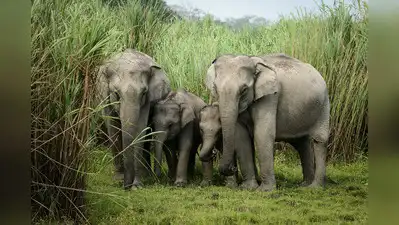
Pilibhit : Ancient Indian texts on elephants contain detailed observations on their behaviour, health, temperament, training and welfare that could offer insights for modern conservation efforts, according to a recent review by Project Elephant director and additional director general in the Union environment ministry, Ramesh Kumar Pandey. The commentary traces more than two millennia of Indian elephantology, describing it as a “proto-scientific” tradition with lessons for addressing rising human-elephant conflict, welfare concerns and habitat loss. Tracing references to elephants to the Indus Valley period, Pandey says elephants occupied a central role in Indian warfare, statecraft, forestry, transport and kingship. The review says this knowledge later developed into specialised branches.
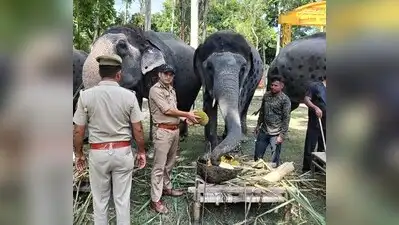
Published in the Journal of Wildlife Science in Aug, it draws on five major texts — Gajasastra, Hastyayurveda, Matangalila, Manasollasa and Hastividyarnava. Kautilya’s Arthasastra, dated to the 3rd century BC, is cited as one of the earliest accounts of an organised elephant-management system, which prescribed the appointment of a Gajadhyaksha, or elephant superintendent, to oversee the capture, training, feeding and healthcare of elephants. The text also referred to protected elephant forests, or Gaja-van, and prohibited their unauthorised killing or injury. Gajasastra dealt with the classification, capture and training of elephants, while Hastyayurveda focused on their medicine, describing illnesses through observable signs such as loss of appetite, changes in gait, discharge, swelling and behavioural changes. Pandey’s review highlights the ancient texts’ observations on elephant behaviour, noting that Matangalila, attributed to the 12th century, described changes in posture, movement, vocalisation and interaction with handlers as possible indicators of fear, stress, fatigue, illness or impending aggression. The review also notes that ancient texts recognised the distress elephants could experience when separated from their natural habitats and deprived of freedom, a concern that echoes present-day debates on the welfare of captive elephants. Matangalila prohibited the capture of pregnant females and those accompanied by calves. Removing pregnant or nursing females can significantly affect population growth and may jeopardise the survival of dependent calves, the review states. Manasollasa, another 12th-century work, emphasised patience, calm handling and freedom from stress during training. It described elephants as intelligent animals and stressed the importance of their mental wellbeing. The review, however, also points to contradictions in the texts. A separate section of Manasollasa prescribed pharmacological methods to induce musth for combat and arena entertainment — practices incompatible with contemporary animal-welfare standards. Its illustrations covered elephant anatomy, diseases, surgical instruments, harnesses and stable layouts. The text also incorporated local knowledge of forests, rivers, medicinal plants and seasonal conditions, while describing non-violent training methods and warning against over-capture and neglect of breeding populations. Pandey cautions against treating the ancient texts as equivalent to modern conservation science. Most were produced in royal and administrative settings where elephants were valued for warfare, transport, ceremonial functions and statecraft. Modern conservation, in contrast, focuses on the survival of viable free-ranging populations. However, he argues that the texts’ observations on elephant behaviour, stress, health, social relationships and environmental needs renewed attention as habitat fragmentation, climate stress and human-elephant conflict intensify. Revisiting this knowledge, he suggests, could complement modern research and contribute to a better understanding of elephant welfare, management and coexistence. Download the TOI App.