
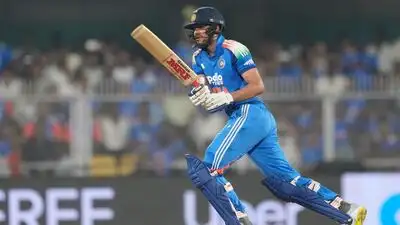
Shubman Gill
KOCHI: 811 runs were scored in 93.3 overs in the second ODI between India and West Indies at Guwahati on a ridiculous day of batting, when bowlers were reduced to mute spectators. India captain Shubman Gill’s unbeaten 223 was sublime, his impeccable timing, placement and voracious appetite hallmarks of his talent. So too was Rohit Sharma’s easy-on-the-eye 101. “Over 800 runs scored on a paata wicket and there was absolutely nothing in it for the bowlers. He reckons that an ideal ODI should end around 280 per side. Former Delhi pacer Sanjiv Sharma attributes the trend to the proliferation of T20Is and expects more teams to chase down 400+ scores in ODIs going forward. “In T20Is, we see teams chase down 200+ scores. Batters are carrying that confidence into the 50-over format,” he said.
“Extremely boring game yaar,” Madan Lal, former medium-pacer and member of India’s 1983 World Cup-winning squad, told TOI. Once, a match like this would have been celebrated like a historic event. Now, it’s just another game of cricket. A game like this doesn’t thrill the audience; it leaves them weary of watching another run-fest on a pitch described as a ‘national highway’ by Ravi Shastri on commentary. The West Indies also had three centurions. These batters needed adversaries, and they found none. Not from the bowlers nor from the pitch. Give the bowlers something to play with. Where is the contest between bat and ball? Lal observed. The kind of game that offers a genuine contest and the one that spectators want to watch. Lal points out that the real worry about such run-fests is that in the long term it kills the quality of bowling. Sharma concurred. “Apart from Kuldeep (Yadav), neither side had a match-winner with the ball. India had a second-string attack, but what about the West Indies? Their bowling was abysmal,” he added.