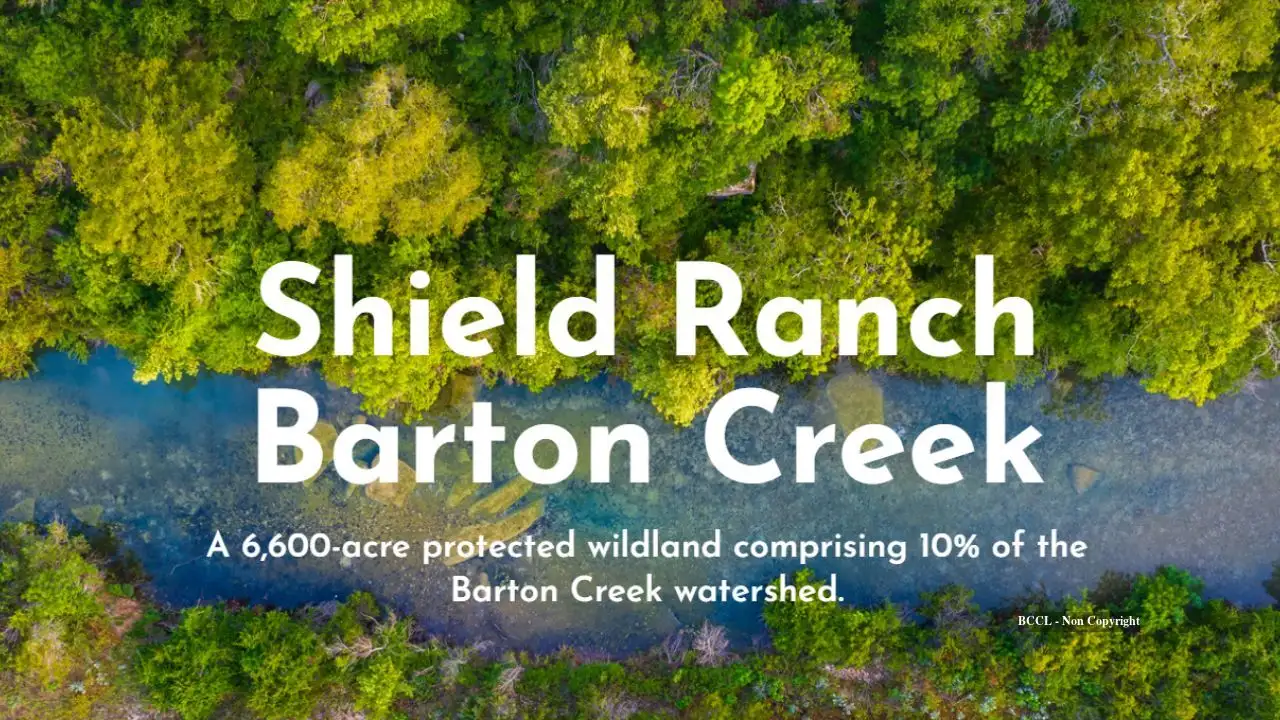
Shield Ranch Barton CreekPhoto credit: @jvailphotography/ Instagram
In 1938, Fred and Vera Shield of San Antonio bought a 5,300 acres on Barton Creek, beginning a multigenerational commitment to the land. Roughly, nine decades later, that same family has added another layer of protection through a 202-acre conservation easement with the City of Austin. The agreement, announced in 2026, is part of a broader strategy to safeguard Shield Ranch, a 6,600-acre wildland that contains about 10 percent of the Barton Creek watershed and plays a vital role in the region’s water quality, according to The Nature Conservancy and Shield Ranch. A portion of the easement’s appraised value was purchased using funds from the city’s 2018 Water Quality Protection Lands Bond, with the balance donated by the Shield-Ayres-Bowen family, according to a report by Shield Ranch. In the late 1990s, the Ayres family donated an easement on 4,670 acres to The Nature Conservancy, restricting certain types of development, as per Shield Ranch. Patricia Shield Ayres, co-owner of Shield Ranch, says her family has been committed to land stewardship and natural resource conservation for nearly 90 years. The first conservation easement was donated in 1998, and each subsequent agreement reflects an ongoing commitment to safeguarding highly developable land along Barton Creek. Her hope is that 50 or 100 years from now, the ranch will look much as it does today, a rare and truly wild place in an increasingly urban region.
Those experiences, she says, gave her a sense of independence and confidence that stayed with her into adulthood. She says their work was about caring for the land during their time and using tools like conservation easements to ensure it would remain wild for those who come after. Bowen recalls discovering armadillos and snakes, riding a horse alone through the undeveloped landscape, and leaping off a boulder into the family swimming hole in Barton Creek. The joy and freedom she felt on the ranch ultimately inspired the family to protect the land for future generations through conservation easements, as per a report by The Nature Conservancy. The family’s conservation journey began in earnest after they developed their first ranch masterplan in the 1980s. They reached out to The Nature Conservancy in Texas to learn how they could protect the land, and the organisation served as a thought partner over the next decade. The conservation easements prohibit commercial development while allowing agricultural and recreational activities to continue. Limited development is permitted within strict parameters, including a small number of family residences and facilities for nonprofit organisations. This structure enables the family to maintain its stewardship role while ensuring the land’s ecological and hydrological functions remain intact. Bowen frames the family’s role as one of temporary caretakers in a long line of stewards.
Today, Shield Ranch Barton Creek is protected through three easements, one held by The Nature Conservancy and two by the City of Austin, as per Shield Ranch’s website.