
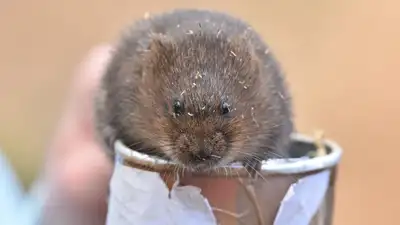
PC: the National Trust
The Trust listed the work as follows: creating 20 ponds and scrapes, removing land drains, planting 26,000 trees and sowing 15 hectares of wildflower seed. Natural flood management measures and rewetting were also introduced along 1,700 metres of watercourse, alongside conservation grazing to support biodiversity. Under its ten-year strategy, the Trust aims to work with partners to create 250,000 hectares of nature-rich landscapes, an area it described as one-and-a-half times the size of Greater London.
The press release said this forms part of a wider programme across North Devon to restore a more natural, wetter landscape that is better able to cope with the impacts of climate change. The National Trust said the reintroduction has been carefully managed with Derek Gow Consultancy, whose expertise has helped deliver a planned programme to give the animals the best chance of survival. The voles are first placed in protective pens on site, where they are monitored and cared for before gradually dispersing into the surrounding habitat, according to the press release. The animals leave the pens in their own time, which helps to reduce stress, according to the BBC. The National Trust said water voles’ burrows create flowering habitats that support bugs, butterflies and other riverside species. South told the BBC the burrows also provide dens for other animals and create a more complex habitat. He said the voles are prey for animals such as herons and foxes, and that they breed a lot and so can cope with this. In the press release, he described the return as “an important moment for nature in North Devon”, saying it shows wildlife can recover with the right conditions. Hannah Ford, the Trust’s Fundraising Manager, invited supporters to donate to the Adopt a Plot initiative in North Devon, which the press release said supports habitat restoration and the reintroduction of native species such as pine martens, red squirrels and water voles.
Trail cameras have been set up to capture them as they begin to explore their new environment. The project was delivered in partnership with North Devon Coast National Landscape, with funding support from Farming in Protected Landscapes. The Trust relies on volunteers to monitor watercourses in the area, and South asked local people to get in touch to watch for burrows and mink, and to report both to mammal societies.