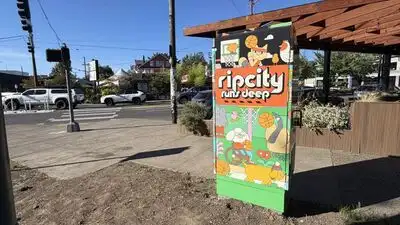
Portland is giving ordinary traffic signal boxes a colourful new purpose, covering the metal cabinets with artwork. Image Credit: Meira Gebel/Axios
Portland’s Public Environment Management Office began wrapping utility boxes with graffiti-resistant vinyl coverings in 2025, according to Axios. Axios reported that Portland had 130 wrapped signal boxes, with nearly 50 more in development, and more than a dozen designs in use. The average installation cost was about $1,750. In 2016, the Portland Bureau of Transportation supported a pilot project in East Portland that used a traffic signal box as a small public artwork. A Portland Bureau of Transportation news advisory from November 2016 said residents and local stakeholders had expressed a strong desire for public art during discussions about the future of the Division Midway business district.
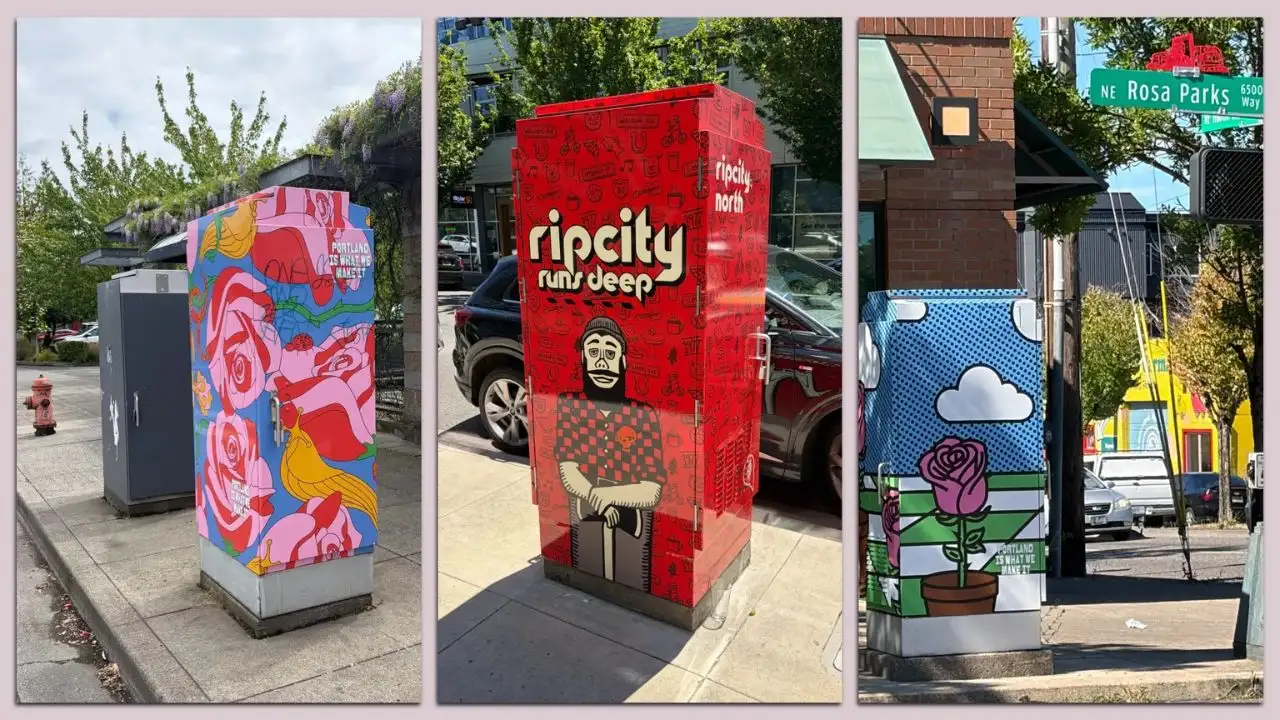
Because many of the boxes had previously been repeatedly tagged and then painted over, the change is noticeable. Portland is giving ordinary traffic signal boxes a colourful new purpose, covering the metal cabinets with artwork that does more than brighten street corners. The city is using durable vinyl wraps to make these pieces of essential infrastructure more attractive while testing whether the coverings can also discourage graffiti and reduce the need for repeated repainting. The approach has already produced dozens of designs across Portland, from roses and clouds to animals and comic-style images, turning objects that once faded in the background into small pieces of public art. The project centres on traffic signal boxes and utility cabinets that contain electrical equipment used to operate traffic lights, pedestrian crossings and other traffic functions. They are often positioned at busy intersections, along narrow pavements and beside places where people wait for public transport or spend time on foot. The office was created during the pandemic to address visible quality-of-life issues such as graffiti, rubbish and neglected public spaces. The signal-wrap project was developed as one way of dealing with both the appearance and maintenance of these highly visible boxes. Those repairs could leave mismatched patches of paint across the metal surfaces. The new coverings provide a consistent design instead of another layer of plain paint. Image Credit: Meira Gebel/Axios The colourful designs are not simply being added to make intersections look better. The vinyl is intended to resist graffiti, giving the city an opportunity to see whether a more durable surface can reduce the amount of cleaning and repainting required over time. The city is continuing to monitor the wraps to determine whether they can provide a financial benefit by reducing long-term maintenance work. The designs themselves vary widely. Some feature oversized roses, clouds and comic-book-style graphics, while others include animals, cartoon characters and lumberjack imagery. There are also Portland Trail Blazers-themed designs, giving some of the otherwise ordinary street equipment a connection to the city’s sporting culture. The current effort builds on an idea that has appeared in Portland communities before. The Division Midway Alliance researched low-cost approaches and developed the ‘Art on the Box’ concept, which was intended both to beautify the area and deter graffiti. The first installation was placed at Southeast 122nd Avenue and Division Street. The Portland Bureau of Transportation described it as the city’s first use of a traffic signal box for low-cost public art. Its four panels represented the seasons and local culture, including the cultural diversity of the Division Midway area.
A 2016 report from News Center Maine described a project in which local artists painted utility boxes around downtown Portland to make otherwise plain infrastructure more attractive. East Portland News reported that the earlier project involved students from David Douglas High School’s main and Fir Ridge campuses, working under the direction of an adult art coordinator.
The organisation worked with local artist Irene Ramirez and the city to wrap a utility box near one of Portland’s busiest cycling areas, according to Lloyd EcoDistrict. The organisation said the graffiti-resistant vinyl could be maintained with a simple wipe-down rather than requiring the whole surface to be repainted. The city said the effort was intended to beautify the urban landscape, encourage civic participation and support local artists.
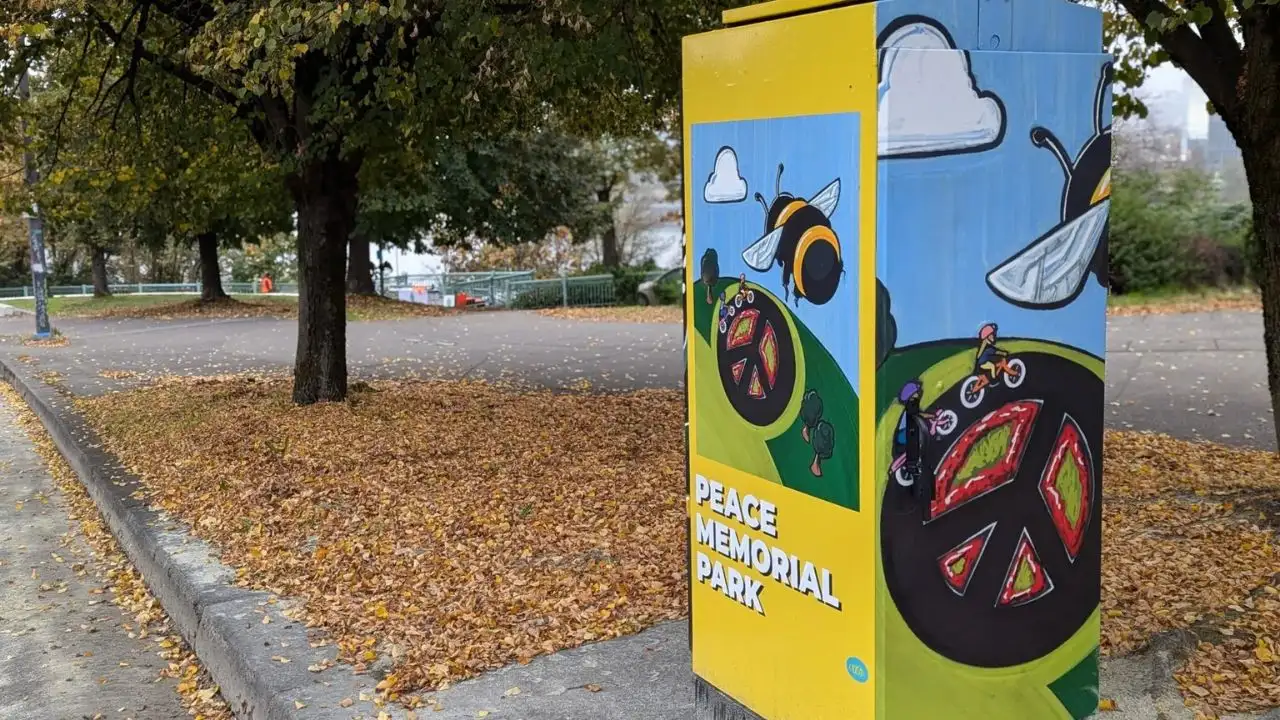
Their designs were created at school and transferred digitally to a durable vinyl wrap. The resulting artwork replaced a formerly grey electrical utility box with a collection of student-created images. The material, commonly used on vehicles such as trucks and buses, provided a practical surface for the artwork while allowing the box to continue serving its original purpose. The project also showed how a relatively small object could provide an accessible place for young artists to contribute to their neighbourhood. A more recent example can be found at Peace Memorial Park in Portland’s Lloyd neighbourhood. The artwork focuses on local pollinators and includes the name of Peace Memorial Park. The new design was intended to give the location a stronger sense of place while offering cyclists, pedestrians and visitors something colourful to notice as they passed. The Lloyd EcoDistrict also tested the wrap shortly after installation. During a community clean-up, a small amount of graffiti that had appeared on the artwork was removed with an eco-friendly cleaner. Image Credit: Lloyd EcoDistrict/Website The idea has also been used in Portland, Maine, showing that utility boxes can serve as small public canvases in more than one city with the same name. You use AI every day. Now get your AI Quotient. Take the AIQ test.
The box had previously been blank and covered in graffiti.