
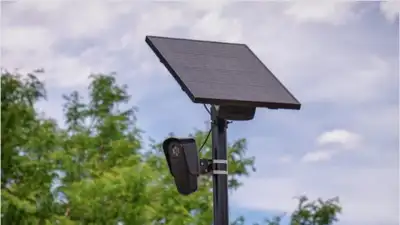
Flock Safety ALPR camera system on a roadside pole
How do police license-plate cameras track cars
Bakely’s former boyfriend, Braselton Police Chief Michael Steffman, searched her license plate and that of her teenage daughter roughly 600 times through Flock Safety, according to the report. The Georgia Bureau of Investigation arrested Steffman in November 2025 on charges of stalking, harassment and misuse of an automated license-plate reader. The report says at least 50 police officers have been accused of misusing automated license-plate readers. At least 26 of those cases involved officers allegedly using Flock cameras to track current or former partners or people they wanted to meet. The Washington Post has separately reported nearly 50 cases involving officers accused or charged with using Flock cameras for unauthorized searches. Flock says its system is used by more than 140,000 monthly users and that its audit logs can help find misuse. The Washington Post reported that thousands of law enforcement agencies in 49 states can search and share Flock data across jurisdictions. In September 2026, Wired and 404 Media analysed data that hackers had copied from one Flock camera. The data covered about 21 days, including roughly 50,200 vehicles and 1.6 million images, according to the report. Flock announced changes to its system in August 2026 following criticism over how its technology was being used. It also announced plans to reduce the standard data storage period from 30 days to seven days.
The Washington Post has also reported dozens of cases in which police officers were accused of using the system for personal searches.
A report republished by Forbes from The Conversation says the technology can turn local license-plate cameras into a searchable record of where vehicles have been. Flock has said it did not have enough information to assess the hackers’ claims about security problems with the camera. The report says this can allow agencies that did not install or buy the cameras to search data from other departments. The company said law enforcement customers would have to use an audit tool designed to identify unusual searches.
When Marci Bakely drove to a grocery store or went on a date, her former boyfriend often knew where she was within minutes. A report found that he had searched her vehicle’s license plate, as well as the plate of her teenage daughter, hundreds of times using a network of automated license-plate cameras. The case has raised fresh questions about how police use such surveillance systems. He was found dead before trial. Bakely’s case is not the only example of alleged misuse. Flock Safety’s cameras automatically capture information about passing vehicles. This can include a license plate, the vehicle’s location and other details that can help identify a car. The data can then be searched by police agencies that have access to the system. The report describes the technology as a kind of search engine for vehicle movements. Police can search images by date and other details, allowing them to find where a vehicle was seen. One of the concerns raised in the report is that alleged misuse does not require someone to hack into the system. An officer with legitimate access can potentially search the database using that access. In one recent case, six employees of the Savannah Police Department, including four officers, were placed on administrative leave after an internal audit found potential misuse of the department’s Flock system. The cases were also referred to the Georgia Bureau of Investigation. The report argues that this makes the way the system is designed important. Audit logs can record a search, but they may only reveal misuse after it has already happened. The report also points to the amount of data that these systems can collect. The system’s software could also detect people and bicycles in images. Another issue is that Flock cameras installed by one police department can be part of a wider network. Users will also be required to enter a case code linking a search to a specific investigation, while emergency searches will be flagged for review. The changes come as police departments and communities across the US face growing questions about how automated license-plate readers should be used and who should be allowed to search the data. You use AI every day. Now get your AI Quotient. Take the AIQ test.
The report also points to cases involving immigration-related searches and a 2025 case in which a Texas sheriff’s office searched more than 83,000 cameras for a woman who had self-managed an abortion.