
Tamil Nadu has ambitious plans to develop an Olympic city and a motor sports city to improve sports infrastructure.
This was preceded by a significant increase in the allotment for youth welfare and sports development in the state budget (572cr in 2025-2026 to 1,051cr in 2026-2027). Chief minister C Joseph Vijay recently announced that Chennai would be home to an Olympic city and the state would soon have a motor sports city with world-class infrastructure that would promote sports tourism and advance the state into an international hub for sports. But, experience has shown that such announcements and budgetary allocations may not fructify unless the ecosystem around sports sees marked changes.
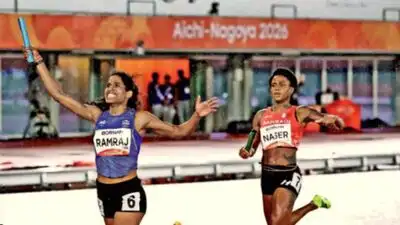
The first-ever law in the country on sports is the National Sports Governance Act (NSGA), 2025 and the National Sports Governance (National Sports Board) Rules, 2026 that provide the framework for sports governance. A hurriedly passed legislation in mid-Aug 2025 amidst protests in Parliament was only to conform to global standards for India’s bid to the 2036 Olympics. Another retrograde step is raising the age of key office bearers to 75 years (earlier capped at 70 years). It was also observed in the judgment that there would be a minimum of 25% members elected from players of outstanding merit with voting rights in the general body and executive committee of mational sports federations and IOA, but that does not find place in NSGA. Vithya Ramaraj, who won three medals at the 2026 Asian Games in Japan, credits former sports minister Udayanidhi Stalin for improving the sports scene.
The law does not promise reform, but control over sports administration, and as sports activist lawyer Rahul Mehra rightly said, “is a deliberate attempt to dismantle reforms achieved through years of litigation”. As Nelson Mandela said, “Sport has the power to change the world. The judgment that was lauded as pro-player reform has been overhauled by the law that is perceived as regressive. The TVK govt has to navigate the centralization of power, executive interference, and the skewed dispute resolution mechanism built into the NSGA to turn the state into a world-class sporting arena and stimulate athletic engagement. It also has to strengthen sports at the grassroots level if it wishes to wean the youth away from drugs, or else the chief minister’s slogan “sports ah edu, drugs ah vidu (start sports, stop drugs) would be meaningless rhetoric. The special scholarship for elite sportspersons scheme has contributed to athletes’ success. To realise its proposal for an Olympic city and a motor sports city, the govt should consider an expert committee of sports professionals, international athletes, lawyers and policy strategists to draw up a comprehensive policy to strengthen sports federations, improve transparency in selection, an effective dispute resolution mechanism and a monitoring and compliance mechanism insulated from govt influence. It has the power to inspire. It has the power to unite people in a way that little else does. It speaks to youth in a language they understand. So, let the change begin.