
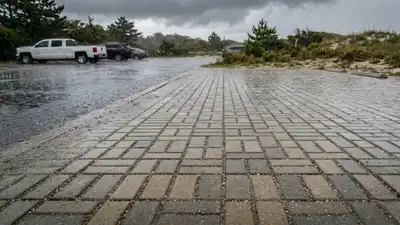
AI-generated representative image. Credits – Gemini
For the site’s largest monitored event, 88 mm of rain, the calculated equivalent curve number was 37. At Swansboro, such a combination allowed the pavement system to absorb an 88 mm rainfall event without producing measured surface runoff. Because permeable pavement relies on the underlying conditions, those circumstances are important.
Using the SCS Curve Number method, the researchers calculated an equivalent curve number for individual rainfall events. To put it plainly, the pavement was more like an extremely absorbent surface, rather than a normal paved lot, during that occurrence. The sandy soil of the site and the enormous storage layer facilitated the result. The speed at which stored water moved through the system depended on the soil and drainage conditions beneath the blocks. So the whole North Carolina research gives a more meaningful lesson than the headline alone. Permeable interlocking concrete pavers have the potential to greatly minimise runoff if the surface, stone layers, soil and maintenance techniques are suitable for the site. The research showed that permeable concrete blocks can form part of an effective stormwater system when the pavement, storage layer, underlying soil and maintenance regime are suited to the site.
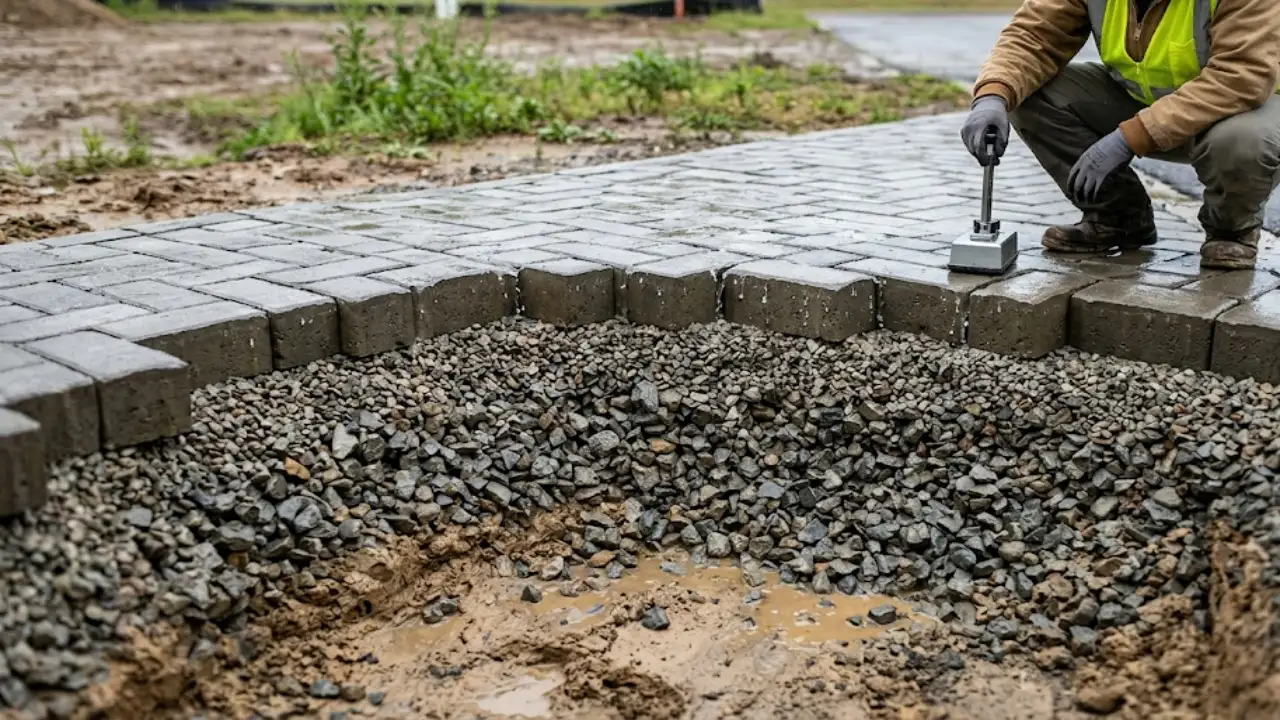
During monitored rainfall events as large as 88 millimetres, the Swansboro pavement produced no measured surface runoff, according to a 2007 study in the Journal of Irrigation and Drainage Engineering . The Swansboro site was especially notable since an 88 mm rainfall storm generated no runoff from the permeable pavement. Researchers observed the Swansboro PICP, or permeable interlocking concrete pavement, for around 10 months. The site received over 1000 mm of rainfall during this time, including five events with rainfall depths exceeding 50 mm. The biggest event was 88 millimetres of rainfall. The 2007 study in the Journal of Irrigation and Drainage Engineering found that no runoff was generated from the Swansboro location for rainfall events up to that depth.
When heavy rain strikes ordinary concrete or asphalt, it typically has nowhere to go. During a major storm, water might overflow the nearby drainage system, rush across the surface, and accumulate in drains. A different strategy was explored by engineers in North Carolina, using permeable interlocking concrete pavers that let rain pass through the surface and into the stone layers beneath. The result comes from a larger North Carolina State University study of permeable pavement across North Carolina’s Coastal Plain. The researchers weren’t just interested in whether water disappeared; they evaluated rainfall, runoff, infiltration and water quality to see where the water went.