
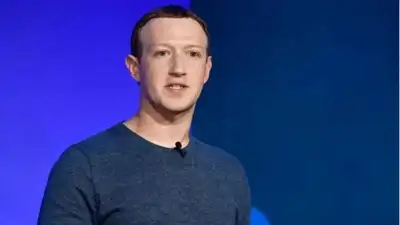
Mark Zuckerberg (Image: ANI)
With the new commitments, total funding for the effort has reached $1.8 billion. Google DeepMind, Meta and Alphabet-owned drug discovery startup Isomorphic Labs are jointly putting in $300 million. The US Department of Energy (DOE) and the National Institutes of Health (NIH) have also signed on.
Mark Zuckerberg and Priscilla Chan’s nonprofit Biohub has brought Google, Meta and the US government into its plan to build a “virtual cell”. Biohub says this is the largest coordinated investment in AI-ready biological data so far. The money will build open datasets that could let researchers “ask, predict, and answer biological questions digitally”.
A virtual cell is an AI model of human biology that can predict how cells behave, fall sick and respond to treatment. In practice, scientists could test ideas on a computer before taking them to a lab bench.
Biohub anchored the Virtual Biology Initiative with $500 million in April 2026. Of that, $400 million goes into new measurement technology. The other $100 million funds research outside Biohub.
This includes cryo-electron tomography, which resolves near-atomic detail inside a cell, and microscopy that can image millions to billions of cells in living tissue. Nvidia is offering computing infrastructure and software. The Broad Institute, Allen Institute, Wellcome Sanger Institute and the Human Cell Atlas are among the scientific partners.
The OpenAI Foundation has launched a grant programme worth more than $125 million for biological and medical datasets. Biohub launched in 2016 with $600 million from the Chan Zuckerberg Initiative’s $3 billion pledge. In 2023, it started building a cluster of over 1,000 Nvidia H100 GPUs to model cells.
Companies that fund the project can work on the datasets for a fixed period before anyone else, Rives told Reuters. Biohub calls the project open science, but corporate funders get a head start. After that, the data becomes publicly available. The government-funded work will carry no such restriction. Biohub plans to approach pharmaceutical companies and philanthropies next. Other AI companies are moving into biology as well. Anthropic has set up its own wet lab. For Zuckerberg and Chan, the virtual cell has been a long-running goal. That pledge aimed to cure or manage all diseases within their children’s lifetime. One of Biohub’s first projects was a cell atlas. Nearly a decade later, the goal remains the same, and Google, Meta and two US government agencies are now helping pay for the data it needs.