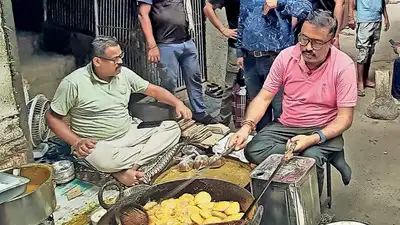
In the bustling Chawri Bazar, brothers Rajesh and Manish Bhargava uphold a culinary legacy by running their family kachori business
NEW DELHI: Two brothers hold court in Gali Hakim Baqa. They look alike but are not twins. Just like the aloo and dal kachoris they sell only on Sundays. The regulars know the difference, and their love is evenly split between the two.
You’ll find the Bhargava brothers at work, keeping alive a trade started by their granduncle, Om Prakash , in 1950. Rajesh says they supply chai to around 150 shops. Two kachoris of your choice land on top for Rs 35.
You Can Also Check: Gold Rate in Delhi | Silver Rate in Delhi | Bank Holidays in Delhi | Public Holidays in Delhi | Delhi AQI | Weather in Delhi | Petrol Price in Delhi | Diesel Price in Delhi | CNG Price in Delhi | LPG Price in Delhi Stay updated with the latest Delhi news.
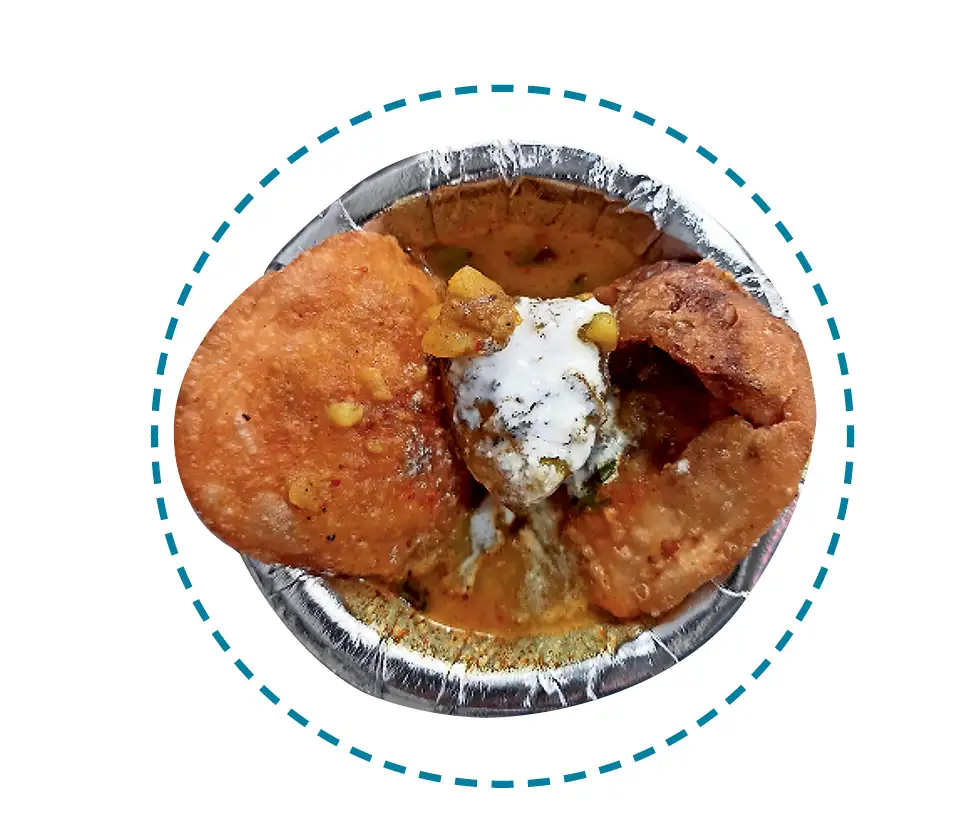
Kachori stuffed with spiced aloo and dal “The first batch of kachoris still goes as an offering to the nearby Chaumukha temple,” says Rajesh, 45, who now helms the space alongside Manish, his elder brother by three years. “Till the early ‘90s, we stayed in Purani Dilli and served customers all seven days,” says Rajesh. Just aloo and masala,” says Rajesh. “Dal kachoris are double-fried to ensure they’re light on the stomach,” says Rajesh. “The aloo used for the filling always retain their skin,” she says.
The bustling lane in Chawri Bazar, lined with shops in one of India’s largest sanitaryware and plumbing hardware markets, is easily navigable with the stores shut on Sundays. Enter the lane and walk past a landmark, Standard Sweets. Omi, as he was popularly known, sat at a mini tri-junction. He sold kachoris during the day and pakodis in the evening, all through the week. The family has since moved to east Delhi. The bhagona rests on a gas burner outside the first-floor tea stall that the Bhargavas run on all days the market is open. Chipsona aloo, sourced from a supplier in Sitaram Bazar, are washed, cleaned, cut and soaked overnight with the jacket on. At 4am on Sundays, they are boiled with masala for the aloo sabzi served with the kachoris. “We don’t use pyaz-lehsun, not even tomatoes. “The spice mix has over a dozen ingredients — mainly jeera, dhaniya, red and yellow chillies, hing, hand-pounded haldi and garam masala. A helper brings over a plate of dough balls stuffed with either aloo or dal — hard to tell which is which. With bare hands, Manish flattens each one and slips them into bubbling soybean oil. If stuffed with dal, the kachoris come off looking almost like a luchi and are placed on a brass plate. Half-fried. Rajesh then punctures one side before they go back into the kadhai for a second dip, emerging crisp and golden brown. The more regal-looking aloo kachoris get a one-time, uninterrupted oil bath. His wife, Kajal, seated on an empty soft drink crate beside the tea stall, keeps the stuffed dough balls coming. The aloo sabzi arrives downstairs in an aluminium bucket, is poured into a patila, woken up with a shower of masala and chopped coriander. Time to serve. The sabzi, ladled into a disposable dona, gets a pinch of masala and a splash of dhaniya-pudina chutney. For children or those who are spice-intolerant, there’s always a dash of dahi to soften the heat. Can’t choose? Tell Rajesh: one aloo, one dal. Download the TOI App.
These days, prep starts on Saturday evening with 50kg of potatoes and a 100kg bhagona.