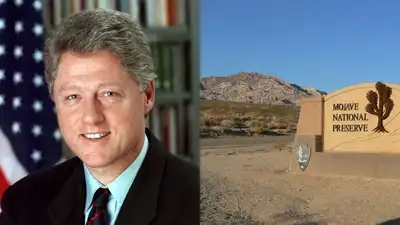
Image of former US president Bill Clinton alongside a view of Mojave National Preserve in California. Credits – Wikipedia
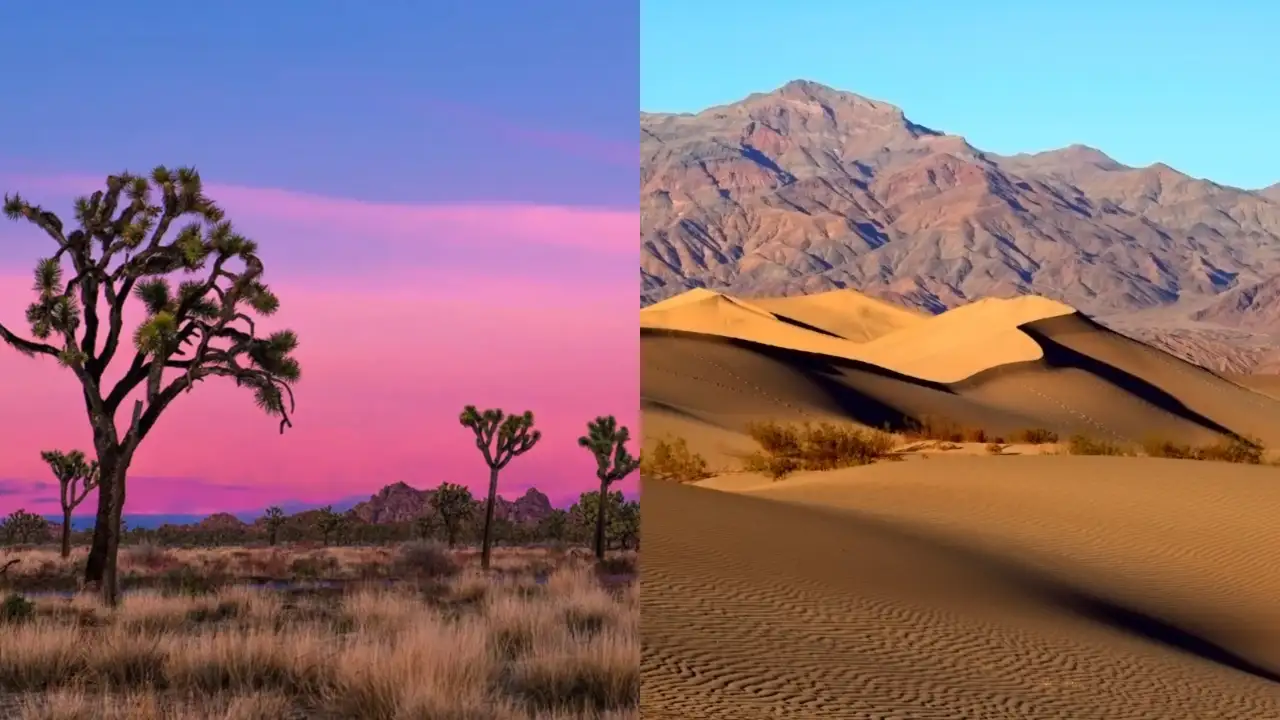
A significant portion of the eastern Mojave had been designated as a national scenic area since 1981, while Death Valley and Joshua Tree had been national monuments since 1933 and 1936, respectively. A Barstow organisation called Citizens for Mojave National Park began advocating for something greater as early as 1976, according to the National Parks Conservation Association. That battle ultimately succeeded when President Bill Clinton signed the California Desert Protection Act on 31 October 1994. The Bureau of Land Management says the law impacts nearly 9.2 million acres of public land from the northern end of Death Valley to the Mexican border. It changed Death Valley National Monument into Death Valley National Park and added over 1.3 million acres. It changed Joshua Tree National Monument into Joshua Tree National Park and added around 234,000 acres. And it established the Mojave National Preserve, some 1.4 million acres, in the previous East Mojave National Scenic Area. The park now totals more than 3.3 million acres with the 1994 expansions, and the National Parks Conservation Association said it became the largest national park unit outside Alaska. Credits – nps.gov, Wikipedia As the bill moved through Congress, the Christian Science Monitor called it the largest public lands law since the Wilderness Act of 1964.
The Wildlands Conservancy donated more than 560,000 acres to join up scattered “checkerboard” parcels inside the Mojave Preserve and the surrounding wilderness areas, according to the Bureau of Land Management. Large portions of the surrounding terrain were completely outside the National Park System, and those labels provided genuine but limited protection. Conservationists worked for decades to achieve this goal. It was sponsored by California’s two senators, Dianne Feinstein and Barbara Boxer. The act did three important things for the national parks. The Mojave National Preserve, though it is called a preserve and not a park, is managed under the National Park System laws of the act. The statute also created advisory commissions for Joshua Tree and Death Valley, which provided advice on management plans in the years that followed. Death Valley was changed most of all. Its size implies it can protect entire desert basins and mountain ranges, rather than just small sections. Private generosity filled in some of the gaps. Joshua Tree National Park and Death Valley National Park. Now Joshua Tree, Death Valley and Mojave are connected in a protected chain of desert land spanning Southern California, with wilderness areas around them cushioning wildlife habitat from traffic and development.