
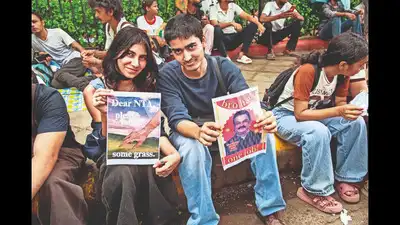
For a generation often dismissed as ‘too online’, showing up IRL at a protest is becoming its own form of expression. But the interesting part isn’t simply that Gen Z is protesting. It’s what being at a protest means to them.
For 25-year-old dog trainer Tara James, showing up at a recent protest in Bengaluru meant coming prepared. For 22-year-old student Ekta Pal, the decision is even more instinctive. For 29-year-old lawyer Ananditha Reddy, protest is also about the realities of becoming an adult now.
I want to join them,” she says. But we’re just not letting that keep us silent,” says Tara. A protest can begin with a post, a group chat or a meme. But once people step onto the street, it becomes about more than slogans and placards. It is also about figuring out who needs a ride home, sharing water and supplies, looking out for strangers — and sometimes leaving with new friends. She carried ORS, electrolyte water, tampons, sanitary pads, pain-relief patches and first-aid supplies. When it was over, she drove fellow protesters home. “I want to go. Housing costs, financial insecurity and the pressure to hit traditional milestones can make the future feel increasingly uncertain. The line between online and offline activism has become increasingly blurred. Instagram and social media can be where people first hear about an issue, find out where a protest is happening or organise what to bring. But for many young protesters, posting is only one part of participating. Memes can become slogans. Film references can become placards. Satire can become protest art. The internet gets people in the same place; the street gives them a reason to stay there. And turning up isn’t necessarily about being confident or fearless. “We are not fearless. We absolutely are afraid. For her, knowing that a protest could be uncomfortable or uncertain isn’t enough reason to stay away. Social media, she adds, has also exposed her to how people elsewhere respond to political and social issues, widening her sense of what is possible. A protest may last a few hours. The reasons for being there can be much bigger: the right to question, the need to be heard and the feeling that sitting this one out is also a choice. The Gen Z protest playbook Gen Z’s protest language