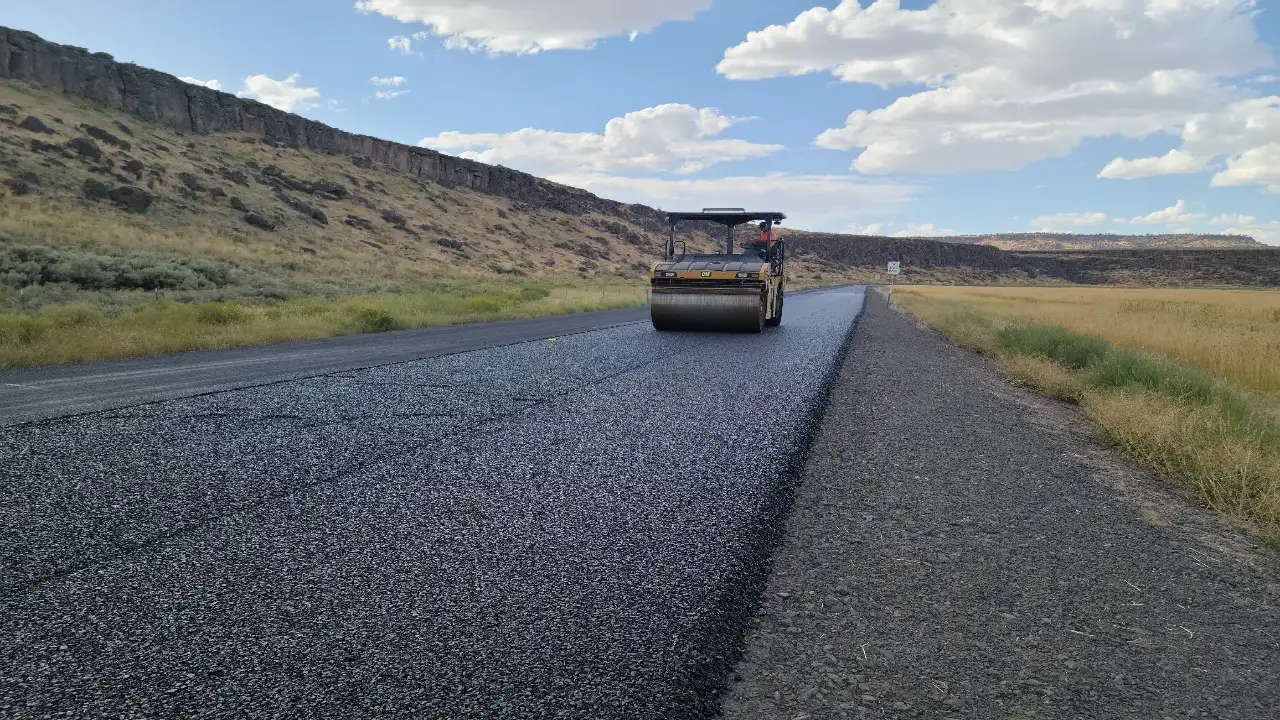
Representative image of a highway in Georgia. (Image credits: Pexels)
Later, in 2019, Rath et al.’s field visit found that the Georgia section was still in good condition, with a Pavement Surface Evaluation and Rating (PASER) score of 8.5 after more than a decade in service. In those states, the reported field performance of these mixtures had matched or exceeded that of polymer-modified or terminal-blend rubber alternatives. The Georgia project was part of three field sections examined in a study of chemically engineered dry-process ground tyre rubber (DP-GTR) in dense-graded asphalt mixtures. Across the three locations, the researchers found good-to-excellent field performance, including the Georgia section, which was the oldest of the group. However, the laboratory results were not uniformly aligned with the field observations, as intermediate-temperature cracking tests such as I-FIT and IDEAL-CT showed results that could penalize the rubber-modified mixtures. Conversely, the disk-shaped compact tension test indicated higher fracture energy with DP-GTR. As the paper reports, Georgia and Texas agencies had collectively deployed over one million tons of dry-process crumb-rubber-modified asphalt mixtures.
The rubber used in the study consisted of fine ground tyre rubber particles, generally about 400 to 600 micrometres in diameter, that had been chemically treated with a non-elastomeric liquid. Laboratory testing showed that the chemically treated rubber affected several asphalt performance measures: when adding about 8% to 12% DP-GTR by binder weight, the high-temperature performance grade increased by roughly 10°C to 12°C. In addition, DP-GTR contents up to 10% had no changes to the binders’ low-temperature performance grade. The first was on Interstate 88 in Illinois, where a DP-GTR stone-matrix asphalt section was placed in 2016. In May 2019, an inspection took place after a winter in which temperatures dropped below −33°C. In the disk-shaped compact tension test, the DP-GTR section recorded a fracture energy of 905 J/m², compared to 830 J/m² for the SBS section. The second tested field was in Davison, Michigan, where a dense-graded 12.5-mm nominal maximum aggregate size mixture was placed on Cambridge Drive in 2016 with 10% DP-GTR. Later, an inspection in 2019 found no visible cracking or rutting, and the section received a PASER rating of 8.1. Prior to the field observations, rutting performance was shown through laboratory mixture testing: in a Hamburg wheel tracking test at 50°C, the DP-GTR mixtures resisted rutting through 20,000 passes. After 9,908 passes, one unmodified mixture reached a 20-mm rut depth; on the other hand, its DP-GTR counterpart reached only 5.5 mm at 20,000 passes.
The process can be introduced at an asphalt plant shortly before the binder is added, as the authors described. The study also examined two other places. The results found that the adjacent thermal cracks were found in the DP-GTR section.