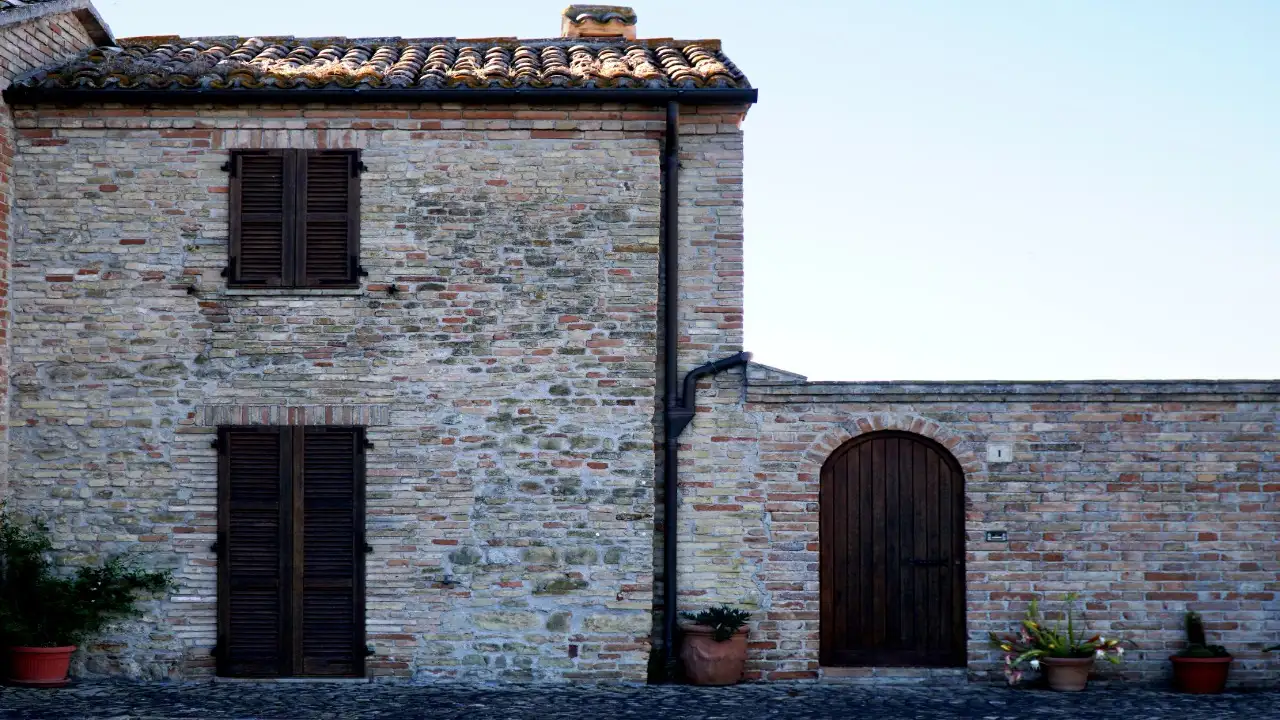
Representative AI image of close-up a the exterior wall of a rustic, hand-built Italian-style. (Image Credits: Chatgpt)
A farmer in Brazil, 69, spent two decades turning about 2,000 stones into a house with inspiration drawn from the stone homes of Italy. Dionísio Bertoldi started the project in 1995 after his first marriage and completed it in 2015, building almost the entire residence by himself. The construction was halted for almost a decade until he resumed and completed it in 2015.
As reported by NSC Total, Bertoldi, hailing from the Ipiranga community in Rodeio, Santa Catarina, was not a mason by profession when he began building, and as the project progressed he learned how to work with the material. After the death of his first child during childbirth and other deaths in the family, Bertoldi lost the motivation to continue and moved to a neighbouring area. He estimated that if he knew how to cut and shape the stone, the house would have taken two to three years rather than twenty to finish. The long construction was hindered by personal events. Building with thousands of stones
The end product of his labour was a finished house containing 10 rooms, neither plastered nor painted in order to preserve the exposed stone and its rustic appearance. The walls measured about 25 centimetres in thickness, the doors were made by Bertoldi himself, and the windows carried several Italian flags, reinforcing the visual connection to the inspiration behind the project. A 2013 study in Building and Environment investigated the Sassi of Matera and the Trulli of Alberobello and found that these structures helped maintain relatively stable indoor temperatures through different seasons and limited the effect of outdoor temperature fluctuations.
Because he wanted a home that embodied his family’s country of origin while preserving a cultural connection that had been carried into Brazil, this was the reason for choosing the stones, which carried more than a construction decision,.
Representative image of Italian architecture. (Image Credits: Pexels) A house built around family heritage The Italian connection is personal for Bertoldi, who told ND Mais his grandparents came from Italy and worked as architects building churches in the region. By his own account, Bertoldi sourced some of the raw materials from his property and others were bought locally. He learned the best techniques and tools, and spent the rest of his available time on construction while working as a farmer. Rather than relying on the expertise of a masonry crew, the process required him to select, break and position the stones, some weighing up to two tonnes by his estimate. He recalled repeatedly striking his hands with a sledgehammer and being attacked by bees while collecting stone in wooded areas. The only outside support he received came during the second part of the slab work, when a friend and two bricklayers helped out for half a day, after which Bertoldi continued on his own. He’s also descended from the Bertoldi, Feltrin, and Fiamoncini families, weaving the house into a history of Italian immigration . That connection extends beyond the house itself, as Bertoldi also makes wine and sings in Italian. The completed house has garnered attention beyond the local community as the story spread on social media, which led to his being recognised in Italy during a visit. Bertoldi has highlighted the practical characteristics of the house, stating that during the summers it stays cool, and in winters it retains warmth and does not accumulate moisture. The thermal characteristics of traditional Italian buildings built from stone have also been examined through the lens of academic research and help provide context for Bertoldi’s own observation. However, those were traditional buildings in Italy and not Bertoldi’s residence, so the study can only provide architectural context rather than independent evidence of the thermal performance of his house. You use AI every day. Now get your AI Quotient. Take the AIQ test.