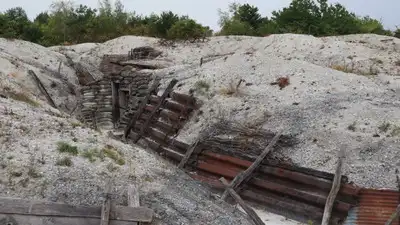
Representative image of Historical World War I trench fortification. (Image Credits: Pexels)
The site at Browndown , equivalent to almost 17 football pitches according to a government release, contains two opposing trench systems and a no-man’s-land. Photographs from 1923 also independently confirmed their First World War date. An approximately 130-metre stretch of open ground served as a no-man’s-land, dividing the opposing systems. By 1915 and 1916, practice trenches had become common at British training camps as the experiences from the Western Front influenced how soldiers were trained at home. More ground for investigation was opened up between 2020 and 2022, owing to several gorse fires and deliberate vegetation management, enabling archaeologists to examine features that had hitherto been difficult to reach. The available documentary evidence includes a diary entry dated August 10, 1914, by James Thompson of the Plymouth Battalion of the Royal Marines Light Infantry, who marched from Portsmouth to Browndown to dig trenches..
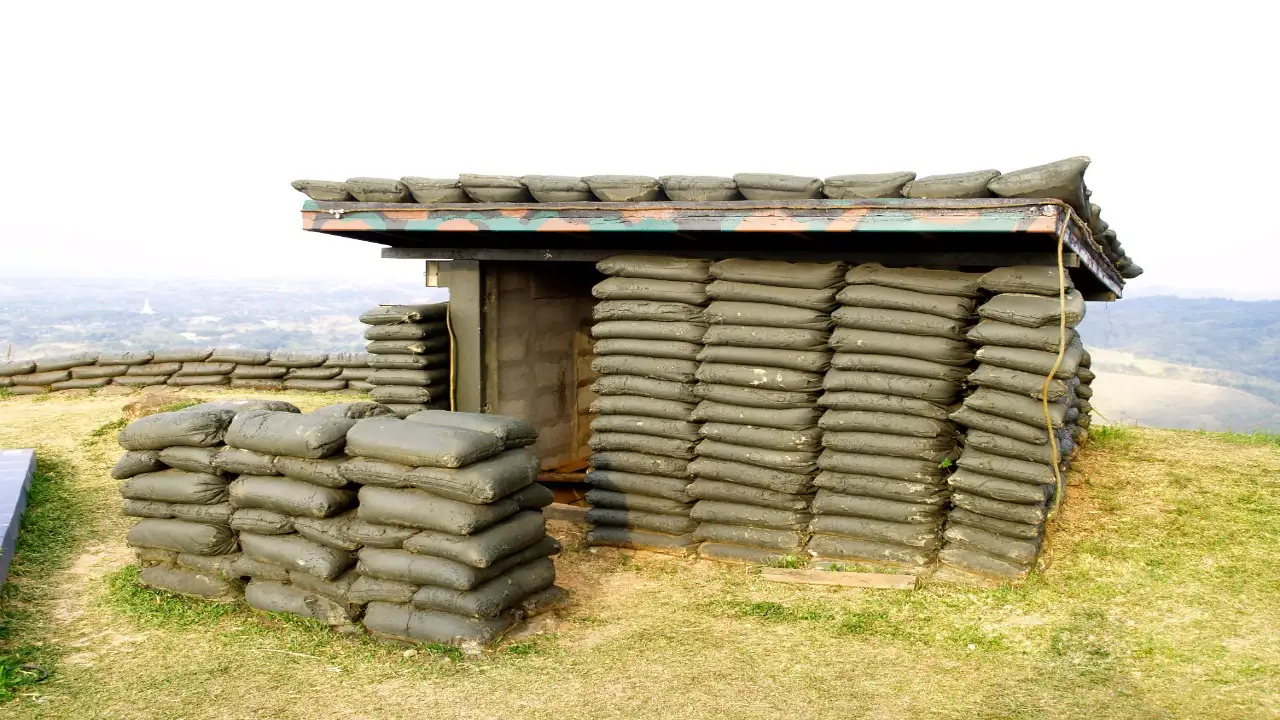
Because thick vegetation, including gorse, obscured sections of the site, surveying the remains turned out to be difficult. Because several periods of use can occur in the same location, these overlapping phases of activity make individual features harder to interpret. An overgrown heathland in Hampshire has been identified as a First World War practice battlefield at Browndown Training Camp, near Gosport. Browndown has been identified as one of the best-preserved and most complex practice grounds in England, providing evidence for how soldiers were trained before being deployed to the Western Front. The remains were brought to wider attention after archaeologists examined aerial photographs and conservation officer Rob Harper of Gosport Borough Council traced the remains on the ground. Aerial photographs dating from the 1920s onwards, including particularly useful RAF photographs from the 1950s and 1960s, helped establish how the remains had survived. The trenches followed the pattern of a Western Front battlefield The arrangement of the trenches at Browndown reflected the way British troops were trained to operate on the battlefield. The eastern complex comprised two opposing sets of crenellated frontline or fire trenches, and positioned behind them were the support, reserve and communication trenches. The surviving trenches measure more than a metre in depth, flanked by banks on either side that formed the parapet and parados. At the back of the systems are semi-circular platforms that are likely to have accommodated mortars or light artillery. But not every trench at Browndown belonged to these larger arrangements. Archaeologists also recorded more irregular trench complexes alongside simpler isolated trenches. The latter may have been used for teaching troops how to construct trenches, while simultaneously providing physical training and developing group cohesion.In contrast,the more organised system appeared to create an environment for soldiers to practise living and fighting under war conditions. Representative image of a bunker structure on a hill. (Image Credits: Pexels) The soldiers who trained there remain difficult to identify Despite the extent of the remains, identifying the units that used the practice battlefield has been elusive. Archaeologists believe this activity probably relates to the simpler, isolated trenches and doesn’t establish who used the later, more elaborate systems. The later trench complexes could have been used by the Hampshire Regiment or other regiments that were based around Gosport bound for the Western Front. However, the evidence at hand doesn’t corroborate the users of the systems with certainty, leaving the physical remains as the strongest evidence for understanding the usage and development of the training ground. Moreover, Browndown also holds remains from periods before and after the First World War. A round barrow, probably from the Bronze Age, a heavy anti-aircraft battery from the Second World War, along with interwar and later grenade ranges, overlap with the practice trenches. You use AI every day. Now get your AI Quotient. Take the AIQ test.