
Google DeepMind SynthID Bio
She said that by linking designs to the model developer, the watermarks “empower developers to lead on safety and allow synthesis providers to streamline screening for customers who have used those models. In laboratory tests, the watermarked designs matched the performance and natural variety of designs without a watermark, according to Google. Biosecurity is a combination of practices and protocols designed to prevent the transmission of harmful biological agents, infectious diseases and invasive species like viruses and bacteria, according to Scientific Journal ScienceDirect.
Sarah Carter, a biosecurity policy expert and Principal at Science Policy Consulting who reviewed the work, called it “an important piece of the puzzle for tracking the provenance of biological designs. SynthID Bio is currently available as a research release, with open-source code and data made accessible to the scientific community. The signature can’t be seen but it can be verified. It works on the digital model and it also works on the actual protein once it has been made in a lab.
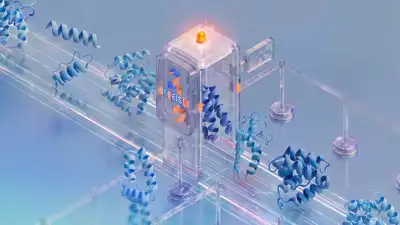
Google DeepMind, Google ’s AI lab, recently introduced a technology called SynthID Bio that essentially puts a hidden watermark on proteins designed by artificial intelligence (AI).
DeepMind compares biosecurity to a “Swiss cheese” defence. The main motive of this is that anyone can later check where a design came from, serving as a key security measure in strengthening biosecurity. Moreover, this tech will also serve a way to mitigate the risk of mislabeled synthetic 3D structures polluting public databases and misleading downstream research. The key point is that the watermark doesn’t get in the way of how the protein works. This also answers the question, “Why this matters now? AI is already helping scientists with some of biology’s hardest problems: it can predict the structure of proteins (AlphaFold) and design brand-new ones (AlphaProteo and ProteinMPNN). More recently it has been used to develop new bacteriophages, which are viruses that infect bacteria. Every safeguard, such as model-level protections or vetting customers, has some gaps. Stack several together and each one covers the holes in the others. SynthID Bio adds another layer, built into the biological design itself.