
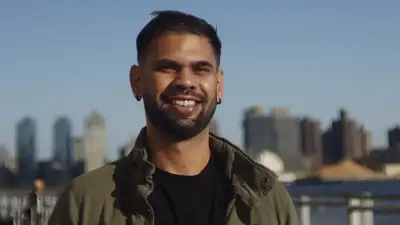
Cinematographer Gaurav Shah, who is working on the feature-lemgth version of a short film he did a few years ago, talks to us about building a career in the US, mastering multiple departments on a film set and finding his visual language. Excerpts from a quick chat:
You have worked on 63 productions in a little over a decade. How has your journey unfolded?
I started in 2013, managing live events in Hyderabad. In 2016, I moved to the US on my own, without any industry connections, and began building my career from scratch. You moved to Los Angeles in 2021.
Because the way a person is lit can influence how an audience connects with them on screen, it is an important aspect of cinematography. Because framing is such a personal part of the process, i like to operate the camera myself. At Temple University in Philadelphia, I worked on live television productions, shooting and editing content before moving on to cinematography and co-directing a television pilot, The Substitute. After graduating, I spent a year working on the documentary Where is the Love? before pursuing a master’s degree in Film and TV Production at DePaul University in Chicago. I took up different roles, including gaffer, key grip and first assistant camera, on student productions. These experiences gave me a practical understanding of how a film set operates. How has working across different departments shaped you as a cinematographer? Cinematography is a constantly evolving discipline. We are always learning new technology, techniques and ways to tell stories visually. Working across camera and lighting departments helped me understand the process beyond just framing a shot. It also taught me how different elements come together to create the visual language of a film. You have also explored lighting for different skin tones . How did that interest develop? At DePaul, a classmate, Estrella Vargas, initiated an independent study on lighting people of colour. The subject attracted enough interest to become a full-fledged class, which I attended. I continued experimenting with colour palettes and lighting techniques after graduating. Every complexion deserves to be seen with clarity, warmth and intention. Lighting should honour every skin tone rather than force every face into the same mould. You often operate the camera yourself instead of delegating the task. Why is that important to you? It allows me to decide exactly when a frame lands and how the camera responds to the action, without having to communicate those decisions through someone else. My approach also begins well before shooting. During pre-production, I work closely with the director to understand the blocking and coverage of each scene. I also operate my own Steadicam rig, which requires physical stamina as well as precision. Camera and actor movements need to work together, and planning them in advance helps achieve that. For specialised equipment such as cranes and jibs, however, I bring in dedicated operators when the shot requires their expertise. What opportunities followed? Los Angeles opened up opportunities across films, television, music videos, documentaries and corporate productions. My credits include television projects such as Welcome to Amrika and Vegan Hunter, and feature films including Influence, Wedding in Hamptons, Once Upon a Dream and Blossom. I have also worked on music videos and content featuring artists and public figures, along with a documentary for the French-German broadcaster Arte.tv and the Solana Stories series. Corporate campaigns and industry-focused films have been another significant part of my work. Moving between these formats keeps me adaptable and exposes me to different storytelling requirements. What has been the biggest lesson from building a career without an established network? You have to be willing to learn, take on different responsibilities and put in the work before opportunities come your way. Not every role comes with recognition, but each experience adds to your understanding of filmmaking. Building a career takes persistence, particularly when you are starting in a new country without contacts. What lies ahead?
My upcoming projects include feature films, a television pilot and music videos. One of the projects closest to me is a feature-length adaptation of Same Love, the short film that first brought me attention. The film will be shot partly in India, with the remainder filmed across North America. It feels fitting to bring the journey back to India in some way. Having started out in Hyderabad and built my career in the US, I want to keep exploring stories, techniques and collaborations that push me creatively. You use AI every day. Now get your AI Quotient. Take the AIQ test Get the latest Lifestyle News and more. Download the TOI app.