
Image credit: X (Twitter)
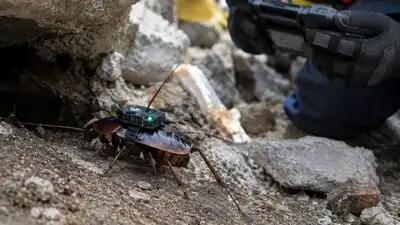
Called “paraborgs,” these modified insects combine their natural ability to navigate confined spaces with remotely controlled equipment. The project involves researchers associated with the University of Queensland and the University of New South Wales, according to a BGR report. Scientists are testing whether the cockroaches can carry medical supplies into hazardous areas, identify potential victims through camera feeds and deliver drugs to targets. The approach could eventually support emergency responders dealing with collapsed buildings, earthquakes and other disasters where time and access are critical. By combining insect movement with miniature electronic systems, the team aims to reach places conventional rescue equipment may struggle to access. The project uses the giant burrowing cockroach, scientifically known as Macropanesthia rhinoceros, a large cockroach species native to Australia. Its size makes it suitable for carrying a small electronic backpack containing a camera, control equipment and a syringe-based delivery mechanism.
The insects reached the checkpoints with a 100% success rate, according to the reported results. The syringe system recorded a 72% success rate when delivering medication to targets. When the syringe was fired from within six inches of a target, the success rate increased to 95%.
The medical delivery system is another part of the design. Researchers have developed a mechanism that can fire a small syringe, described as functioning like a dart gun, towards a target. The aim is to deliver medication when a person needs urgent treatment and a medical professional cannot reach them immediately. Time is another consideration. Finding an injured person quickly can affect the treatment they receive, especially when the emergency involves a condition that requires prompt medical attention. Camera-equipped cockroaches could help rescuers assess a location and identify a possible route towards someone who needs assistance. However, the system would not replace conventional rescue personnel or medical treatment. Its effectiveness would depend on camera visibility, remote control, access to the target, and the ability to safely deliver the appropriate medication. For now, the research demonstrates a potential application of biohybrid technology, which combines living organisms with electronic systems. If further testing establishes its reliability and safety, these cyborg cockroaches could become an additional tool for locating and assisting disaster survivors in places where conventional rescue equipment has limited access.