
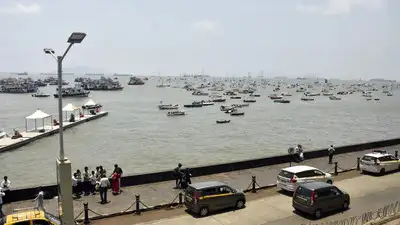
Private yacht operators at the Gateway of India are negotiating to halve the pontoon fee from Rs 90 to Rs 50 (Representative image)
MUMBAI: Private yacht operators at the Gateway of India could get relief from additional access costs, with a proposal to halve the pontoon fee from around Rs 90 to Rs 50 per passenger being discussed as a possible settlement with the port authorities and the Royal Bombay Yacht Club (RBYC). The dispute follows the closure of Jetty No 5, opposite the Taj Mahal Palace hotel, on structural safety grounds. Sources in MbPA and RBYC confirmed that a proposal along these lines was under discussion.
We will ensure that it is halved from the existing rates,” state assembly speaker Rahul Narvekar, who is mediating between the Yacht Operators Welfare Association (YOWA) and the Mumbai Port Authority (MbPA), said. “We are trying our best to arrive at a golden mean wherein both parties will be satisfied. An iron gate has blocked the concrete slipway that operators say they had used free of charge for years, leaving them dependent on a paid floating pontoon to reach their vessels. YOWA has approached the Bombay high court, challenging the pontoon tariff and the arrangement under which RBYC manages the facility. It seeks removal of the gate, restoration of free slipway access and permission to use other jetties.
Operators have used the concrete slipway free of charge since 2006, according to the petition. A floating pontoon was introduced in 2019 as an optional facility, with tariffs approved by the Tariff Authority for Major Ports in December 2020. YOWA contends that the pontoon installed in 2025 is a different structure, with a different owner, cost and user base. “How can a tariff formulated in 2018 for floating hotels be applied to us? According to Rane an average minimum tariff per passenger for a speedboat is Rs 500 to Rs 600 and if Rs 90 to Rs 100 fees is given to MbPA, it will eat away the profit margins and eventually force us to burden it on common tourists. In its petition YOWA has questioned RBYC’s role in managing Jetty No 5, controlling access and collecting fees, alleging that the arrangement was made without a public tender or transparent competitive process. It also alleges that private boat owners have been denied permission to use Jetty Nos 1 to 4. MbPA declared Jetty No 5 structurally unsafe and restricted access.
You Can Also Check: Gold Rate in Mumbai | Silver Rate in Mumbai | Bank Holidays in Mumbai | Public Holidays in Mumbai | Mumbai AQI | Weather in Mumbai | Petrol Price in Mumbai | Diesel Price in Mumbai | CNG Price in Mumbai | LPG Price in Mumbai Stay updated with the latest Mumbai news.
He said yacht owners were willing to pay legitimate charges but wanted rational rates comparable with those for catamarans, so private operators could continue serving Indian and foreign tourists affordably. Some members of the yacht community, however, said they were ready to pay applicable charges and GST and legalise their operations through ticketing instead of cash, provided the costs collected by MbPA remain affordable for tourists as well as operators. They stressed that passenger safety, vessel safety and security were paramount, and said reasonable charges could support tourism around Mumbai.
Why cannot our jetty be repaired, as other jetties have been recently?” asked YOWA joint secretary Chetan Rane. Operators say pontoon charges depend on the number of passengers and staff needing access and the frequency of trips, potentially reducing margins or increasing costs for customers. YOWA has sought disclosure of the structural assessment, an independent audit and time-bound repairs. It has also raised concerns about the pontoon’s connection to the jetty. The petition seeks refunds of charges found to have been collected without legal authority and disclosure of agreements, permissions and accounts relating to the pontoon. MbPA and RBYC were approached for comment, but no official responses had been received at the time of the source report. Any reopening of the slipway would depend on a technical assessment and the necessary safety clearance. Download the TOI App.
It questions whether the earlier tariff can automatically apply to the newer facility without a valid legal basis or fresh approval.