
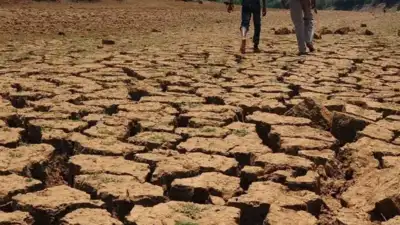
(Representative image) Maharashtra is facing a troubling rainfall deficit during the crucial June to September monsoon period, sparking alarms regarding water availability and agricultural stability
Meteorologists have warned that a warmer-than-normal winter could bring summer-like conditions as early as February 2027. The state received 804.4mm of rainfall during the June-September monsoon, against the normal of 994.5mm, a shortfall of about 19%. Nineteen of its 36 districts recorded deficient rainfall. Marathwada was the worst-hit subdivision, with a 39% deficit, followed by Vidarbha at 27%.
MUMBAI: Maharashtra’s deficient monsoon, coupled with a developing potentially strong El Niño, has raised concerns over water security, rabi crop stress and food prices. The Konkan region fared relatively better, with only one of its seven districts recording deficient rainfall.
A Climate Trends analysis dated October 16 says Maharashtra is among five states, along with Telangana, Karnataka, Andhra Pradesh and Rajasthan, that have declared drought. Its claim that drought affects 75% of Maharashtra needs to be verified against the relevant government notification. Central Water Commission data cited in the report show that live storage in 178 monitored reservoirs stood at 78.71% of the corresponding period last year and 87.08% of normal as of October 8. The western region’s storage stood at 82.42% of its normal level. Rainfall deficits across the country India’s monsoon ended with a 13% rainfall deficit, its weakest performance in a decade, according to the analysis. East and Northeast India received 1,017.1mm of rainfall against the normal of 1,367.3mm, a shortfall of 25.6% and the region’s lowest monsoon total since 1901. The South Peninsula recorded 542mm against the normal of 716mm, its fourth-lowest monsoon total since 1901.
The impact could extend into the next crop cycle, as depleted soil moisture, lower groundwater recharge and stressed reservoirs increase irrigation requirements. For Mumbai and the metropolitan region, water availability will depend on reservoir storage, subsequent inflows and demand.