
AI image
Nagpur: Nearly one lakh residents across 12 villages on Nagpur’s outskirts are set to benefit from a revised bulk water supply system approved by the Maharashtra Jeevan Pradhikaran (MJP) board. Bawankule had pursued complaints about differences in water supply charges between Nagpur Municipal Corporation limits and the surrounding peri-urban areas. #Key takeaways Beneficiaries: Nearly one lakh residents across 12 villages on Nagpur’s outskirts.
Welcoming the approval, revenue minister Chandrashekhar Bawankule said the earlier system involved direct retail supply by MJP, unlike the arrangement in Nagpur city, resulting in a financial burden on residents outside the municipal limits. “Providing clean water at equal and affordable rates to residents of the peri-urban areas around Nagpur was our priority,” he said. “With the MJP board approving the bulk water supply system, residents of these 12 villages will receive a major relief,” he added.
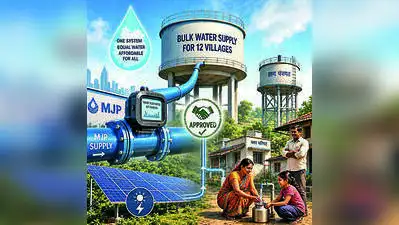
Under the revised arrangement, MJP will supply water to elevated storage tanks operated by the respective municipal councils and gram panchayats, which will then distribute it to households through their pipeline networks. The change is expected to help control supply costs and ease the financial burden on residents. The approved framework also provides for technology-based monitoring. Internet of Things-enabled smart flow meters will be mandatory at each storage tank to accurately measure the water supplied. An automation system is also envisaged. To reduce electricity costs and support uninterrupted supply, the board has decided to consider setting up a solar power project under the public-private partnership model. The participating local bodies will have to sign formal agreements with MJP to avail themselves of the bulk supply arrangement. They will also be required to pay current and outstanding water charges regularly. Approval: The MJP board has cleared the bulk water supply model. New arrangement: The MJP will supply water to local bodies’ elevated storage tanks, with local authorities handling household distribution. Affordability: The change aims to control costs and reduce residents’ financial burden. Monitoring: IoT-enabled smart flow meters will be mandatory at storage tanks. Renewable energy: A solar power project is planned for consideration under the PPP model. Conditions: Local bodies must sign agreements with the MJP and pay current and outstanding water bills.
You Can Also Check: Gold Rate in Nagpur | Silver Rate in Nagpur | Bank Holidays in Nagpur | Public Holidays in Nagpur | Petrol Price in Nagpur | Diesel Price in Nagpur | CNG Price in Nagpur | LPG Price in Nagpur Stay updated with the latest Nagpur news. Download the TOI App.