
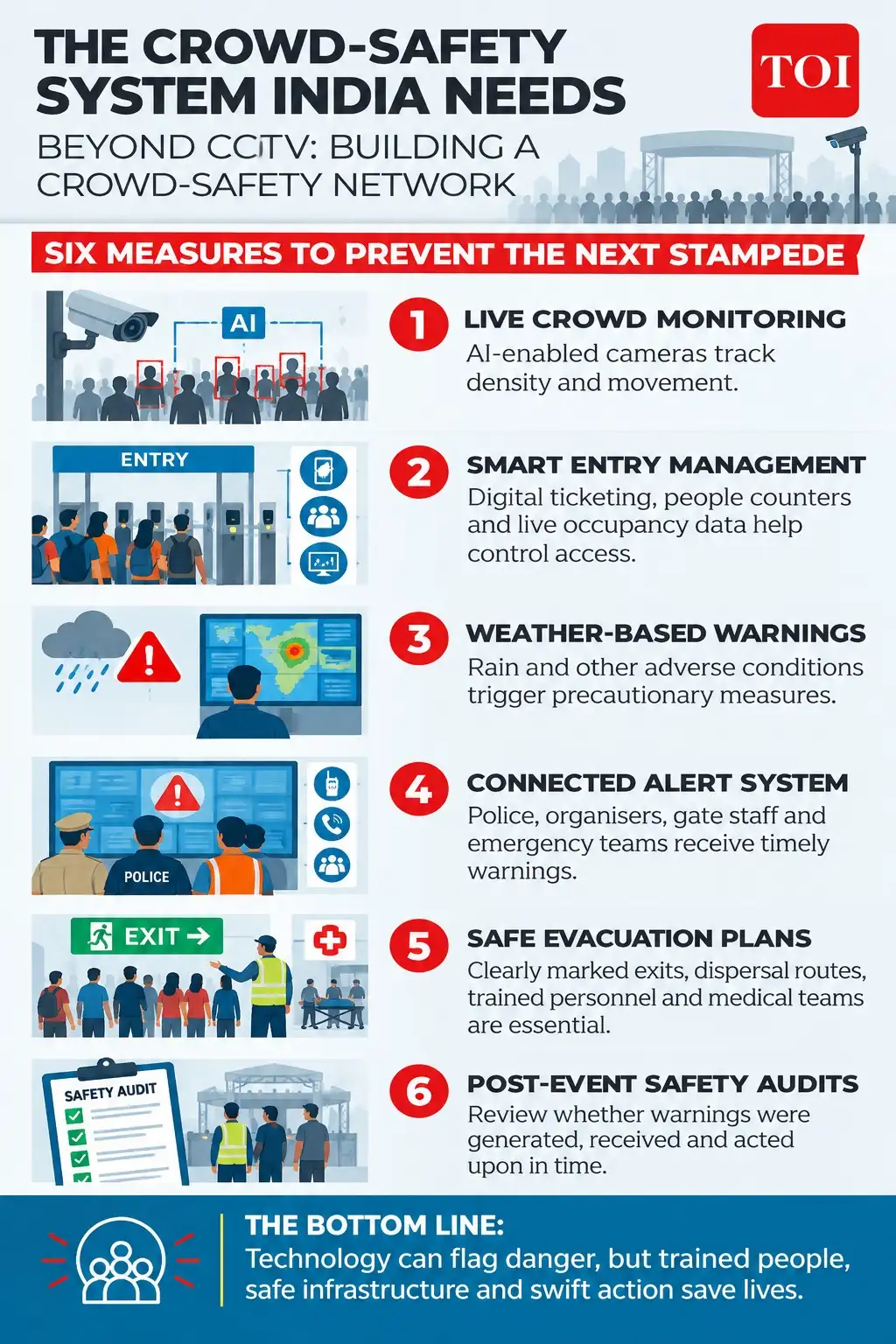
Digital ticketing, people counters and entry gates fed with live occupancy data can help organizers prevent a venue from exceeding its safe capacity.
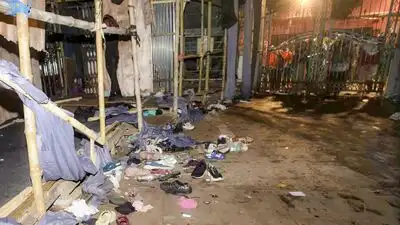
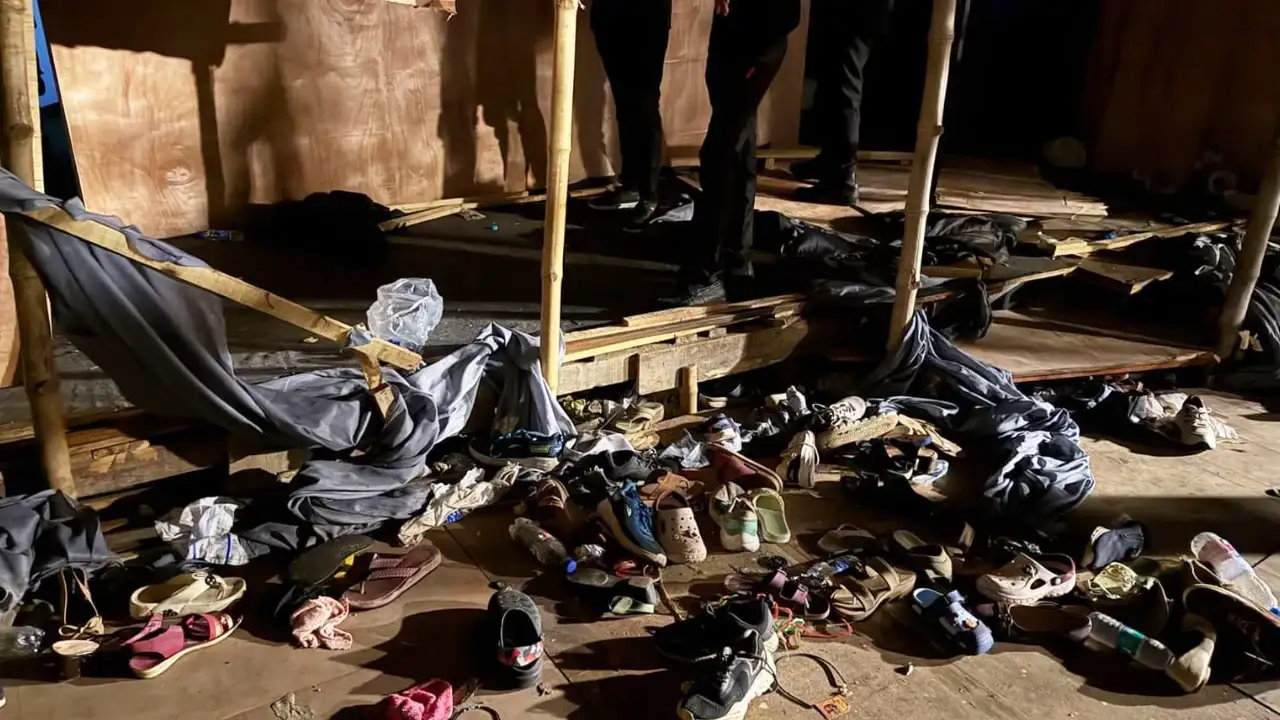
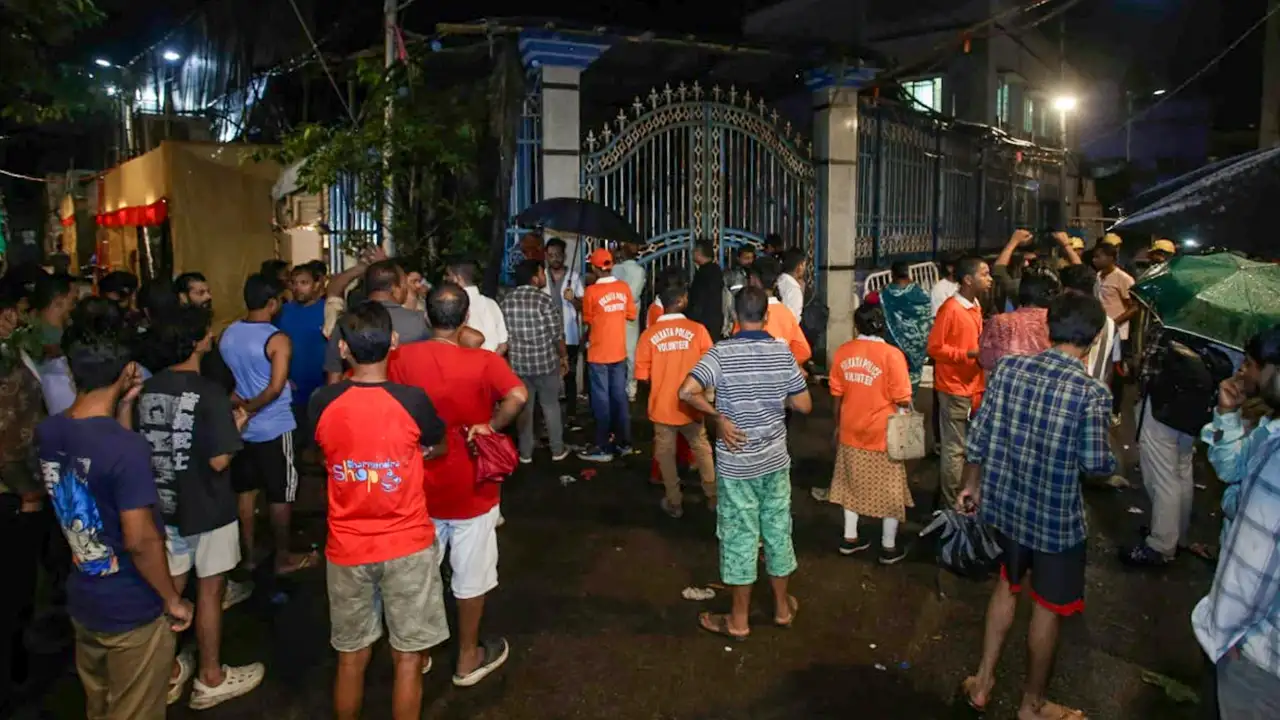
NEW DELHI: Nineteen people were killed and 25 injured in the stampede at Kolkata’s Chorbagan Durga Puja pandal on Saturday, bringing crowd management back into focus. During the 2025 Maha Kumbh in Prayagraj, an integrated command and control center was deployed to monitor crowd density and movement utilizing inputs from 500 AI-enabled cameras and drones.
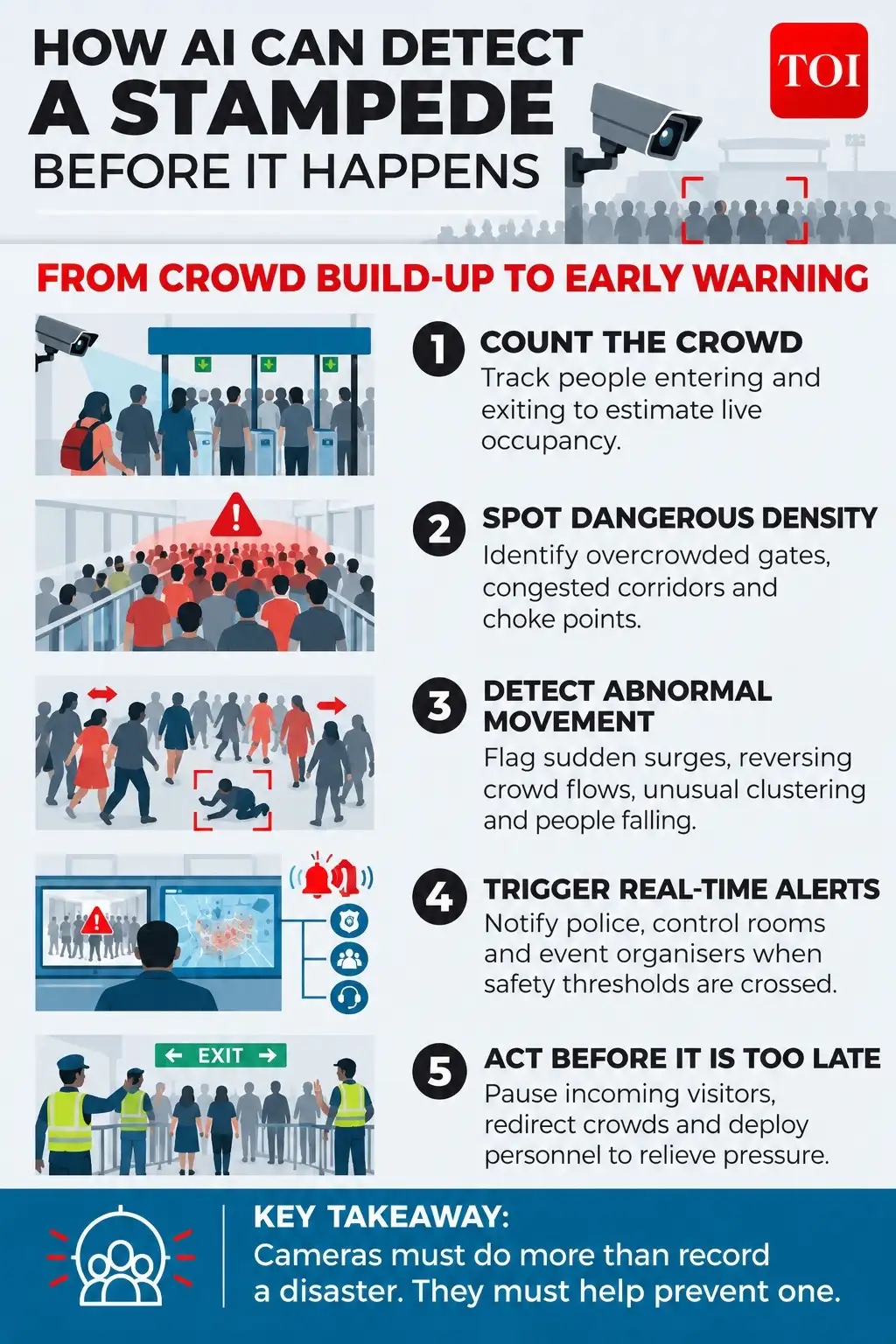
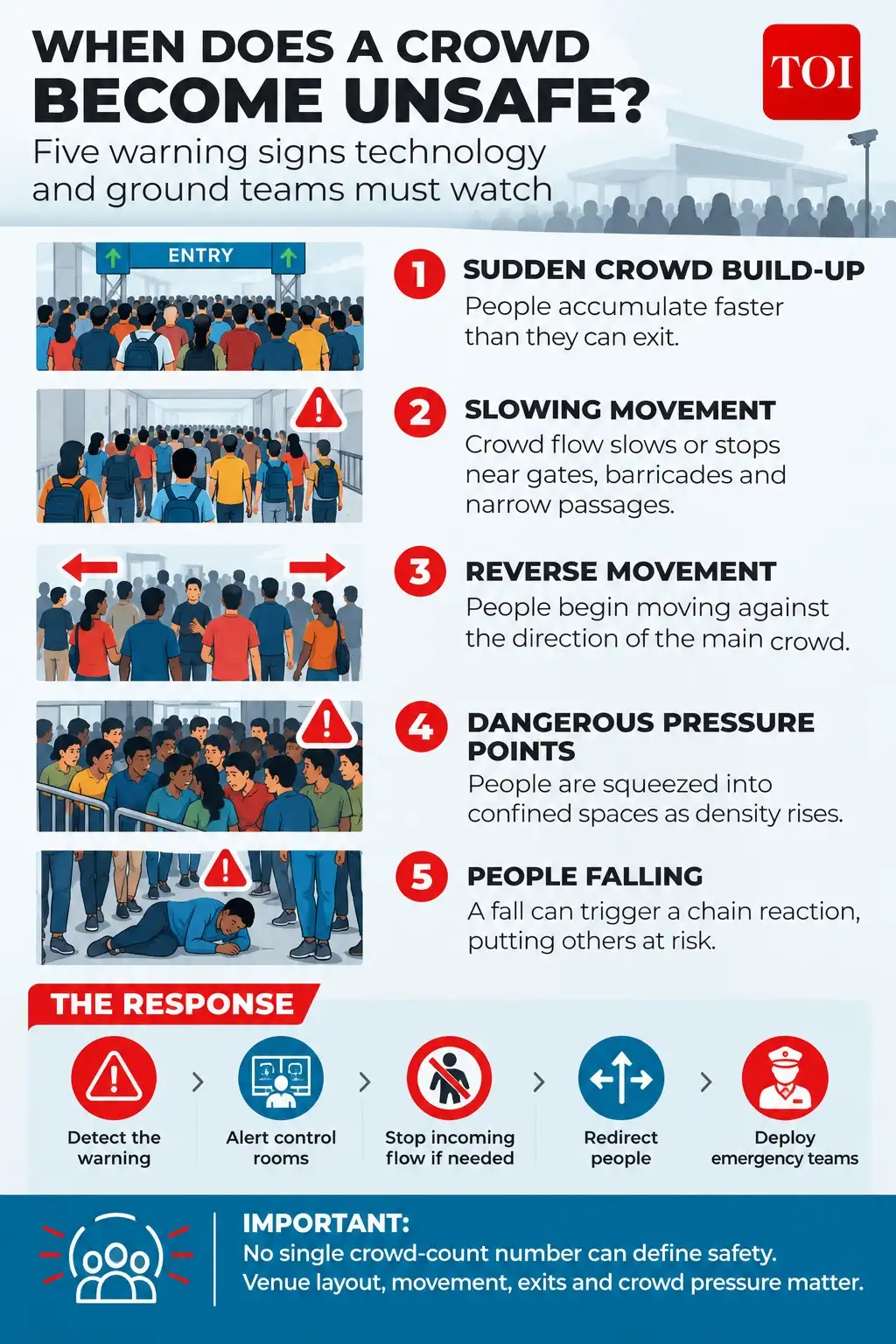
Live alerts can help officials prevent dangerous crowd surges Heavy rain was said to have driven visitors toward the entrance, causing a stampede in which people fell over each other. Heavy rain is said to have contributed to the rush. The tragedy raises an important question: can technology identify the warning signs before a crowd turns dangerous? Digital ticketing, people counters and entry gates fed with live occupancy data can help organizers prevent a venue from exceeding its safe capacity. Predicting disaster to documenting India has invested heavily in CCTV cameras in public places, transport hubs and mass gatherings. But cameras that just record events are of little use in preventing a stampede. Artificial intelligence (AI) can analyze live video feeds, estimate crowd density, track movement and flag sudden surges, so control rooms can identify trouble spots before conditions become critical. The challenge is to turn surveillance into an early warning system that leads to action. Real-time crowd monitoring needs coordinated emergency response systems AI cameras can detect crowd build-up Such systems can count people entering and exiting a venue, map congestion at individual gates and identify areas where flow has slowed or reversed. Narrow exits, poorly placed barricades and inadequate evacuation plans can worsen stampede risks despite advanced technology. Algorithms can also spot unusual clustering, sudden changes in the direction of crowds and people falling. Crowd safety depends on swift action after alerts How alerts are only useful A monitoring system has to be more than just flashing a warning on a screen. Alerts should be sent to police officers, event organizers and teams managing entry and exit points when density exceeds a pre-set safety threshold. Officials may be able to temporarily stop incoming visitors, create designated dispersal routes, redirect people from choke points or place personnel to relieve pressure. Importantly, thresholds should be based on the layout of the venue and the patterns of movement, not on a single crowd-count figure. Connect public address systems to crowd-control teams so instructions are consistent as conditions change. It could also lead to weather alerts and precautionary measures at Kolkata. These may include temporary entry restrictions, additional personnel deployment, and clear directions for visitors. Tech can’t replace ground level planning Even the most sophisticated artificial intelligence can’t make up for narrow exits, badly placed barricades or insufficient evacuation plans. Cameras can also fail to capture activity in blind spots and can be affected by rain, poor lighting or dense crowds, which can affect the quality of readings. So every major event needs a physical safety audit, clearly marked emergency routes, trained personnel and medical teams and regular evacuation drills. Technology should reinforce these arrangements, not give a false sense of security. Next step: real-time crowd safety network India needs a common operating framework for high-footfall religious gatherings, festivals, railroad stations and public events connecting CCTV analytics, entry counts, weather alerts and emergency response teams. Authorities should also carry out post-event audits to determine if alerts were issued and acted on in a timely manner. As adoption grows, privacy protections and independent verification of automated systems will be critical. The real test is not how many cameras a venue installs but whether its safety system is able to detect danger early enough to move people out of harm’s way.
You Can Also Check: Gold Rate in Delhi | Silver Rate in Delhi | Bank Holidays in Delhi | Public Holidays in Delhi | Delhi AQI | Weather in Delhi | Petrol Price in Delhi | Diesel Price in Delhi | CNG Price in Delhi | LPG Price in Delhi Stay updated with the latest Delhi news. Download the TOI App.