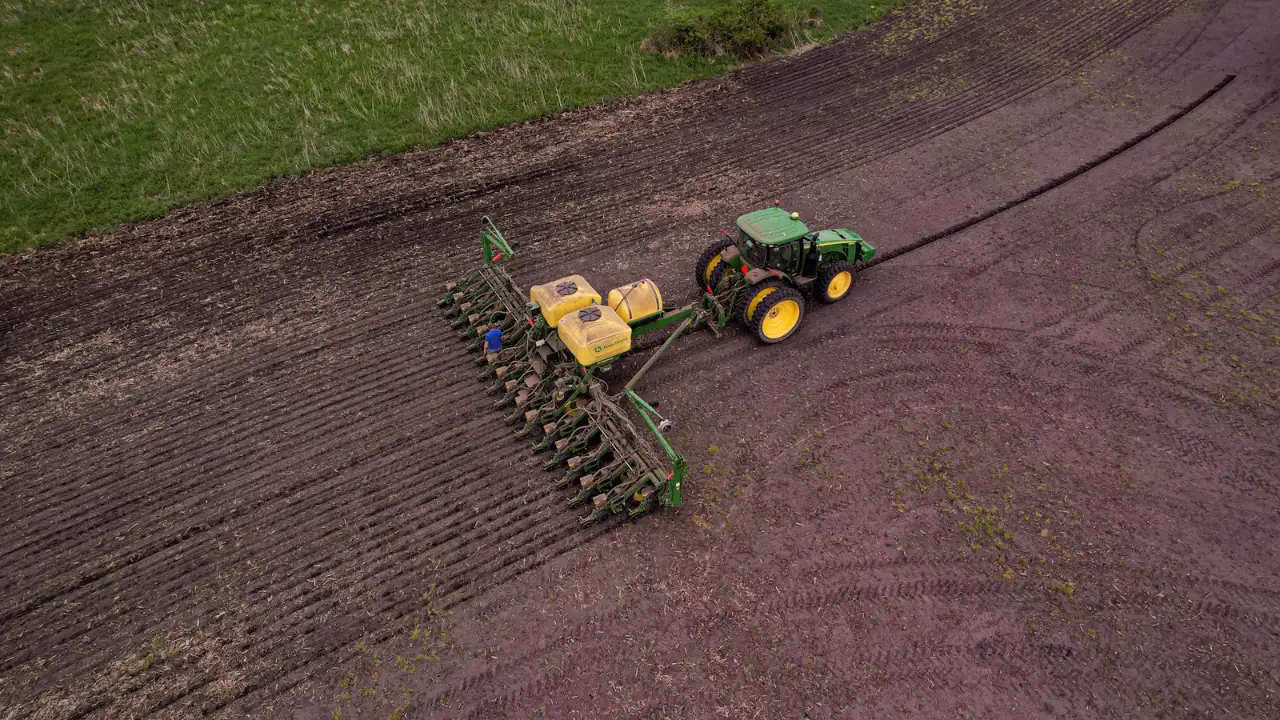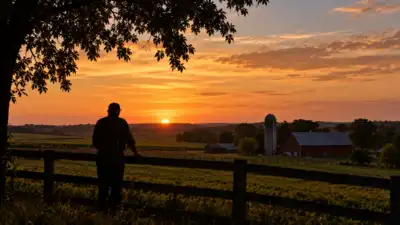
AI REPRESENTATION: Don Doll’s Michigan farm, where he chose to keep the land intact for future generations of his family | ChatGPT
Doll and his late wife, Therese, had raised all six children on the land, which had remained in the same family for more than 150 years, and had owned the property since 1962, according to Legacy Land Conservancy’s account of the farm’s protection. The agreement made sure that Don Doll’s 186-acre farm remained privately owned while limiting future development, and Legacy Land Conservancy helped facilitate the protection through its work with the county’s parks and recreation commission. The farm also lies about a quarter-mile from more than 400 additional acres of contiguous protected land, including Goose Lake State Game Area and Washtenaw County Parks and Recreation Commission’s Koenn Preserve, according to the conservancy’s 2017 account. Doll was still active on the farm when the protection was announced in 2017, and at nearly 90, he said that he wanted the property to stay exactly the way it was.
Because he was worried that his six children might have to divide the property after his death, don Doll was almost 90 years old when he secured permanent protection for his 186-acre Michigan farm in 2017. Washtenaw County’s Natural Areas Preservation Program buys conservation easements so that they can restrict development without requiring landowners to sell their property, and the programme considers agricultural soil quality, development pressure and links to existing protected land, according to Legacy Land Conservancy . The Doll property had an impressive location and agricultural value, and Legacy Land Conservancy reported that the farm had high-quality soil, faced development pressure, and adjoined other protected land, with its easement connecting two existing conservation easements.
It sits off Heim Road near Chelsea in Washtenaw County and includes rolling fields, woodland, and wetlands. Michigan also has a state-level framework for agricultural conservation easements that restrict non-farm development and also allow private ownership to continue. The US Department of Agriculture’s Natural Resources Conservation Service describes its Agricultural Conservation Easement Program as a source of financial and technical assistance for eligible partners who are working to conserve agricultural land and wetlands, and the programme’s agricultural land easements limit non-agricultural uses while keeping farms in production. Legacy’s account does not identify the exact division of funding for Doll’s easement or provide a detailed schedule of restrictions for the property, but it does state that Washtenaw County’s programme purchased the farmland conservation easement and that Legacy helped negotiate and complete it. The agreement put permanent development restrictions in place while keeping the farm in private hands.