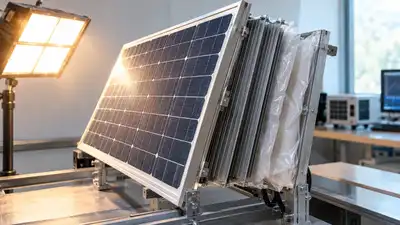
AI Representation: A photovoltaic panel fitted with aluminum cooling fins and folded plastic bags at the rear. Image credits: Chatgpt
Aluminum fins helped release heat from the panel A 2019 study by Ammar Alkhalidi, Mohamad K. Solar panels can lose some of their electrical performance as they heat up under strong sunlight. Scientists have tried several ways to limit heat on panels without electric cooling, including using affordable materials that would normally be thrown away. One study used a cheap combination of aluminum heat sinks and folded plastic bags mounted on the rear of a solar panel. These results suggest that a non-electric cooling system can improve solar panel performance, at least under laboratory conditions. Discarded plastic bags could thus have another application in managing heat. Khawaja and Abdel Ghaffar Al Kelany, Investigation of Repurposed Material Utilization for Environmental Protection and Reduction of Overheat Power Losses in PV Panels , published in the International Journal of Photoenergy , examined whether repurposed plastic materials could help cool photovoltaic panels and reduce heat-related power losses. The researchers tested the panel under halogen-lamp simulator conditions, then added fitted heat-extraction fins before layering in repurposed HDPE and plastic bags.
They report that this passive cooling approach lowered panel temperature and raised power output at 1000 W m⁻², with the perforated fin design chosen for its lower weight and better airflow. Aluminum fins and folded plastic bags increased output power by 11.6% The biggest performance increase came from combining aluminum cooling fins with folded plastic bags on the back of the panel. At a simulated irradiance of 1,000 watts per square metre, this configuration produced 11.6% more output power than the unmodified panel and lowered the panel’s temperature by 22.7%. Aluminum fins alone raised output power by 11.5%, so the bags added only a small further gain. Palyvos, published in Solar Energy in 2009, examines the relationship between module temperature, electrical efficiency, and power output. The review also emphasizes the typical test condition of 25°C and 1000 W/m² and explains the temperature effect using the well-known negative temperature coefficient. Licensed CC BY-SA 4.0.
Because the cooling method was passive, no fans or pumps were used. Because photovoltaic modules generally lose electrical performance as their operating temperature rises, lower panel temperatures can improve electrical performance Heat management matters. But the observed effect was reached only in a laboratory setting, not necessarily reflecting results that could be achieved in outdoor installations due to variations in sunlight, air moisture, and wind.
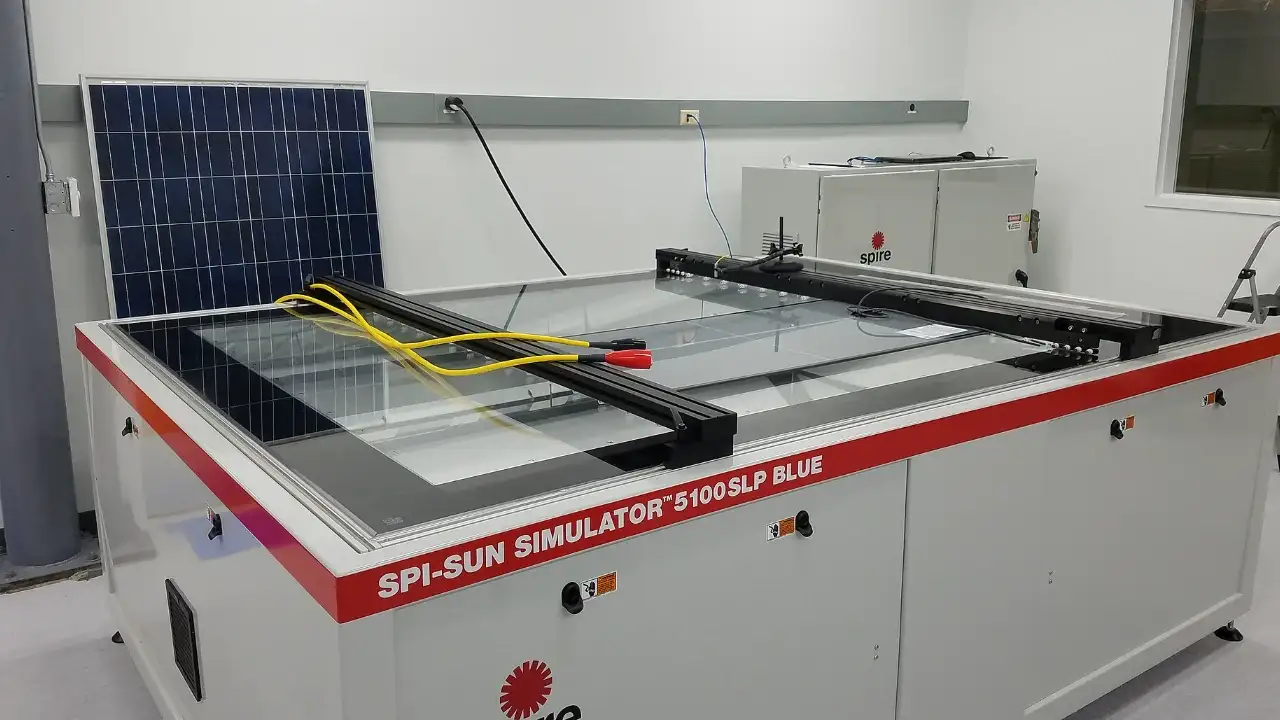
The perforated aluminum fins were attached to the back of the panel to increase its surface area for heat exchange, and the perforations let air move through them. The study also tested the fins with ground HDPE, but the highest output came from the folded plastic bags. The review On the temperature dependence of photovoltaic module electrical performance: A review of efficiency/power correlations by E. Skoplaki and J. A. In the opinion of the authors, the review is dedicated to one-sun commercial silicon modules and considers how temperature affects the major electrical characteristics, particularly efficiency and maximum power. A real solar simulator in a university clean-energy laboratory. Image credits: Wikimedia Commons The energy production of solar panels requires sunlight, but the heat caused by high irradiance lowers their voltage and peak power. Thus, removal of excessive heat could enable a panel to produce more efficient electric energy using the same amount of sunlight. In the above-mentioned study by Alkhalidi and colleagues, the possibility was tested with a passive cooling system made of aluminum fins and plastic. Since this system did not use any equipment for active cooling, it had the potential to increase the efficiency of panels without requiring additional electricity consumption. Outdoor testing is needed to establish practical benefits The combination of these materials with aluminum fins represents a simple way of temperature control and reuse of waste material. There are some practical issues that need to be investigated. For example, how does the change of outdoor conditions such as varying light, wind, dust, and humidity influence the cooling process? The researchers should study the system’s durability, maintenance, and costs of its installation before determining its feasibility. This experiment showed that a passive cooling system using aluminum fins and folded plastic bags can increase a solar panel’s power under laboratory conditions. You use AI every day. Now get your AI Quotient. Take the AIQ test.