
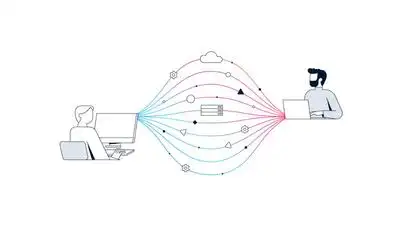
Image credit: Cisco
In a post on X, Musk wrote: “SpaceX closed $40B of debt for GPUs, but we’re investment grade and have Starlink & launch revenue. That means the 200+ neoclouds are going to see guppy-level death and consolidation. SpaceX raised $40B in debt just for graphics processing units (GPUs). They offer bare-metal access, and their servers typically hold 4-8 GPUs each.
Because it is investment grade and earns money from Starlink and launches, musk said it could do so. Because they are built from the ground up for GPU rental, neoclouds differ. They also use very fast networking so that GPUs can talk to each other without delay
Elon Musk has predicted that most “neoclouds”, the startups that rent out AI computing power, will not survive as money gets harder to raise. Elon Musk said lenders have turned away from firms that rely only on AI data centres. “As of the past few weeks, debt markets have almost entirely shut off access to money for any company that doesn’t have substantial revenue independent of AI data centers,” he wrote.
Some will make it through, but not many. His post shows how costly it has become to build AI computing capacity. Cisco defines neoclouds as specialised cloud providers dedicated to AI workloads. They use GPUs to serve enterprises, model builders and hyperscalers. They offer on-demand access, reserved instances and platform-as-a-service, covering everything from training large models to running them. Hyperscalers are the giant global providers such as AWS, Azure and GCP.
Because neocloud providers are AI-native by design, they align all platform decisions with AI workload characteristics rather than general-purpose IT requirements, focused AI optimisation:.
Higher GPU utilisation: By minimising network variability and “noisy-neighbour” effects, neocloud providers ensure their neocloud infrastructure maintains consistent GPU throughput. Cisco says neoclouds are not a universal replacement for traditional clouds. That leaves them dependent on AI-workload revenue, which is the profile Musk says lenders are avoiding.
As explained by Cisco, Neocloud providers design their services to address specific AI infrastructure challenges, delivering several key benefits for enterprise workloads. Faster model training: Neocloud platforms utilise a deterministic neocloud architecture to reduce synchronisation delays between GPU nodes. This approach shortens training cycles for large models, improving time to insight and reducing infrastructure waste. This higher utilisation translates directly into improved cost efficiency for the organisation. Infrastructure transparency: Unlike highly abstracted hyperscale services, neocloud providers often offer deeper visibility into hardware topology and network characteristics. This transparency allows technical teams to better optimise their distributed workloads. Scalable performance and simplified operations: Neocloud providers leverage high-bandwidth Ethernet fabrics and carefully engineered topologies to support near-linear performance scaling. This specialised design simplifies management across both front-end and back-end networks. they are not a universal replacement for traditional cloud platforms While neocloud platforms provide performance advantages. Cisco lists some of the advantages of neoclouds that include: Narrower service portfolios: Hyperscale providers offer extensive managed services, including serverless functions, managed databases, analytics platforms, and global content delivery. Neoclouds typically focus on infrastructure-level AI services rather than full application ecosystems. This makes them less versatile for wider, all-encompassing applications. Geographic footprint: Many neocloud providers operate in fewer regions compared to global hyperscalers. Organisations with strict data residency requirements must carefully evaluate availability. Operational maturity: Teams accustomed to platform-as-a-service models may need additional expertise to manage lower-level infrastructure constructs such as network topology awareness or distributed training optimisation. Integration complexity: Hybrid architectures that combine neocloud AI clusters with traditional IT systems require secure connectivity, policy alignment, and careful workload placement decisions. Each limit it names adds to the funding pressure Elon Musk describes: Narrow service range: Neoclouds mostly sell AI infrastructure, not full application ecosystems. Fewer regions: Many operate in fewer locations than hyperscalers. Customers with strict data residency rules may have to look elsewhere, which shrinks the pool of buyers. Operational maturity: Teams used to managed platforms may need extra expertise to run lower-level infrastructure. That can slow adoption among firms that want simplicity. Integration complexity: Linking neocloud clusters with existing IT systems needs secure connectivity, policy alignment and careful workload placement. Smaller firms with thinner resources may struggle to support this. You use AI every day. Now get your AI Quotient. Take the AIQ test.