
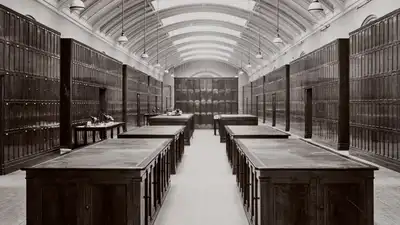
As a Herbarium in 1950 (Image: The Trustees of the Natural History Museum London)
Visitors can also touch a replica jaw from one of Britain’s earliest known domesticated dogs, which lived around 14,300 years ago and offers evidence of the long bond between people and dogs. The exhibition moves well beyond fossils and skeletons. A miniature model of a Crystal Palace dinosaur shows how early scientists and artists pictured prehistoric life. Jenny, a Victorian skeleton of a monk seal, reveals how wild animals were once exploited for entertainment. Some objects are far more ordinary. A toy from the Star Wars films, made in the 1980s and now encrusted with bryozoans (tiny water-dwelling animals), shows how everyday items can take on new meanings through contact with nature and the passing of time. The handaxe, meanwhile, is an object whose discovery transformed understanding of when humans first existed.
A visitor-led experiment that will shape the permanent gallery planned to open in 2029
Nature and Us opened to the public on 16 September.
Claire Andrews, Head of Community Engagement at the Natural Environment Research Council, said in the museum’s announcement that the space would help audiences explore their connection with nature. She added that she was confident it would captivate minds and encourage people to examine their own relationship with the natural world and how science can drive action for the planet. The Natural Environment Research Council, part of UK Research and Innovation, is the lead funder. Björn Savén is the associate funder, and the museum also thanked Ned F. Kuehn, Roger Gahagan, the Edith Murphy Foundation and The James & Shirley Sherwood Foundation for their support.