
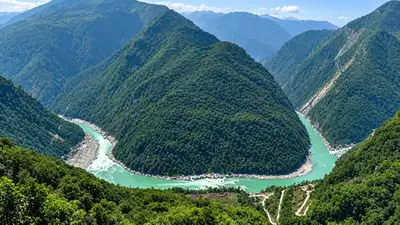
Estimated to cost around $168 billion, the project is expected to comprise five cascade hydropower stations.
Chinese researchers have warned that the Brahmaputra River could witness increased runoff and a higher risk of floods over the course of this century, raising fresh concerns over the potential implications of Beijing’s $168-billion mega dam project on the river in Tibet. Researchers from the Chinese Academy of Sciences and Yunnan University reconstructed the river’s runoff history from 1325 to 2020 using tree-ring width data collected from the southeastern Tibetan Plateau. The findings were published in the journal China Science Bulletin on October 8, the Hong Kong-based South China Morning Post reported on Monday, according to PTI.
What we know about the project “These results provide a long-term perspective on hydroclimatic variability in the Yarlung Tsangpo River and a scientific basis for assessing future water-resource risks,” the researchers said. Combining the reconstruction with climate data, they developed a model projecting an increase in river runoff under future climate scenarios, alongside a possible rise in high-runoff events such as floods. The river, known as the Yarlung Tsangpo in Tibet, flows into India as the Siang in Arunachal Pradesh before becoming the Brahmaputra further downstream. It is a crucial source of water for agriculture, livelihoods and ecosystems across northeastern India and Bangladesh. They called for projected changes in runoff to be considered while planning water-resource development and storage infrastructure, as well as when assessing risks involving rivers that cross international borders. Runoff is a natural process in the water cycle in which excess water flows over the land or through the soil into rivers, streams, lakes and other bodies of water. It occurs when rainfall, melting snow or irrigation water exceeds the amount that the ground can absorb. excessive runoff can cause environmental and property damage Although runoff helps replenish water sources. Runoff can carry pollutants, including fertilisers, pesticides, oil and other chemicals, into surface water and groundwater, harming wildlife and potentially affecting human health. Excessive runoff can also cause flooding, soil erosion and property damage, particularly in urban areas with impermeable surfaces. Measures such as effective drainage systems, vegetation cover and mulch can help reduce runoff and minimise its harmful effects.
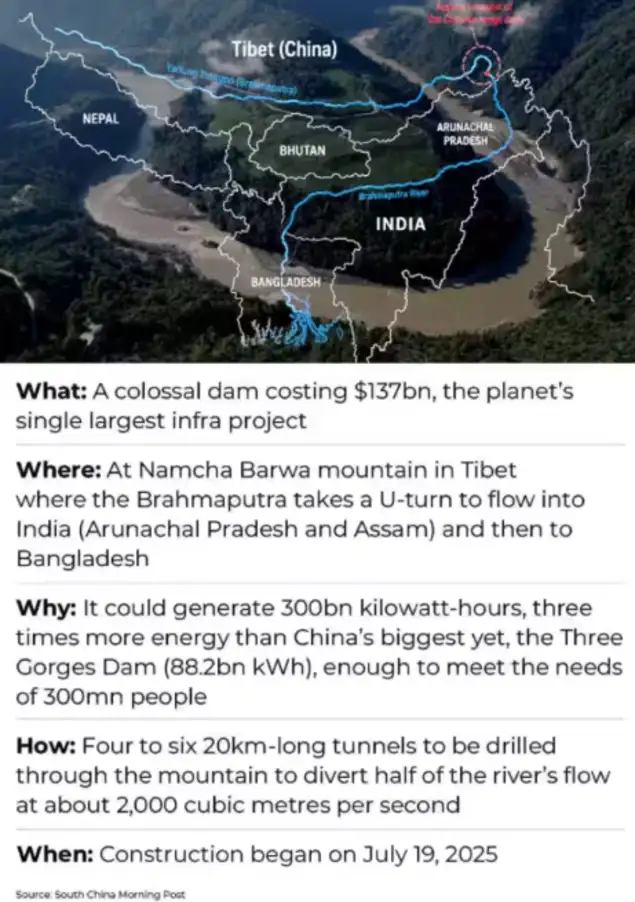
Estimated to cost around $168 billion, the project is expected to comprise five cascade hydropower stations. The Himalayan region’s vulnerability to cascading natural hazards was also highlighted by flash floods along the China-Nepal border on August 26, triggered by an ice-and-rock avalanche and the subsequent collapse of a temporary river blockage. The disaster killed nearly 1,500 people and left more than 5,500 missing in Nepal and China, according to the report.
its scale and upstream location have raised questions about downstream water flows, flood management and ecological impacts While the project is primarily intended to generate electricity. A large upstream project could give China some ability to regulate the timing and volume of releases, although the extent of any impact on India would depend on its design and operation. The latest findings add to scientific concerns about the risks associated with the project. In July, Chinese geologists warned that an active fault line beneath the planned dam could threaten its structural stability. They urged engineers to strengthen vulnerable slopes and introduce protective measures against landslides and rock collapses. You use AI every day. Now get your AI Quotient. Take the AIQ test.