
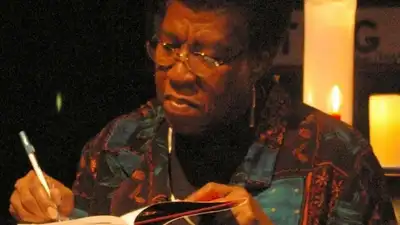
Octavia E. Butler, the science-fiction writer who woke up at 2am to write before going to work as a dishwasher and potato-chip inspector
Writing workshops, especially the Clarion Science Fiction and Fantasy Writers’ Workshop in 1970, taught her about craft, discipline, and professional circles. But that’s how her first novel, Patternmaster, finally hit shelves in 1976. ‘Parable of the Sower’, published in 1993, introduces Lauren Olamina: a young Black woman fighting to survive in a California devastated by climate change, inequality, and violence.
Butler’s work won two Hugo Awards, two Nebula Awards, and finally, in 1995, the MacArthur “genius grant,” making her the first sci-fi writer to earn the honor. That’s right. Before she became one of the most influential science-fiction writers of the 20th century, Octavia E. Butler spent years building an extraordinary literary career around ordinary jobs, financial uncertainty, and a writing routine that began long before sunrise. Her path to literary success is the stuff of sheer determination. She didn’t start out in some fancy writer’s room. In fact, she woke up at 2am, poured herself into her stories, and then slogged through jobs as a dishwasher, potato-chip inspector, and telemarketer. Growing up, Butler was painfully shy and battled dyslexia. She found comfort and escape in books, many of which her mom brought home after cleaning employers’ homes. That habit gave Butler a constant library for her budding imagination. She started writing early and, after watching a science fiction film she thought was lousy, decided she could do better. That spark led her through Pasadena City College, then Cal State LA and UCLA. Early on, Butler’s days were tough. Rejection slips piled up, and money was always a worry. But instead of waiting for inspiration or the perfect schedule, she built her writing routine around her jobs. Up before dawn, writing her heart out, then heading off to whatever job paid the rent. It was brutal: washing dishes, inspecting snacks, pitching calls as a telemarketer, and so on. That book started the series that set her voice apart in sci-fi. Three years later, ‘Kindred’ broke through, taking a time travel twist to dig deep into the realities of slavery in America. Then came the Parable novels, which hit even closer to home. Its sequel, ‘Parable of the Talents’, dives into authoritarian politics, religious extremism, and the struggle to forge community from chaos.
Imagine working ordinary jobs day after day, fighting financial uncertainty, and still sticking to the discipline of showing up early at dawn to write. That’s not just being dedicated to a certain routine; it’s the execution of sheer will that eventually shaped Octavia E. Butler into who she was.