
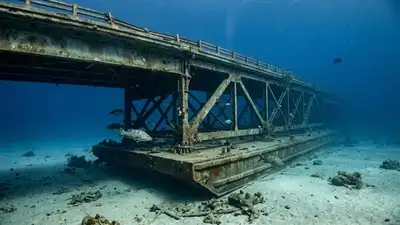
AI-generated representative image showing a retired steel highway bridge resting on a barge structure on the Atlantic seabed, where fish gather around the artificial reef. Credits – Gemini
South Carolina chose a different fate for an old Highway 41 bridge in 2017. After carrying traffic over the Wando River near Charleston since 1939, the steel span was repurposed as part of an offshore artificial reef, where it provides habitat for marine life. It measured 168 feet (about 51 metres) in length. The combined structure was taken about 50 miles (80 kilometres) off Charleston and deployed in more than 300 feet (91 metres) of water as part of the South Carolina Memorial Reef. From highway to seabed In August 2017, the old bridge was removed as vehicles began using the replacement span nearby. The bridge was then secured to a retired barge measuring 130 feet long. The combined structure was deployed at the Charleston Deep Reef in October 2017, providing 44 feet of vertical relief above the seabed. The South Carolina Department of Natural Resources estimated the cost of purchasing, cleaning and transporting the structure at $180,000, with contributions expected from conservation groups and private donors. The project is located within the Charleston Deep Reef, a permitted marine protected area that Marlin magazine reported was established in 2009 before reef material was placed there. Grouper and billfish The first structures went down in 2014. By the time the bridge came out in 2017, the department said, those barges were already doing well at attracting snowy grouper along with big billfish such as blue marlin and sailfish. The bridge and its barge were deliberately deployed on the Charleston Deep Reef in October 2017. The department’s 2018 annual report lists the 168-foot bridge and the 130-foot barge among the structures placed on the reef. The same report records 17 reef construction projects at 15 sites that added more than 300,000 cubic feet of hard bottom habitat to South Carolina’s offshore reefs during the fiscal year.
The tournament coordinator for the Governor’s Cup Billfishing Series said the number of billfish caught and released in and around the reef that summer had been unlike anything seen before, and she expected the bridge to make the area livelier still.
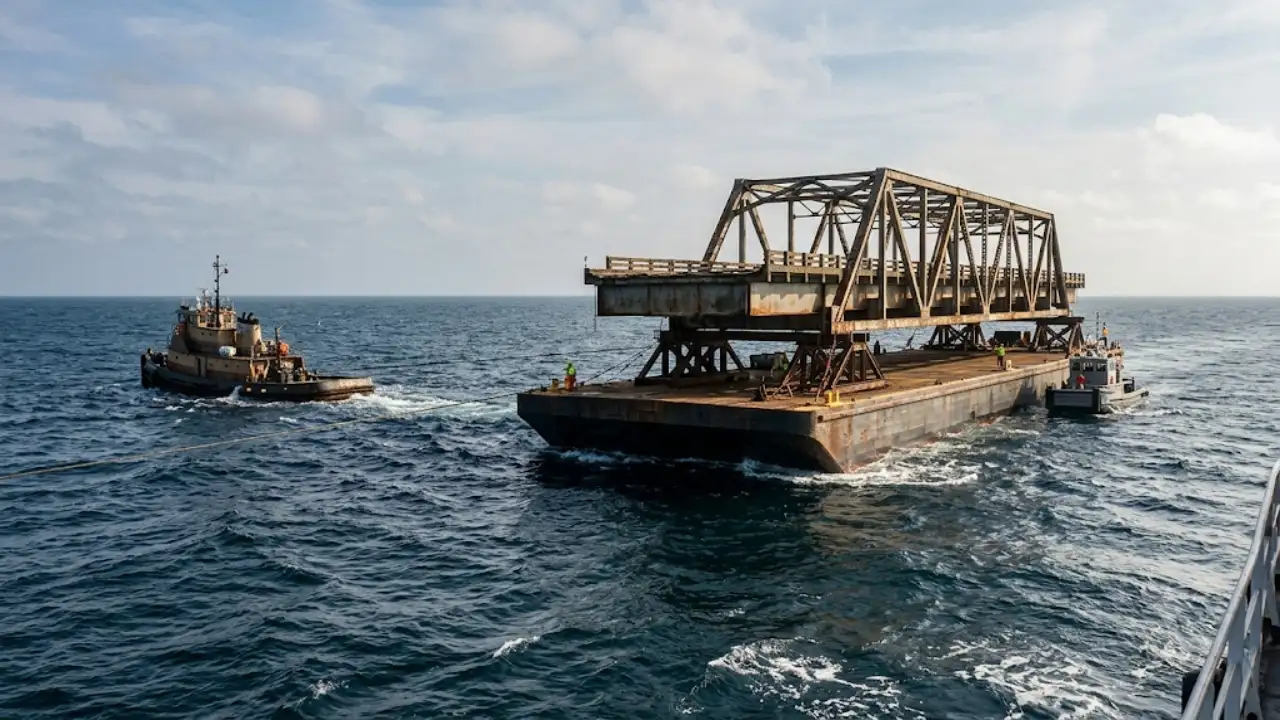
Robert Martore, the department’s artificial reef coordinator, said the earlier barges had worked so well for deepwater grouper that extra material could only add to the area’s productivity. The South Carolina Department of Natural Resources says artificial reefs are usually placed on seabeds with little natural relief. Bridges do not last forever, and many are eventually sent for scrap. The steel swing bridge once connected Mount Pleasant with the area near the Francis Marion National Forest across the Wando River. After the replacement bridge opened, the old span was cleaned and attached to a retired barge. Crews lowered the old structure by crane onto a barge and cleaned it to remove materials that could harm the marine environment. The project required substantial funding as well as engineering work. The Memorial Reef fund was established by independent anglers seeking to honour family members and friends through artificial reef projects. The South Carolina Governor’s Cup Advisory Board worked with the department to support the initiative. They were two retired barges piled high with shipping containers, truck chassis and radio towers. It also reports that acoustic receivers detected highly migratory species passing through the reef areas at particular times of year, including animals from as far away as Massachusetts and Florida, as well as local migrants such as sturgeon and sea turtles Reports on the Charleston Deep Reef have documented deepwater snapper and grouper around its structures, alongside billfish that attract anglers to the area. The permitted reef site was intended to provide additional habitat for vulnerable snapper and grouper species while supporting offshore fishing opportunities. AI-generated representative image showing a retired steel highway bridge secured to a marine barge for transport to an offshore artificial reef site. Credits – Gemini Why states sink old structures Artificial reefs serve a similar function in the temperate waters off South Carolina, where tropical coral reefs do not naturally form. These structures provide habitat, shelter and spawning grounds for fish while attracting recreational divers and anglers. For nearly four decades, the state has built artificial reefs using a range of retired structures, including bridge spans, military vehicles and subway cars.
It was placed on the seabed rather than buried beneath sediment, adding hard structure and habitat to a previously sandy stretch of ocean floor.
There is also an environmental argument. Old material used as habitat keeps it out of landfills, though anything meant for a reef has to go through a long and thorough cleaning procedure before it’s sunk. South Carolina now has dozens of reef sites, and the agency makes their location data available as a free download for marine GPS devices so fishing and diving vessels may discover them. You use AI every day. Now get your AI Quotient. Take the AIQ test.