
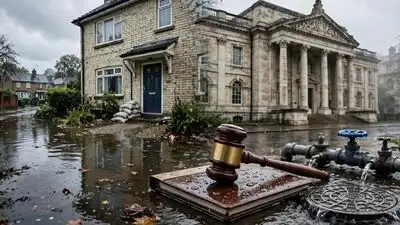
PC: AI Generated
A London homeowner has been ordered to repay £225,000 to Thames Water after the High Court found that she pursued a compensation claim describing her flood-hit property as unsaleable even though she had already sold the property. Karen Imber’s home in Woodford Green, Essex, suffered sewage flooding in 2006, 2007 and 2014. However, Thames Water later discovered that Imber had accepted an offer of £780,000 for the property before mediation and completed the sale on 3 August 2023. On 23 October 2026, the High Court rescinded the settlement after finding that the claim involved fraudulent misrepresentation and dishonesty. Thames Water had agreed to pay £225,000 on 6 September 2023 without being informed that the property had been sold. The judge applied the honesty test established by the Supreme Court in Ivey v Genting Casinos (2017), considering the defendant’s knowledge and beliefs before assessing her conduct against the standards of ordinary decent people. The settlement was rescinded, and Imber was ordered to repay £225,000.
He said it was impossible to imagine that the company would have reached the same agreement if Imber had corrected the statement. The court found that the completed sale fundamentally changed the factual basis of her claim for a reduction in property value. The judge rescinded the settlement agreement and ordered Imber to repay the full amount. Deputy Master Marzec found that Thames Water had relied on the false representation when agreeing to the settlement. He held that continuing to pursue and settle a claim based on a property being unsaleable, without disclosing that it had been sold, would plainly be regarded as dishonest. The court found no real prospect that Thames Water would fail to establish misrepresentation, reliance and dishonesty. Disclaimer: This article is based on publicly available information. The Times of India has not independently verified the court proceedings, settlement details, repayment order, or other circumstances mentioned. The information should not be interpreted as an independent legal assessment or as confirmation from the parties involved.