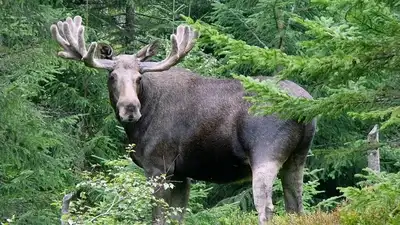
An elk in a forest. Image credits: Wikimedia Commons
Between December 1997 and March 2002, wildlife authorities released approximately 1,550 elk in southeastern Kentucky. The state now has an estimated population of more than 10,000 elk, according to the Kentucky Department of Fish and Wildlife Resources (KDFWR). The animals reportedly occupy a designated restoration zone covering 16 counties and around 4.1 million acres. In 1997, the KDFWR conducted a habitat feasibility study and set up public meetings to assess whether southeastern Kentucky could support a free-ranging herd. In December 1997, the captures began, and the animals underwent disease testing before being transported to Kentucky. Releases took place through March 2002, with Harlan, Knott, Leslie, Letcher, Martin, Perry and Pike counties being the initial release sites. A 16-county zone with varied elk distribution The state’s elk management zone encompasses approximately 4.1 million acres across 16 counties in the southeastern part of the state. The original zone included 14 counties, with Whitley and McCreary counties added in 2004 to provide a travel corridor between Kentucky’s restoration zone and Tennessee’s elk restoration area. However, elk numbers are not distributed evenly across all 16 counties. Image credits: Wikimedia Commons In the winter of December 2022, one important step occurred when wildlife officials relocated 43 elk from neighbouring counties to McCreary County. The first modern hunt of the state took place in 2001, when 12 permits were issued, and six bulls and six cows were harvested. In 2024, the department reportedly made 500 elk permits available. The state’s wildlife department estimates the current population at more than 10,000 elk using two models: a life-table model and statistical population reconstruction.
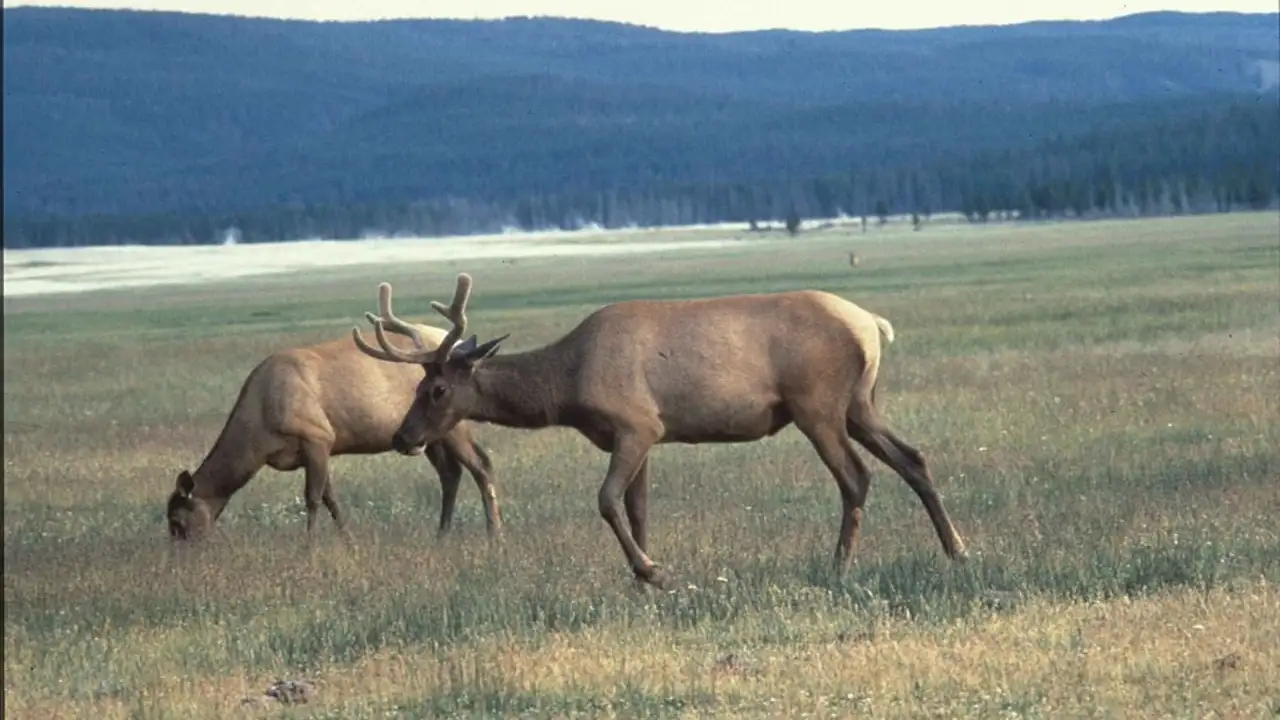
The programme has therefore moved past its original task of returning elk to Kentucky. From restoration to long-term population management As the herd became established, Kentucky introduced regulated hunting as part of its management programme. This release began a restoration programme that has since established one of the largest elk herds in the eastern United States. The animals were captured in six western states and transported to Kentucky, where elk had disappeared during the 19th century. Bringing native species back to Kentucky Historical data indicate that elk once roamed the state, but habitat degradation and overhunting eliminated its population by the mid-1880s. Wildlife officials and conservation advocates were looking into ways to restore the species to its historical range by the late 20th century. The agency identified suitable land and found substantial public support for the idea, thus allowing the restoration initiative to proceed. The department obtained elk from six western states: Arizona, Kansas, New Mexico, North Dakota, Oregon and Utah. The landscape includes deciduous forests, active and reclaimed surface mines, agricultural or cleared land, and smaller areas for urban development. KDFWR’s report suggests that many animals remain concentrated around the original release sites, while some peripheral areas have lower densities or few elk. The department has now undertaken additional translocations within the state, moving animals from areas with established populations to locations where their presence remains limited, to address this uneven distribution challenge. A couple of elk in nature. The operation helped establish a new population in an area of the county that had suitable habitat but lacked a resident herd. KDFWR described the move as the final step in its restoration activities, while noting that the programme continues to manage elk distribution and population levels. Subsequently, the number of permits changed as officials adjusted hunting opportunities and management objectives. These methods draw on data used by wildlife managers to estimate abundance; however, the resulting figure is not a direct count of every animal across the state. Wildlife managers now focus on maintaining the herd, managing its distribution, monitoring population trends and balancing habitat needs with opportunities for hunting and wildlife viewing. You use AI every day. Now get your AI Quotient. Take the AIQ test.