
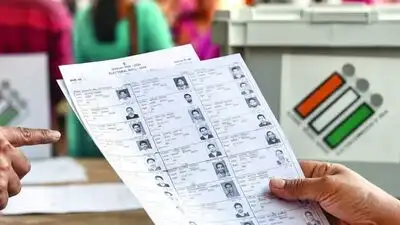
The electoral revision in Karnataka aimed at verifying the eligibility of voters through a meticulous process
The draft rolls on Aug 24 left out 1.08-cr names, while 4.55-cr electors made the final list published on Oct 27. In this explainer, Pearl D’souza traces how the exercise unfolded, how voters could establish their eligibility, and what the numbers reveal The road to final rolls JAN 1, 2025 – JUN 16, 2026 | Applications before the freeze Karnataka received 73.03 lakh applications before the rolls froze. These included 16.24 lakh Form 6 applications for inclusion, 604 Form 6A applications from overseas electors, 15.82 lakh Form 7 applications for deletion and 40.95 lakh Form 8 applications for modifications. JUN 16, 2026 | Rolls frozen Karnataka had 5.54 crore electors when the rolls were frozen. Bengaluru’s electorate stood at 1.03 crore. JUN 30 – AUG 17 | Enumeration, three deadlines House-to-house enumeration began on June 30, initially scheduled to end on July 29. Following concerns over the workload on booth-level officers (BLOs), the deadline was extended to Aug 8 and then Aug 17. During this phase, 12 BLOs died in incidents involving heart attacks, illness or accidents. AUG 8–17 | ASDDO list remains large The list of electors marked Absent, Shifted, Duplicate, Dead or Others (ASDDO) stood at 1.09 crore on Aug 8. By Aug 17, it had fallen to 1.07 crore. The number of Form 6 applications rose from 3.83 lakh to 4.28 lakh over the same period. AUG 17–24 | Lists shared for scrutiny ASDDO lists were shared with political parties to identify errors. AUG 24 | Draft rolls published The draft list contained 4.46 crore electors, with 1.07 crore names missing. About 43.8 lakh electors were scheduled for notices: 23.45 lakh had not mapped themselves to 2002 records, while 20.35 lakh had discrepancies in their own or their parents’ details. AUG 24 – SEPT 23 | Claims, objections and hearings Electors were called to hearing centres, where long queues and inadequate seating were reported. From September 11, families could attend hearings for senior citizens, sick persons, persons with disabilities and electors overseas. SEPT 24 – OCT 22 | Notices disposed of, disputes intensify Officials processed notices and claims. Reports of bulk Form 7 deletion applications from places including Bhalki and Bableshwar triggered political allegations. On October 1, Chief Minister DK Shivakumar and state ministers met the chief electoral officer over alleged mass-deletion attempts. OCT 7–12 | Complaints and protests Residents from Vijayapura who said they had been wrongly declared dead held a media briefing on October 7; an FIR was subsequently filed against BJP MLA Basanagouda Patil Yatnal. The following days saw protests, including a large gathering organised by Citizens for Justice and Peace at Freedom Park on October 8 and an AISA student march on October 11 that prompted the chief minister to order a probe into alleged police excesses. On October 12, the state said it had nearly met its deadline for issuing notices. Some Form 6 applicants began receiving EPIC numbers by SMS. OCT 22–27 | Final checks and publication The hearing and claims period concluded on October 22. The centralised rolls were sent to electoral registration officers for final checks before the scheduled publication of the final list on Oct 27 How revision worked Mapping the voter Each elector’s details were checked against earlier electoral records, including the 2002 rolls.
Officials said an ASDDO classification did not automatically mean final deletion; affected electors could seek inclusion during the claims period. Actor Prakash Raj said he had been marked as shifted and had not received an enumeration form at his new address. An inquiry was ordered; officials later said some applications had been withdrawn or rejected for not meeting prescribed requirements.
From freezing of electoral rolls and door-to-door enumeration to disputed deletions, hearings and political protests, the special intensive revision became a months-long exercise in verifying voter eligibility. His name was absent from the draft rolls. Outstation students were subsequently accommodated on a case-by-case basis, including through video calls. The link could be established through the elector’s own entry or that of a parent. Classify the records
Enumeration forms were distributed at addresses recorded in the 2026 rolls. Issue notices & conduct hearings After draft rolls were published, electors who could not map themselves to 2002 records, or whose details contained discrepancies, were scheduled for notices and hearings. Claims and objections Electors could seek inclusion through Form 6, object to entries through Form 7, or request corrections and shifting of residence through Form 8. A name missing from the draft list was not automatically a final deletion; eligibility had to be considered through the prescribed process Deletion, addition now complete When SIR began Electoral rolls as on June 16, 2026 5.54 cr After SIR ended Final rolls published on Oct 27, 2026 4.55 cr 99.76 lakh fewer electors 2.25 cr 2.29 cr 2.76 cr 2.25 cr During the process 5.54 cr Enumeration forms generated 4.46 cr Forms submitted and digitised (80.52%) 1.08 cr Forms not submitted; these electors were not enumerated in the draft roll 43.82 lakh Notices generated and delivered; hearings recorded as completed 10.08 lakh Additions during claims and objections 1.88 lakh Deletions during claims and objections 8.96 lakh Modifications to electoral entries 61,867 Electors marked ineligible for the final roll 8.20 lakh more electors. Net increase between the draft electorate of 4.46 lakh and the final electorate of 4.55 lakh 99.76 lakh reduction and 8.20-lakh increase use different comparison points. Additions and deletions recorded during claims and objections should not be treated as a complete explanation of the overall change Other key figures in final rolls 6.83 lakh Young electors aged 18-19 60,923 Polling stations (up from 59,050) You Can Also Check: Gold Rate in Bengaluru | Silver Rate in Bengaluru | Bank Holidays in Bengaluru | Public Holidays in Bengaluru | Bengaluru AQI | Weather in Bengaluru | Petrol Price in Bengaluru | Diesel Price in Bengaluru | CNG Price in Bengaluru | LPG Price in Bengaluru Stay updated with the latest Bengaluru news.
Enumeration data was used to classify electors according to whether their details could be mapped to earlier rolls. Cases requiring further scrutiny were flagged for verification. Verification of eligibility Electors recorded as Absent, Shifted, Duplicate, Dead or Others were placed on the ASDDO list. Absence, relocation, refusal to sign or a duplicate entry lead to different classifications, which were subject to verification. Notices gave affected electors an opportunity to explain their circumstances and establish eligibility. The cases were examined before decisions were taken on inclusion. The authorities examined these applications before finalising the rolls. Finalising the electoral rolls The final list incorporated eligible additions, accepted corrections and decisions on disputed entries. Download the TOI App.