

The Central Consumer Protection Authority (CCPA) has fined Shangri-La Eros New Delhi’s restaurant, Mister Chai, Rs 1 lakh for automatically adding a 10% service charge to customers’ bills. The order, dated October 22, 2026, directs the restaurant to stop collecting the charge by default or under any alternative name. The CCPA found the practice inconsistent with its July 4, 2022, guidelines on service charges in hotels and restaurants. It also directed the establishment to submit a compliance report within 15 days of receiving the order. Shangri-La Eros New Delhi has said it discontinued automatic service charges across its dining outlets and services from October 1, 2026.
The ruling and its implications for diners have brought renewed attention to consumer rights around restaurant billing in India. The action follows consumer complaints alleging that the restaurant imposed the charge without obtaining customers’ consent. Under the revised practice, customers’ bills reflect the prices of items ordered and applicable government-mandated taxes. Here are five things customers should know about their rights when dining out.
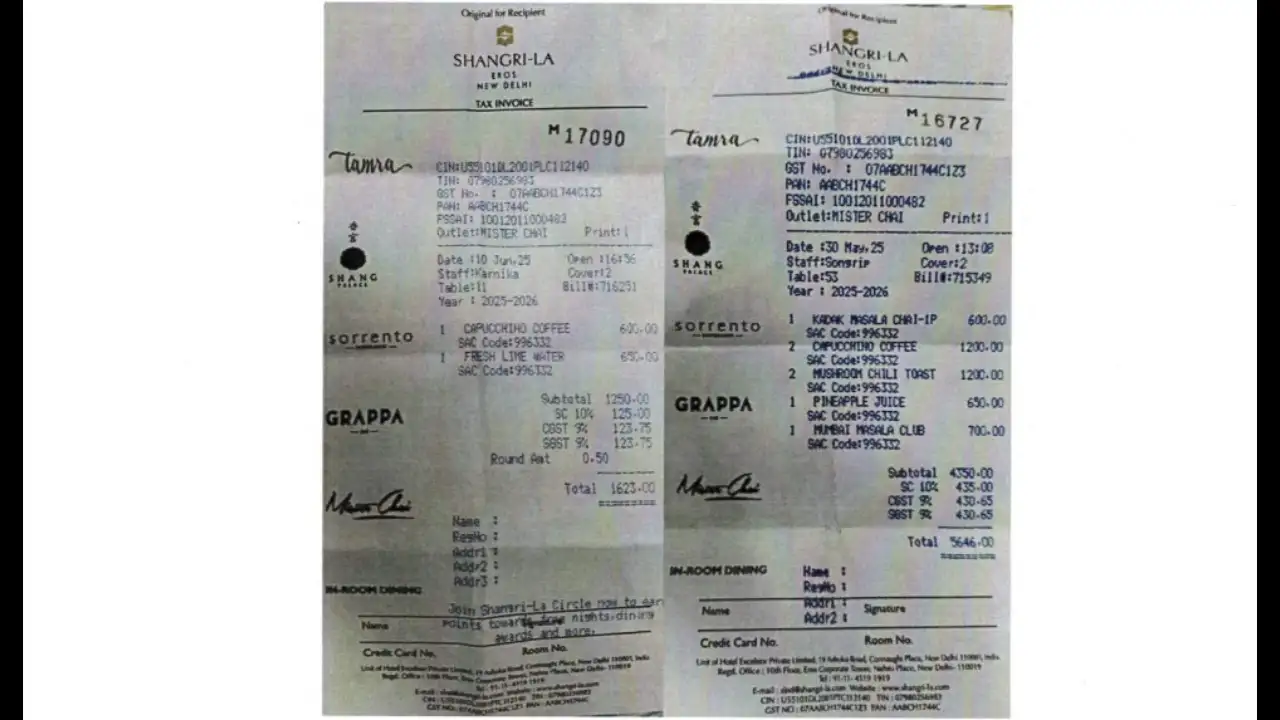
Under the CCPA’s 2022 guidelines, hotels and restaurants cannot automatically include a service charge in the food bill or add it by default. They can also submit a complaint through the National Consumer Helpline by calling 1915 or visiting the official portal at consumerhelpline.gov.in. In this case, the authority imposed a Rs 1 lakh penalty and directed the restaurant to discontinue the practice.
Customers should therefore examine their bills carefully, particularly when an additional fee appears alongside food prices and taxes. Because it appears on a restaurant bill, for diners, the takeaway is straightforward: An additional service charge is not compulsory simply. In its response to the complaint, the hotel maintained that the payment was discretionary and that customers could request a waiver. The CCPA, however, found that making diners opt out of a charge already included in their bills was inconsistent with its guidelines. The ruling reinforces the principle that customers should not have to challenge an automatically added fee to avoid paying it. If a service charge has been included automatically, they can ask the restaurant to remove it and issue a revised bill. This is separate from applicable government-mandated taxes on the food and beverages ordered, which remain payable. If a restaurant refuses to remove an automatically added service charge, customers can raise the issue with the establishment’s management and retain a copy of the bill as evidence. If the dispute remains unresolved, consumers may explore the appropriate consumer commission or other available legal remedies. The CCPA’s action against Mister Chai also demonstrates that the regulator can take enforcement action against businesses that fail to follow consumer protection guidelines. Customers retain the right to question the charge, seek its removal and expect transparent billing practices.