
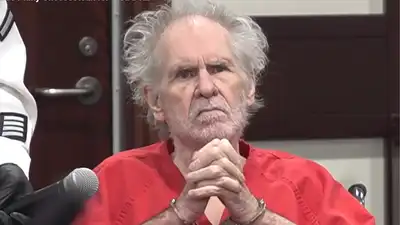
A 74-year-old Florida man facing a first-degree murder charge offered to plead guilty and accept a life sentence if a judge agreed to give him a Philly cheesesteak, fries and a Pepsi. Robert Kessler made the unusual proposal on October 26, 2026, during jury selection in his trial over the 2021 death of 47-year-old Stephanie Crone-Overholt. He also argued that accepting the deal would save taxpayers the expense of a trial. However, Hillsborough Circuit Judge Nick Nazaretian rejected the request, explaining that he could not provide food as an incentive for a guilty plea. Kessler subsequently withdrew his offer and asked the court to proceed with jury selection. He faces charges of first-degree murder and abuse of a dead body.
Investigators allege that Kessler killed the woman and disposed of her remains in the bay. He has been charged in connection with her death, but the allegations must be established through the criminal proceedings.
Kessler has been in custody since 2021 and has been awaiting trial for nearly five years. Because of his visual impairment, he initially chose to represent himself despite having no formal legal training and facing significant challenges.
When the judge asked him to clarify his request, Kessler specified that he wanted onions and mayonnaise on his sandwich, along with fries and a 20-ounce soft drink. Kessler is accused of killing Stephanie Crone-Overholt, a 47-year-old woman originally from Pennsylvania, and disposing of her dismembered remains in McKay Bay near Tampa. Crone-Overholt’s dismembered remains were discovered by fishermen in McKay Bay in November 2021, prompting a criminal investigation. Kessler’s daughter reportedly told investigators that Crone-Overholt had asked for $200 so she could leave. On October 27, Kessler changed his position and indicated that he no longer wanted to represent himself, turning again to his public defender.
In response, Kessler told the court he would accept the arrangement in exchange for a Philly cheesesteak, an order of fries and a Pepsi. “I can’t obviously give food to people to enter a plea,” Nazaretian said, describing the proposed arrangement as inappropriate. If convicted of first-degree murder, he faces a mandatory life sentence, according to reports on the case. She had been staying at a home shared by Kessler and his daughter shortly before she disappeared, according to allegations outlined in an investigative affidavit. At least three witnesses told investigators they had seen a man matching Kessler’s description throwing bags into the bay around the time of Crone-Overholt’s disappearance, according to reports describing the affidavit. He also told the judge that he preferred not to remain physically present in the courtroom during the trial. The judge said jurors would be instructed not to interpret his absence as evidence of guilt or innocence.
Kessler made the offer after Judge Nazaretian explained that he could enter an open guilty plea, potentially receive a life sentence and bring the case to an end without a trial. He argued that the arrangement would benefit taxpayers by avoiding the cost of a lengthy criminal trial. However, the judge made it clear that a guilty plea could not be exchanged for a meal. The judge offered to ensure that Kessler received lunch that day but did not promise him the specific meal he had requested. The judge’s response meant that Kessler could not secure the proposed arrangement. A guilty plea must be entered through the proper legal process, rather than in exchange for a personal reward from the court. After the judge rejected his request, Kessler indicated that he did not want to proceed with the proposed plea and asked for jury selection to continue. He suggested that he might have considered pleading guilty if he had received the sandwich, but acknowledged that the judge was unlikely to agree. Consequently, the exchange did not result in a guilty plea, and the criminal proceedings continued. He faces charges of first-degree murder and abuse of a dead body. The judge repeatedly warned him about the risks of defending himself in a serious criminal case. His decision to represent himself became a major issue during the proceedings. The affidavit also described an alleged argument between Kessler and Crone-Overholt. The prosecution’s case includes witness accounts and forensic evidence gathered during the investigation. Investigators also reportedly found blood evidence in Kessler’s home and vehicles that testing linked to Crone-Overholt. The prosecution is expected to rely on such evidence as it presents its case. The defence has challenged aspects of the evidence, including a witness identification. Kessler’s guilt or innocence will ultimately be determined through the legal process. He remains accused of the offences and is presumed innocent unless convicted. The cheesesteak proposal was not the only unusual development during the trial proceedings. Kessler initially insisted on representing himself, declining the assistance of his public defender despite warnings about the difficulties of handling a murder trial without legal training. His eyesight also presented practical challenges. The court discussed ways to help him access documents and participate in his defence. Nazaretian warned that being absent could disadvantage his defence, as Kessler might miss testimony or lose opportunities to alert his lawyer to information relevant to the case. The proceedings continued as the court addressed these issues and moved forward with the murder trial. You use AI every day. Now get your AI Quotient. Take the AIQ test.
During earlier proceedings, he described his vision as severely limited, saying he could barely distinguish objects.