
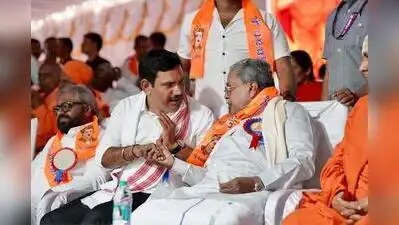
Former chief minister Siddaramaiah with BJP state president BY Vijayendra during Basava Jayanti in Mysuru district
Bengaluru: Major political parties and candidates are taking stock of what the final electoral roll could mean for their prospects, especially since it has shrunk from 5.54 crore before the special intensive revision (SIR) to 4.55 crore voters.
In 2023, a dozen of the 224 assembly seats were decided by fewer than 2,000 votes, eight of them by fewer than 1,000, ADR and Karnataka Election Watch data shows. The worry is rooted in thin margins.
Its four urban districts account for about 45% of deletions despite holding roughly 19% of the pre-SIR electorate. The revised roll also has over 6.83 lakh voters aged 18 and 19, a pool parties will court. He said panchayat polls in early 2027 will test local networks and the 2028 assembly election will show whether changes matter.
“Nearly one crore fewer names do not mean one crore votes lost by a party.
Analyst Ravindra Reshme said the final list is a wake-up call, although the deletions may not greatly alter parties’ prospects. He said governing Congress has a bigger task in urban areas. “It has to go an extra mile to win over urban voters, especially the educated middle-class who have just reflected their preference for Modi-led NDA in MLC elections,” he said, adding that chief minister DK Shivakumar must turn his attention to rural Karnataka too. “Congress, which sought further physical verification, sees a campaign plank in voting rights,” Reshme said. “The 2029 Lok Sabha polls will force parties to rebuild databases,” Reshme said. Chief electoral officer V Anbukkumar has said registration is continuous and eligible citizens can apply for inclusion after the final roll. “Booth-level officers will compare old and final lists and reach out to excluded voters,” he said.
Bengaluru is where anxiety could be greatest. Ahead of Greater Bengaluru Authority polls, parties are expected to revisit booth-level databases and campaign plans. “But it will need to document specific cases of exclusion and help eligible voters re-enroll. BJP has defended the revision as a clean-up of irregularities and must counter allegations of wrongful exclusion. Constituency-wise deletions, additions, turnout and voter preferences will decide. Re-enrolment is the immediate test.