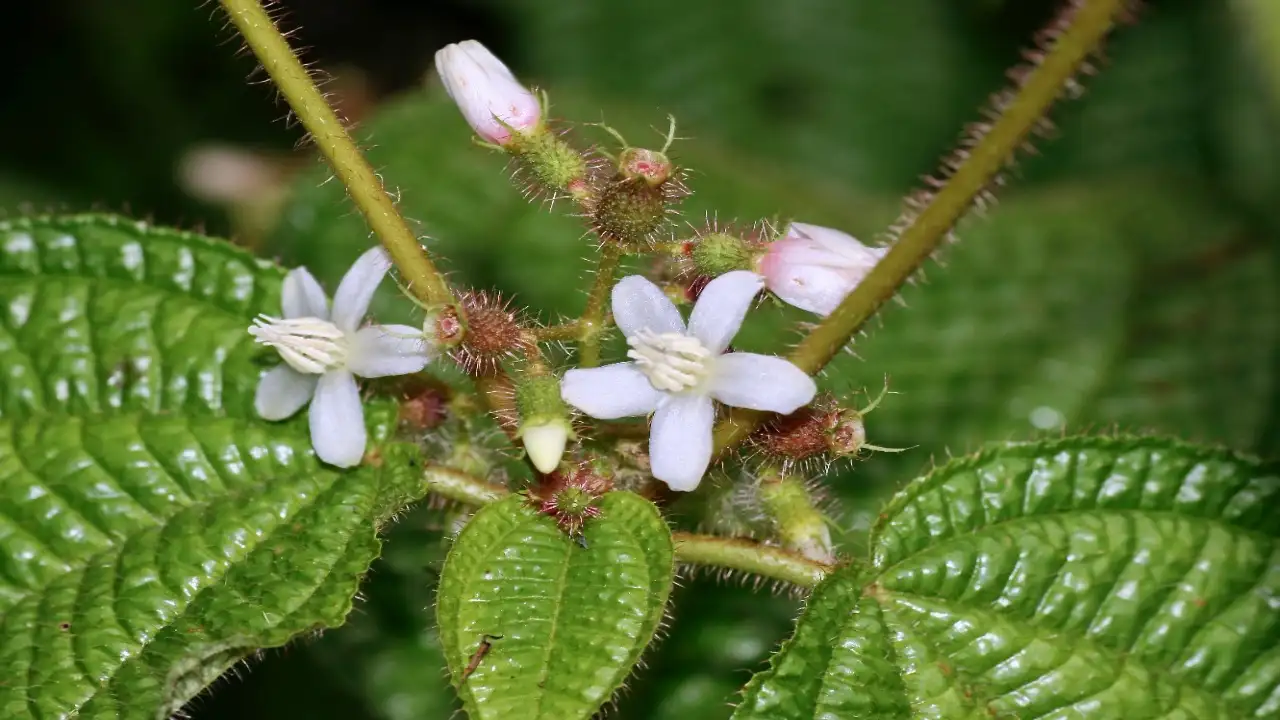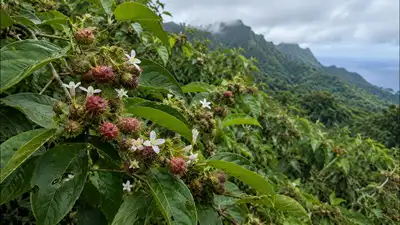
Representative AI image of Koster’s curse, an invasive tropical plant with dense foliage. (Image Credits: ChatGPT)
A plant carrying an ominous name was first found on O‘ahu in 1941, botanically identified as Clidemia hirta; it came to be known as Koster’s curse. Between 1880 and 1886, a man by the name of Koster, while cultivating a coffee plantation, inadvertently mixed seeds of Clidemia hirta into the stock, according to this account. What makes the plant particularly threatening is that its shrub can grow up to 6 feet, although it generally grows from 1 to 3 feet in height and these dense stands, which, by extension, restrict other plants beneath it from growing.
As a result, forests are left without the means to regenerate, and native vegetation is put under pressure in Hawaii’s already vulnerable island ecosystems, which could lose plant and animal species.
A Weed Pest in Hawaiian Forests”, led by Lyndon L, according to the research paper titled “Koster’s Curse ( Clidemia hirta ). Wester and Hulton B. Wood, the plant had subsequently spread across the Hawaiian Islands. it began to colonise habitats in the forests, pastures and cultivated land Although the plant was native to Central and South America. Koster’s curse’s arrival in the Pacific predates its appearance in Hawaii. During the late nineteenth century, the plant became established in Fiji as a severe agricultural and ecological pest. However, the name of the plant, along with the circumstances of its introduction to Fiji, remains disputed. Unbeknownst to Koster, this would spark a disruption of native ecosystems, specifically in coconut plantations, and, by extension of his action, the plant was named after him. Moreover, there are no local wildlife that feed on the plants; they are often transported to new regions by invasive pigs carrying seeds in their hooves. These reasons make it hard to contain, let alone keep it under control, and as a precaution, hikers are advised to wash their boots before and after entering these forests.