Eliot Hall stands amid a light blanket of snow, showcasing its red-brick façade and ornate stonework. Image credits: Wikipedia
Barton, reports that Stafford was born in Philadelphia in 1922 and attended Wellesley College on a scholarship, studying botany. Reed’s archives add that she received her bachelor’s degree from Wellesley in 1944, her master’s from Connecticut College in 1948 and her doctorate from the University of Pennsylvania in 1951. She started working at Reed in 1954 and, as the same feature describes it, became the college’s first female professor in the sciences. She published Factors controlling the synthesis of natural and induced lignins in Phleum and Elodea in 1965; the article is in volume 40, number 5, pp. 844 to 851 of the journal. In 1958, Stafford co-authored The fixation of CO₂ into tartaric and malic acids of excised grape leaves with Frank Loewus; it appeared in volume 33, number 3, pp. 194 to 199 of the journal and was about carbon dioxide fixation into two organic acids in excised grape leaves. Image credits: Wikimedia Commons The December 2011 feature also reports that Stafford left $8 million to the college through her will. The bulk of the gift provides financial aid for students who would otherwise be unable to attend, and $1 million supports the biology department. President Colin Diver announced the bequest as the Centennial Campaign passed $185 million toward its $200 million goal. The campaign, launched in 2005 and scheduled to conclude in December 2012, finished with gifts totalling more than $200 million, as Reed Magazine’s March 2011 and March 2013 issues show. The gift also supports summer fellowships for biology students, a point the 2021 mural story makes. The same feature separately says she endowed the $1 million Morton O.
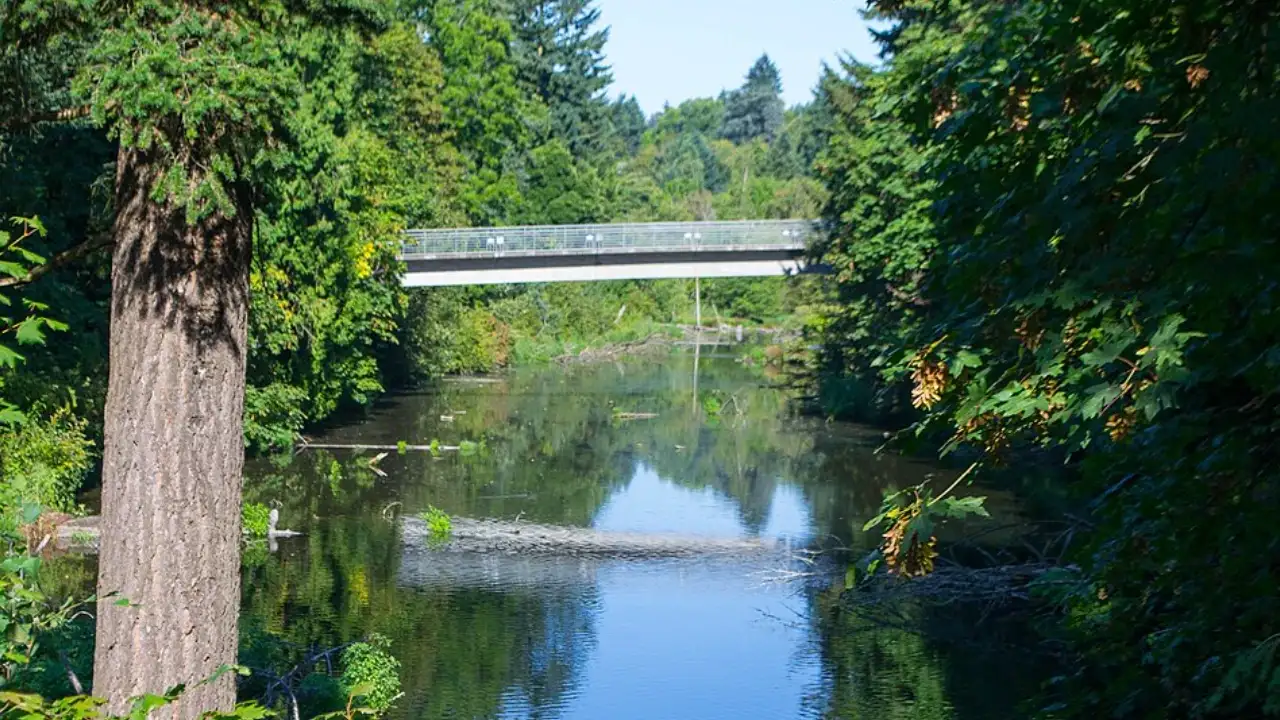
Reed Magazine’s December 2011 feature “Bio Prof Bequeaths Fortune to Reed,” by Randall S. Reed College is a small liberal arts college in Portland, Oregon, and its biology department has had a reputation for combining lab research with teaching for decades. Among those who helped establish this reputation is Helen Stafford, a plant physiologist who spent most of her professional career at Reed. Stafford lived modestly and remained connected with the college even after retirement. Upon the settling of her estate, it became obvious that Stafford’s connection with Reed College was not limited to the classroom. Her bequest has had a significant impact on the college’s ability to support students who cannot afford to attend Reed. Pamela Ronald, who was once a student and is now a professor of plant pathology at UC Davis, wrote on the science blog Biofortified that Stafford faced limited opportunities as a female scientist in the 1950s and that Reed hired her. Stafford also published extensively in the journal Plant Physiology , and the college archives mention her membership on the journal’s editorial board. It discussed the process by which plants synthesize lignin, which is a complex molecule that makes the cell wall rigid. A footbridge over Reed Lake on the Reed College campus. Stafford Jr. scholarship in memory of her brother, who was killed in World War II, though it does not say whether that scholarship came out of the financial aid share of the bequest or was a separate allocation.