
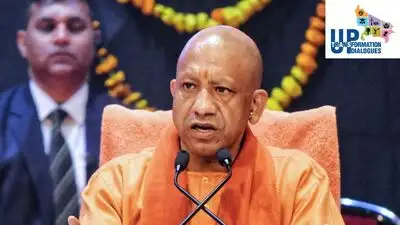
Revenue Reforms by Yogi Government: From Gharouni to Digital Farmer Identity
The broader objective is to ensure that welfare assistance is not merely announced but reaches the intended recipient through a transparent and accountable administrative process. For a government that has emphasised the welfare of farmers, improvements in the delivery of accident assistance form an important part of its effort to make rural administration more responsive. Simplifying Caste Certificates Through Better Use of Digital Records Caste certificates are essential documents for citizens seeking benefits under various educational, welfare and reservation-related provisions, subject to applicable eligibility conditions. For families applying for such certificates, repeated submission of documents and verification of information already available with the administration can create avoidable inconvenience.
Under the SVAMITVA Scheme, more than 1.05 crore Gharounis, or documents recording residential property in rural inhabited areas, have been prepared and distributed. Meanwhile, Uttar Pradesh has recorded more than 1.44 crore registrations under the Farmer Registry, placing the state first nationally according to the figures provided by the Revenue Department. In Uttar Pradesh, the Yogi government has given considerable importance to expanding the initiative, with more than 1.05 crore Gharounis reportedly prepared and distributed. Uttar Pradesh has completed more than 1.44 crore registrations under the initiative and, according to the reported departmental figures, has secured the leading position among states. The achievement of more than 1.44 crore registrations marks a substantial expansion of the state’s digital agricultural infrastructure. It is important, however, to distinguish the absence of these particular achievements before 2017 from the existence of revenue administration itself. The reported distribution of more than 1.05 crore Gharounis and completion of more than 1.44 crore Farmer Registry registrations represent substantial progress in extending formal documentation and digital identification.
Effective grievance redressal and timely correction of records will therefore remain essential. Because the delivery mechanism determines how quickly and transparently eligible families receive support, this change is significant. Because closing a complaint on a digital platform should not be the only measure of success, cross-checking is particularly important.
You Can Also Check: Gold Rate in Lucknow | Silver Rate in Lucknow | Bank Holidays in Lucknow | Public Holidays in Lucknow | Lucknow AQI | Weather in Lucknow | Petrol Price in Lucknow | Diesel Price in Lucknow | CNG Price in Lucknow | LPG Price in Lucknow Stay updated with the latest Lucknow news.
The scheme was earlier operated through an insurance company, whereas assistance is now transferred directly to the beneficiary’s bank account through the district magistrate, according to the Revenue Department’s account. Revenue administration in Uttar Pradesh is undergoing a significant transformation, moving beyond its traditional role of maintaining land records towards a broader system of citizen-centric service delivery, digital identification, property documentation and transparent benefit distribution. Under the leadership of Chief Minister Yogi Adityanath, the state government has expanded the scope of revenue reforms with a focus on securing rural property rights, strengthening farmers’ digital identity and simplifying administrative procedures for ordinary citizens. Two major initiatives illustrate the scale of this transformation. These initiatives represent a shift from fragmented, paper-based records towards more organised documentation that can support access to government services, verification of beneficiaries and better administrative decision-making. Alongside them, changes in the disbursement of assistance under the Mukhyamantri Krishak Durghatna Kalyan Yojana, simplification of caste certificate procedures and closer monitoring of public grievances are intended to make revenue administration more accessible and responsive. Securing Rural Property Rights Through Gharouni For generations, residential property in many villages has been occupied and used by families without a formal, systematically prepared record comparable to documentation available for many other categories of property. This has often made it difficult for households to establish documentary evidence of their residential holdings when required for administrative, financial or legal purposes. The SVAMITVA Scheme, implemented through the use of modern surveying and mapping technologies, seeks to address this gap by preparing records of residential properties in rural inhabited areas. A Gharouni provides a documented record identifying a household’s residential property. Its importance extends beyond the issuance of a certificate. It helps bring greater clarity to local property records and gives families documentary evidence that can be useful when dealing with public authorities or resolving questions concerning property identification. For rural households, this represents an important step towards greater security and administrative recognition. A properly prepared property record can help reduce uncertainty about the identity and extent of a residential holding, support the resolution of certain property-related disputes and improve the quality of information available to local administration. Documented property information can also create opportunities for households to explore formal financial services, subject to applicable laws, lender requirements and the legal status of the property. A Gharouni should not, however, be confused with an automatic guarantee of ownership in every circumstance or with an unrestricted right to mortgage property. Its legal effect depends on the applicable framework and the nature of the recorded rights. The larger achievement lies in bringing a vast number of rural residential holdings into a more systematic documentation process. With more than one crore Gharounis prepared and distributed, the programme has the potential to strengthen record-based governance across thousands of villages while making property-related information easier for citizens and the administration to access. The initiative also reflects an important social dimension of revenue reform. Rural development is not limited to roads, electricity, drinking water and public infrastructure. It also involves ensuring that families possess reliable documents relating to the homes in which they live. By expanding Gharouni coverage, the state is addressing this foundational aspect of rural security and administrative inclusion. Farmer Registry: Building a Digital Identity for Agriculture The second major area of reform is the Farmer Registry, which seeks to create a structured digital record of farmers and relevant agricultural details. Agriculture remains central to the state’s economy and rural livelihoods. Millions of cultivators depend on government programmes for income support, agricultural inputs, insurance-related services and other forms of assistance. However, the delivery of these benefits requires reliable information about farmers, their identities and their eligibility for particular schemes. A fragmented system of records can make verification time-consuming, create difficulties for eligible applicants and increase the administrative burden on both farmers and officials. The Farmer Registry aims to address these challenges by bringing relevant information into a more organised digital framework. The initiative can make it easier for departments to verify farmers’ identities and assess eligibility for schemes where registration is an applicable requirement. It can also support better coordination between agricultural databases and government service-delivery systems, subject to the rules governing each programme. For farmers, the potential benefits include reduced repetition of documentation, more efficient verification and easier access to eligible services as digital systems become integrated. For the administration, a more structured database can help improve planning, identify gaps in coverage and reduce errors arising from inconsistent or duplicated records. The scale of Uttar Pradesh’s registration drive is particularly significant given the size and diversity of its agricultural sector. From the fertile plains of western and central Uttar Pradesh to the eastern districts and Bundelkhand, agricultural conditions, landholding patterns and farmers’ needs vary considerably. A well-maintained registry can provide a stronger information base for designing and implementing interventions across these different regions. Nevertheless, the long-term success of the Farmer Registry will depend on the accuracy and regular updating of records, the correction of errors, the inclusion of eligible cultivators and the availability of accessible support for people who face digital barriers. Registration should facilitate access to benefits rather than become an additional hurdle. Its real value will be measured by how effectively this infrastructure translates into easier access to schemes and better services for farmers. Direct Assistance Under the Mukhyamantri Krishak Durghatna Kalyan Yojana Another important dimension of the Yogi government’s revenue reforms is the effort to make financial assistance more direct and accessible to farmers’ families facing distress following an accident. The Mukhyamantri Krishak Durghatna Kalyan Yojana is designed to provide financial assistance in eligible cases involving the death or disability of farmers and other covered individuals associated with agricultural activities, in accordance with the scheme’s provisions. For families dependent on agriculture, an unexpected accident can have serious financial consequences, particularly when the affected person is the principal earning member. The state government has changed the mechanism through which assistance is administered. By placing the district administration at the centre of the disbursement process and transferring approved assistance directly to beneficiaries, the government aims to establish a more direct connection between administrative approval and financial relief. Direct bank transfers also make payments easier to document and track. They reduce dependence on physical handling of funds and help create a clearer record of the amount transferred to each beneficiary. For families dealing with the aftermath of an accident, a more straightforward payment mechanism can reduce administrative uncertainty at an already difficult time. District magistrates and the revenue administration have an important role in processing applications, verifying facts and ensuring that assistance reaches eligible beneficiaries under the prescribed rules. The effectiveness of the system ultimately depends on timely decisions, accurate verification and effective communication with applicants. The Yogi government has sought to simplify the process by promoting the linking of caste certificates with Aadhaar and reducing documentary requirements for other eligible family members after a certificate has been issued to one member. The underlying principle is straightforward: information that has already been verified should, wherever permitted under the rules, help simplify subsequent applications. When the administration can rely on authenticated records, applicants may not need to repeatedly establish the same family-related details through an entirely fresh set of documents. This can be particularly helpful for rural households, economically weaker families and citizens who must travel to government offices to complete administrative formalities. Fewer repetitive procedures can save time and travel expenses while reducing the burden on revenue officials responsible for processing applications. Simplification also has the potential to improve consistency in service delivery. Standardised procedures and greater use of verified digital information can help reduce avoidable variations in the way applications are handled across offices. However, Aadhaar linkage must operate within applicable legal and administrative safeguards, and the availability of a family member’s certificate cannot automatically establish every other applicant’s eligibility. Individual verification and the relevant rules governing caste certification remain important. The larger reform objective is to make an essential public service easier to access without compromising the integrity of the certification process. By reducing repetitive documentation and making better use of existing records, the government is attempting to move towards a more citizen-friendly model of revenue administration. IGRS: Strengthening Accountability in Public Grievance Redressal Revenue-related grievances frequently concern land records, property documentation, certificates, administrative decisions and the delivery of government services. For citizens, the experience of governance depends not only on the existence of rules but also on whether complaints are heard, examined and resolved within a reasonable period. The Yogi government has placed emphasis on monitoring public grievances through the Integrated Grievance Redressal System, commonly known as IGRS. The system provides an administrative mechanism for registering complaints and tracking their disposal. Despite multiple levels of scrutiny, including cross-checking at different administrative levels. The Chief Minister’s Office also monitors the disposal of complaints. Such oversight can help strengthen accountability by making it more difficult for complaints to remain unattended without administrative scrutiny. The quality of the response, the adequacy of the action taken and the satisfaction of the complainant are equally important considerations. For citizens in remote villages, a functioning grievance-redressal mechanism can provide a channel to bring administrative problems to the attention of the authorities without relying entirely on repeated visits to local offices. Digital monitoring can also help senior officials identify recurring problems and direct attention towards departments or districts where complaints require closer examination. In revenue administration, where disputes and requests may involve several levels of officials, systematic monitoring can improve coordination and make responsibility for pending cases more visible. The intended outcome is a shift from complaint registration alone towards more accountable disposal. To sustain public confidence, the system must also ensure that citizens can submit complaints easily, receive understandable responses and seek further review when a matter has not been satisfactorily resolved. From Paper-Based Administration to Citizen-Centric Governance Taken together, these initiatives indicate that the state’s revenue reforms extend well beyond the digitisation of individual records. They seek to improve the relationship between citizens and the administration by making information more organised, procedures less repetitive and benefit delivery more transparent. Gharounis address the documentation needs of rural residential property holders. The Farmer Registry creates a digital foundation for identifying farmers and supporting verification under relevant agricultural programmes. Direct transfers under the Mukhyamantri Krishak Durghatna Kalyan Yojana seek to streamline financial assistance. Simplified caste certificate procedures aim to reduce unnecessary paperwork, while IGRS monitoring seeks to strengthen the accountability of public officials. The government is now seeking to build systems in which information can be verified more efficiently, records can be accessed through digital platforms where available, and applications can be monitored through defined administrative channels. The transition also brings responsibilities. Digital records must be accurate, personal information must be protected, and citizens who lack smartphones, internet access or digital literacy must not be excluded. Assisted service centres, accessible grievance mechanisms and timely correction of errors are crucial to ensuring that technology benefits all sections of society. Similarly, property documentation must be supported by clear procedures for resolving discrepancies, and farmer registration must remain connected to practical improvements in access to eligible services. The value of a digital system lies not simply in the number of entries it contains but in the quality of the services it enables. Building a Stronger Foundation for Rural Development Uttar Pradesh’s large rural population makes efficient revenue administration particularly important. Property documentation, agricultural identification, welfare assistance and grievance redressal directly affect the everyday lives of millions of citizens. These figures indicate the scale at which the state is attempting to strengthen the administrative foundations of rural governance. For households, better property records can improve documentary clarity. For farmers, a structured digital registry can make verification more efficient and support access to eligible schemes. For families affected by agricultural accidents, direct payment mechanisms can make assistance more transparent. For other citizens, simplified certification and stronger grievance monitoring can reduce procedural difficulties and improve accountability. These reforms are also relevant to the wider development agenda. Reliable records help governments plan services, identify beneficiaries and monitor implementation. More accessible administrative procedures can reduce the time citizens spend navigating official processes, while better grievance monitoring can help identify weaknesses that require corrective action. The larger significance of these reforms lies in their focus on citizens’ everyday needs. A household’s residential property record, a farmer’s verified digital identity, a timely assistance payment or a complaint resolved fairly may appear to be separate administrative matters. Together, however, they shape how effectively government reaches people at the grassroots. By broadening the scope of revenue administration from traditional record maintenance to property documentation, digital farmer identification, direct assistance and monitored grievance redressal, the Yogi government is seeking to establish a more transparent, accessible and accountable system. The lasting measure of success will be the extent to which these changes provide greater security to rural families, reduce avoidable administrative burdens and ensure that eligible citizens receive the services and support intended for them. Download the TOI App.
Before the expansion of these initiatives, revenue services relied heavily on conventional records and office-based procedures. Land records, certificates and farmer-related services existed earlier; the change being highlighted is the expansion of specific initiatives, the scale of coverage and the development of new digital mechanisms.
Under Chief Minister Yogi Adityanath, the expansion of these initiatives reflects an emphasis on measurable administrative coverage alongside efforts to improve service delivery. The next phase will require sustained attention to accuracy, inclusion, timely payments, grievance resolution and the practical integration of digital records with public services.