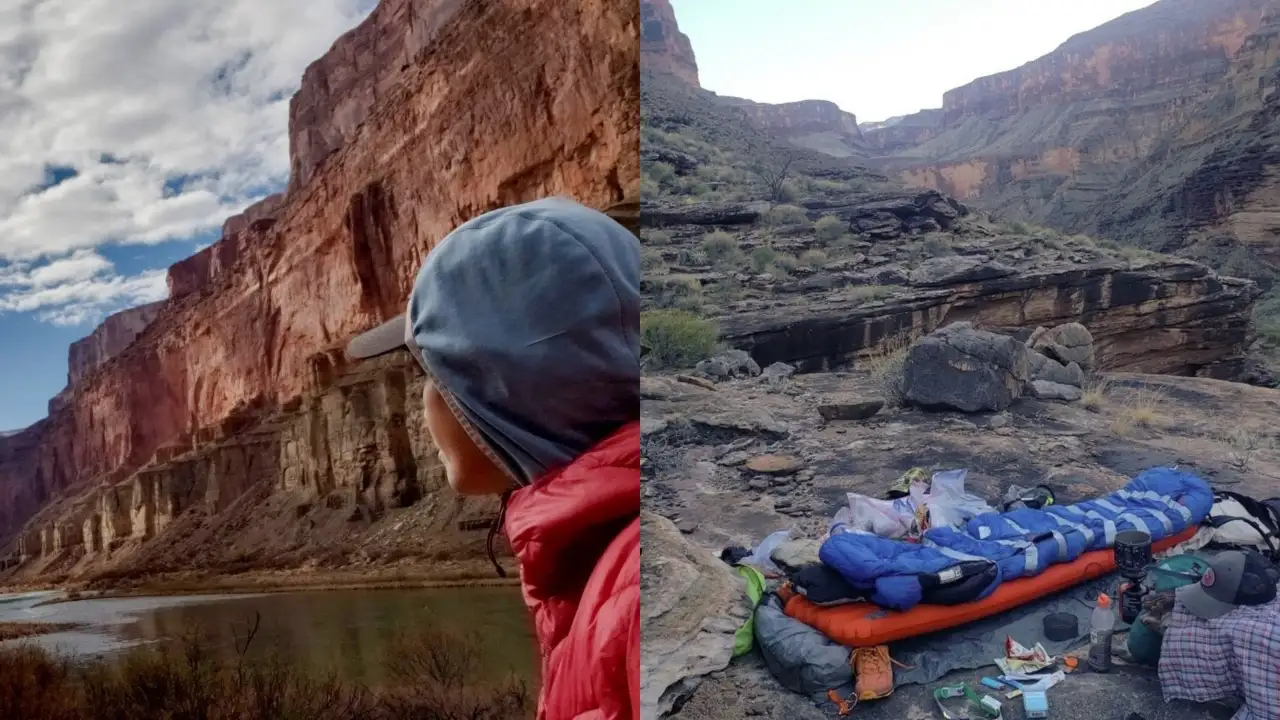
Image of Jen Hogan and a hiking trail along the Colorado River at Lee’s Ferry Recreation Area. Credits – Insta/@grandcanyonnps, Wikipedia
With help from Rich Rudow, fellow rangers and friends, she placed 5-gallon buckets of food and supplies at planned cache sites before setting out, allowing her to restock every five to 10 days. The risks of canyon travel remain clear in the National Park Service’s 2025 statistics : the park recorded 232 search and rescue incidents and 848 emergency medical service incidents that year. It also recorded 8,265 backcountry permits used. These are parkwide figures for 2025, not statistics from Hogan’s 2022 expedition. Hogan’s third attempt began in the winter of 2021 and continued into 2022. Rich Rudow, who completed a 57-day traverse beneath the rim in 2015, understands the difficulty of the route. Rudow’s account of his background and 2015 traverse confirms his own journey through the canyon.
Because it turned out to be a warm winter, beginning at the eastern end made sense. Because hikers must contend with weather, difficult terrain, limited water and their own health, in Arizona Highways, he described travel below the rim as a test of judgment and adaptability. As an adult, she built up her experience by hiking the route in shorter sections on both sides of the canyon. Her previous trips helped her identify water sources and difficult sections along the way. Hogan attempted the traverse again several months later, but pneumonia forced her to stop and spend weeks recovering at her brother’s home. A profile in Arizona Highways described her story as a cautionary tale. This time, she started at Lees Ferry, where the higher elevation offered cooler starting conditions and water was more readily available. Seventy-seven days later, she completed the traverse. Fellow ranger Della Yurcik met her at a ranger station with a hot pizza, a welcome meal after weeks in the canyon. He credited Hogan’s persistence and willingness to change plans with helping her succeed.