
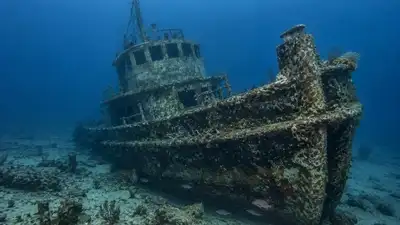
AI-generated representative image of a retired tugboat resting on the ocean floor, now serving as an artificial reef for marine life. Image credits: ChatGPT
Ultimately, on June 28, conditions were favourable enough for the operation to proceed. After deployment, the tugboat came to lie at approximately 120 feet underwater at artificial reef site PA-17, popularly known as Vermilion Reef. The 2019 SCDNR announcement shows that a range of fish species like grouper, jacks, triggerfish and Spanish hogfish are supported by the Vermilion Reef’s deeper offshore setting.
Due to unfavourable weather conditions, the sinking had been postponed for several weeks. Though there are no physical surface buoys marking the location, the exact location of the site is published by the SCDNR for boaters, anglers and divers. Examples of populations associated with South Carolina’s artificial reefs include red snapper, black sea bass, gag grouper and king mackerel.
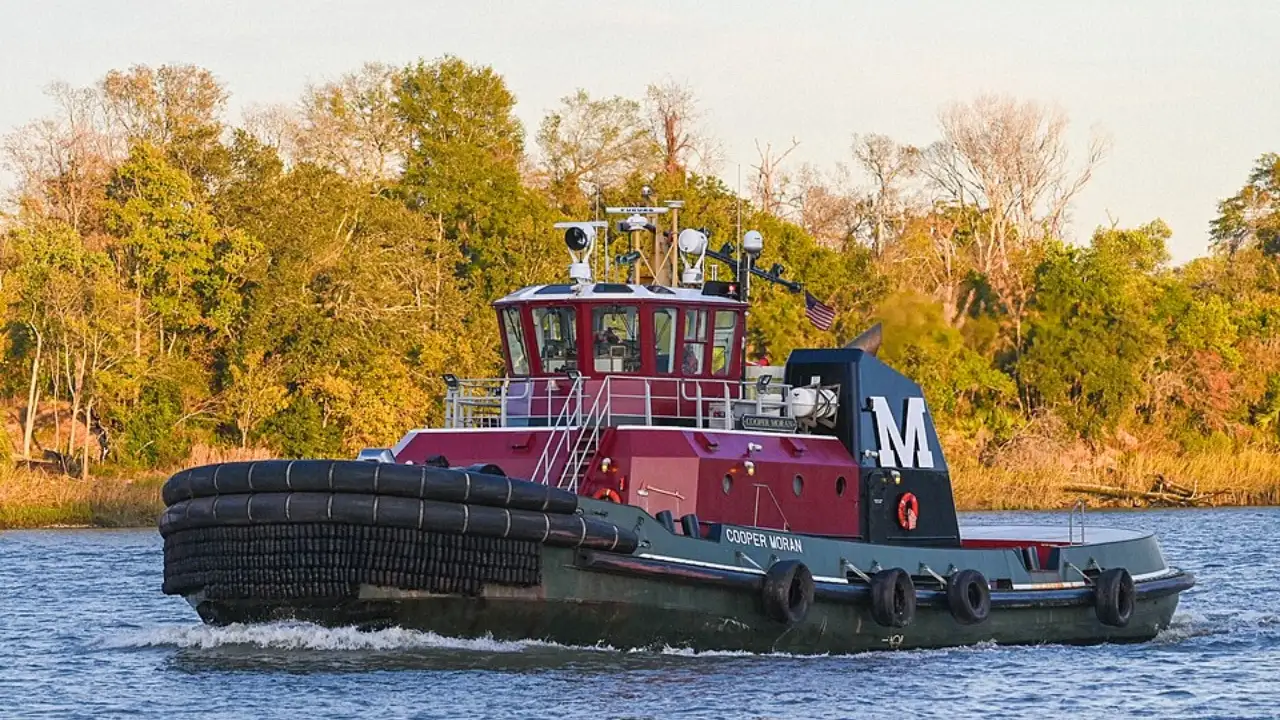
Artificial reef material usually undergoes a cleaning process to ensure it is suitable for the environment before deployment. The state’s programme utilises different durable materials like steel and concrete structures, ships, tugboats, barges, military vehicles and subway cars. On the other hand, the Susan Richards project was funded through a partnership between SCDNR and the Coastal Conservation Association of South Carolina (CCA-SC). Additional support was provided from the revenue generated through saltwater fishing licence purchases. This particular placement was the programme’s ninth major artificial reef project completed in partnership with CCA-SC, thus reflecting the involvement of state conservation authorities and fishing organisations in expanding offshore habitat and recreational fishing opportunities.