
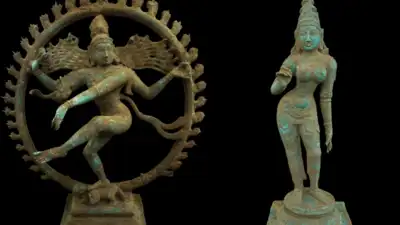
Excavations in Nagapattinam have uncovered two remarkable bronze idols from the 12th-century Chola period.
They may have been buried for safekeeping,” said Professor K Rajan, adviser to the state archaeology department. K Vasanthakumar, who led the excavation, said the team was looking for clues to understand why hundreds of Chola-era bronzes had been buried in Nagapattinam. V Selvakumar, a retired professor in the department of maritime history and marine archaeology at Tamil University, said Nagapattinam was a multifaceted urban centre during the Chola period, with a port, manufacturing units, active merchant guilds and craft workers, military and naval facilities, as well as several religious shrines. The idols may have been buried for safekeeping during invasions in the later period,” he said.
The iconography and artistry suggest that the idols date back to the 12th century. The Cholas ruled the region from the 9th to the 13th century CE. “These are two masterpieces of Chola-period bronzes with fine workmanship. The two idols have been brought to Chennai for chemical treatment, while metallurgical analysis will determine the composition of the materials used. “The port city was frequented by traders, pilgrims and diplomats.
Archaeology minister A Rajmohan announced the discovery on Friday.