
The great Lucknow food migration
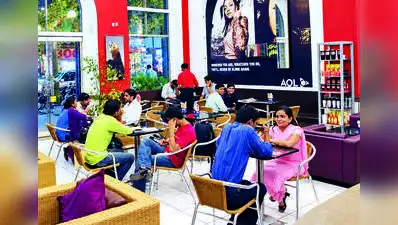
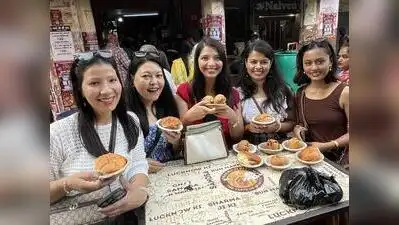
Specialty coffee began competing with the city’s long-standing relationship with ‘chai’,” says Mihir Daswani, a foodie. “Why choose between a ‘kebab’ and a burger when Lucknow can have both,” he says. Lucknow food lovers are going global in taste while still craving for local delicacies The great Lucknow food migration Lucknow food lovers are going global in taste while still craving for local delicacies The great Lucknow food migration From kebabs to pizza, burgers, sushi, Korean bowls and specialty coffee, Lucknow is discovering that its appetite has no borders. There was a time when introducing someone to Lucknow’s food required little explanation. You took them for ‘kebabs’! Perhaps a plate of ‘galouti’, some ‘roomali roti’, a bowl of ‘nihari’ or a leisurely evening of ‘chaat’. Food in Lucknow was deeply tied to memory, neighbourhood and inheritance. Recipes travelled from one generation to another; favourite shops became family institutions; and eating was rarely something you did in a hurry. Then the city began to change. The old aromas did not disappear. They simply acquired company. “Pizza arrived. Then burgers. Cafés multiplied. Sushi appeared on menus that once would have seemed almost impossibly foreign. Korean flavours found a curious young audience. That could well be the unofficial philosophy of the city’s new food generation. Lucknow did not abandon its ‘kebabs’. It simply developed a much larger appetite. LUCKNOW’S NEW FOOD MAP The city’s culinary is changing. The old markets remain essential for traditional flavours. New commercial districts and neighbourhoods have become laboratories for cafés, contemporary restaurants and international cuisines. And delivery apps have erased many of the boundaries in between. The result is a city where culinary discovery no longer belongs to one neighbourhood or one generation. The young diner has changed the rules. New Lucknow diner is adventurous but not necessarily dismissive of tradition. They may know their favourite ‘kebab’ shop and their favourite coffee roaster. They may discuss the difference between a good ‘galouti’ and a good smash burger with equal seriousness. They may travel to Delhi, Mumbai, Bengaluru or abroad and return with a new food obsession. Every trip brings something back. Sometimes it is a recipe. Sometimes it is an idea. Sometimes it is simply a craving. LUCKNOW FOOD DICTIONARY IS EXPANDING The old dictionary hasn’t disappeared. It has simply acquired new pages. What happens when tradition meets trend? A city like Lucknow does not need to choose between heritage and experimentation. Its strongest food culture may emerge from the conversation between the two. Traditional flavours can be reinterpreted without losing their identity. Contemporary spaces can serve familiar recipes. Young chefs can experiment while respecting old techniques. The future of Lucknow’s food may not be about becoming more global. FROM KEBABS TO BURGER The interesting thing about Lucknow’s food evolution is that it was never really a rebellion against tradition. The city still takes its ‘kebabs’ seriously. What changed was the definition of what else could belong on the table. A burger could now share dinner with a plate of ‘biryani’. Pizza could become a weekend ritual. Pasta could be ordered without anyone feeling that the meal had somehow become less Lakhnawi. For a generation growing up with food delivery apps, social media and travel, culinary curiosity became almost inevitable. Food was no longer just something inherited. It was something to discover.
“Earlier, food told you where you came from. That is perhaps the most interesting shift taking place on Lucknow’s plates,” says Mayank Shah, a hotelier. A restaurant can become the place everyone wants to try before they even know what is on the menu,” says Saumya Tripathi, a student. And once curiosity enters a city’s food culture, there is very little chance of putting it back in the box,” says Anit Jain, a foodie.
Now it also tells you what you are curious about. THE PIZZA ARRIVED AND STAYED Pizza was among the early signs that Lucknow’s dining habits were broadening. “Instagram has changed the way we discover food. That may be one of the biggest changes in the city’s food culture. OLD VS NEW Old Lucknow meant ‘kebab’, ‘biryani’, ‘nihari’, ‘chaat’, ‘kulcha’ and ‘chai’ while new Lucknow means pizza, burgers, sushi, ramen, Korean food, desserts, artisanal breads and specialty coffee. But the reality is that most people want both. Sushi represents another stage of Lucknow’s culinary confidence. It requires diners to become comfortable with unfamiliar textures, presentation and flavour combinations. Its arrival suggests that a significant section of the city is no longer looking only for food that feels familiar. People want to know what other cities eat. What other countries eat, what something looks like, tastes like and feels like. “Once people stop asking whether a food is foreign and start asking whether it is good, the city has already changed. KOREAN FOOD & POP CULTURE Korean food arrived in Lucknow at a particularly interesting moment.
That small change says a lot about a city. The city was slowly moving from “What is famous here?” to “What is new here?” What began as an imported idea gradually became part of the city’s everyday vocabulary. Young diners wanted more than familiar flavours, and restaurants responded with increasingly elaborate menus, different crusts, toppings and styles. The important shift was psychological. People were no longer asking, “Why would we eat this? They were asking, “Where can we find a good one? THEN CAME THE BURGER GENERATION The burger represented something different. It was quick, casual and endlessly customisable. It belonged as comfortably to a college afternoon as to a late-night food order. For younger Lucknow, dining also became social content. A new café was not simply a place to eat; it was somewhere to meet, photograph, post about and return to.
Because a handful of customers photograph it and share it, a dish can become popular. You Can Also Check: Gold Rate in Lucknow | Silver Rate in Lucknow | Bank Holidays in Lucknow | Public Holidays in Lucknow | Lucknow AQI | Weather in Lucknow | Petrol Price in Lucknow | Diesel Price in Lucknow | CNG Price in Lucknow | LPG Price in Lucknow Stay updated with the latest Lucknow news.
Now, it can also tell people where you like to sit, what music you listen to and what kind of weekend you want,” says Swati M Srivastav, a food blogger. “I can try something completely new today and still crave the same ‘kebab’ I grew up eating tomorrow,” says Danish Khan, another foodie. For many young diners, Korean culture already entered their homes through music, films, television and social media. Food was simply the next step. Suddenly, dishes that once seemed distant became recognisable. Korean flavours, noodles, fried chicken and other dishes found an audience that was already familiar with the culture surrounding them. The lesson is simple: food rarely travels alone. It travels with music, films, and fashion. THE SPECIALTY COFFEE REVOLUTION Perhaps the most revealing change is not what Lucknow is eating, but what it is drinking. For decades, tea comfortably occupied the centre of everyday social life. ‘Chai’ meant conversation, hospitality and habit. Then came specialty coffee. Suddenly, brewing methods became conversation starters. A cup was no longer simply hot and caffeinated; it could be discussed, photographed and compared. “Coffee used to wake you up. The café became an experience rather than merely a place to have a drink. And this is where Lucknow’s food migration becomes something larger than a list of new dishes. It becomes a story about lifestyle. The drink is important but the atmosphere may be equally important. BUT THE KEBAB NEVER LEFT For all this change, Lucknow’s traditional food remains remarkably resilient. The city can discover sushi without forgetting ‘galouti’. It can drink carefully brewed coffee in the afternoon and eat ‘biryani’ at night. It can order Korean fried chicken one day and return to its favourite chaat shop the next. That coexistence is perhaps the most ‘Lakhnavi’ thing about the entire transformation. The city has not replaced one food culture with another. It has layered them. THE DELIVERY APP EFFECT Technology has accelerated migration. A diner no longer travels across the city to discover something unfamiliar. A few taps on the screen can bring cuisines from different parts of the country — and increasingly, the world — to the doorstep. This has changed how restaurants think too. The menus can be tested quickly. Trends can spread overnight. Ten years ago, a food trend had to travel from one neighbourhood to another. The distance between ‘new’ and ‘normal’ has become shorter. Download the TOI App.
Today, it can travel through a phone.