
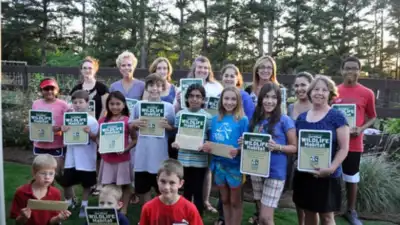
Johns Creek earned its Community Wildlife Habitat certification in 2012, becoming the organisation’s 60th certified community in the United States and only the second in Georgia at the time, according to the National Wildlife Federation (NWF). A suburban Georgia community became a model for urban wildlife conservation after teenager Malcolm Barnard led a two-year campaign to turn backyards, school grounds and public spaces into wildlife habitats.
Action for Nature, which later honoured Barnard with its 2013 International Young Eco-Hero award, said he also went door to door to explain why preserving habitat mattered in a rapidly developing community. By 2013, all 18 of Johns Creek’s public schools had become certified through the NWF’s Schoolyard Habitats programme, according to Action for Nature and other conservation records. In 2011, he was named one of four finalists for Atlanta’s Cox Conserves Heroes programme. Each finalist received $1,250 to support an environmental nonprofit or project, and Barnard directed his award toward his community habitat work, including grants for school gardens.
A contemporary local account reported that the certification effort involved hundreds of homes along with schools and community spaces.
He first discovered the NWF’s Community Wildlife Habitat programme while working on a school project, according to National Wildlife magazine. Johns Creek, a growing city northeast of Atlanta, might not immediately seem like the setting for a major wildlife initiative. However, Barnard recognised the importance of protecting natural habitats in a rapidly developing suburban environment. The programme encourages residents to make their properties more welcoming to wildlife by providing essential resources such as food, water, shelter and places where animals can raise their young. Inspired by the initiative, Barnard approached Johns Creek officials with the idea of pursuing certification for the entire city. The effort quickly grew beyond a student project. Barnard assembled a volunteer team and began working with residents, schools, businesses and community organisations. His approach included educating homeowners about wildlife-friendly gardening, encouraging individual properties to seek certification and organising workshops to build support for the initiative. The campaign also placed schools at the centre of the effort. Barnard secured funding that could be directed towards school habitat gardens, while participating schools received wildlife-habitat signage. The project required a significant amount of community participation. The aim was not simply to create isolated wildlife gardens, but to build a network of habitat across the city. Barnard’s work also began attracting attention beyond Johns Creek. What began as a young person’s idea ultimately changed the way an entire suburb approached nature. In Johns Creek, conservation did not require setting the city aside from development. Instead, it meant finding ways for wildlife and everyday community life to coexist, one garden, school and shared space at a time. You use AI every day. Now get your AI Quotient. Take the AIQ test.