
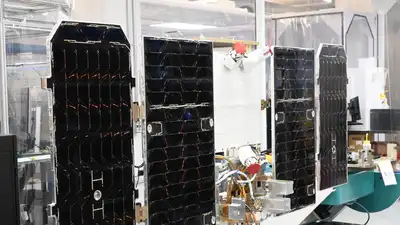
A prototype of Google’s Project Suncatcher
There are four TPUs on board, but the satellite generates up to 1 kW, which is enough to run just one chip at a time for about 20 minutes. Those short windows also have to line up with ground station contact, which makes every exchange a scheduling exercise. The longer test is only starting. Cosmic rays and solar events can cause bit flips, where a value stored in memory changes on its own and corrupts data without tripping the usual checks. In a proton beam at UC Davis, Google’s Trillium TPUs took more radiation than a five-year mission would deliver, and ground tests suggest inference will suffer far less than training. Heat is the other concern. With no air in space, the chips shed heat through heat pipes and radiators rather than fans. One haiku from one chip doesn’t settle that. The radiation and heat data this satellite sends back over the coming months will, and it decides whether those two satellites go up on schedule.