
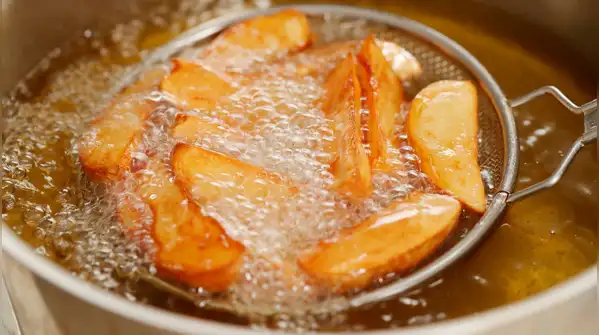
Because even a small amount of moisture can turn into steam rapidly when it meets hot oil, this happens. There is a moment familiar to anyone who has fried food at home: the oil is hot, the pan is ready, and suddenly it starts popping violently as soon as the food goes in. Sometimes the splattering is barely noticeable. Other times, tiny droplets of hot oil seem determined to escape the pan. The difference is not usually the oil itself. It is what the food is bringing into the pan, particularly water.
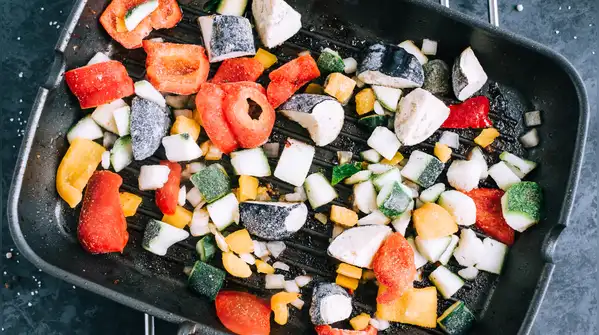
Because the marinade can add another layer of moisture, foods that have been marinated may be even more prone to splattering. Because the batter contains both water and flour or another starch, battered foods are an interesting case. A very wet or loosely adhering batter can therefore behave differently from a thicker, well-set coating. A heavily salted ingredient that has been sitting for a while may therefore have more surface moisture. Because adding a large quantity of cold, wet food at once can cause vigorous bubbling and reduce the oil temperature, avoid overcrowding the pan.
Frozen ingredients often contain a thin layer of ice on their surface. When they hit hot oil, that ice quickly melts and turns into steam. Frozen fries, nuggets and other foods designed for frying are usually formulated to manage this moisture, but loose ice crystals or frost can still cause significant splattering. It is also why shaking off excess ice before frying frozen food is important. Putting a visibly frosty ingredient into a deep pan of hot oil can create a sudden burst of bubbling. Not all ingredients release water at the same rate. Mushrooms, zucchini, eggplant, tomatoes and many fresh vegetables contain considerable amounts of water. When fried, some of that moisture escapes into the oil. Fish and meat can also splutter, particularly if their surfaces are wet. By contrast, a dry ingredient such as a piece of bread or a properly dried potato may cause much less immediate splattering. When the battered food enters hot oil, moisture in the batter begins turning into steam. At the same time, the outer layer starts setting and eventually forms a crust. Small pockets of steam can escape through cracks or gaps in that developing crust, sometimes causing bursts of oil. Seasoning itself is not usually the main cause of splattering, but the preparation that comes with it can be. Salt draws water toward the surface of some foods through osmosis. Marinades can have an even greater effect. Ingredients such as yoghurt, lemon juice, sauces and other liquids leave a wet coating that can react dramatically with hot oil. This is one reason cooks often drain or pat marinated foods before frying them. The simplest precaution is also the most effective: remove excess moisture before frying. Pat vegetables, meat, fish, paneer and other ingredients dry with kitchen paper where appropriate. Shake off excess marinade and remove visible ice crystals from frozen food. Lower the food gently into the oil rather than dropping it from a height. A splatter screen can also help contain droplets while allowing steam to escape. And if oil is already reacting aggressively, reduce the heat rather than trying to add more food to the pan. In the end, the noisy, messy reaction is less mysterious than it looks. Hot oil is usually responding to moisture. The more water a food carries to the pan, and the faster that water turns into steam, the greater the chance of an oil-splattered kitchen.