
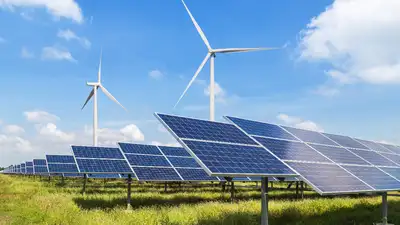
Clover Creek’s solar panels generate power while grazing sheep naturally manage vegetation beneath the array.
The transformation has been driven not simply by livestock or horse-related activities, but by a decision to lease about 1,100 acres to solar developers. Because the land used for the solar installations was not especially productive for traditional agriculture, the opportunity was particularly attractive. As reported by The Salt Lake Tribune, he began considering whether similar infrastructure could work on his Utah property.
Kesler’s ranch in Millard County has more than doubled in size during the past decade, according to The Salt Lake Tribune. The solar developers own and operate the panels, while Kesler earns lease income from the land, according to the online media reports. Once the projects were established, solar became the most financially productive component of his operation, according to The Salt Lake Tribune.
For generations, ranching has meant working the land the traditional way: raising livestock, growing feed and making the most of every usable acre. For Greg Kesler, however, some of his Utah ranch has found an unexpectedly productive second life. On portions of his Double Dollar Ranch where agriculture produced relatively little, rows of solar panels now generate electricity and a steady income that has helped the family expand its cattle and horse operation. For a rancher operating in an industry where rising costs can quickly erode margins, that dependable revenue has provided a valuable financial cushion. Rather than relying on sparse grass to support cattle, Kesler found another way for those acres to contribute to the ranch. The idea emerged after Kesler encountered a solar project while working in Hawaii. His ranch already had important advantages, including access to a transmission line and a large substation, making it well suited for energy development. The additional income also allowed Kesler to purchase neighbouring properties and steadily expand the family ranch. The renewable-energy venture has extended beyond Kesler himself. His son, Landon Kesler, has built a business maintaining solar panels on their ranch while also servicing projects elsewhere, the online report adds.
Located near Mona and visible from Interstate 15, the facility contains more than 200,000 panels and produces about 80 megawatts of electricity. Since becoming operational in 2021, the project has generated more than $1.03 million in property taxes, with roughly half going to the Juab School District, according to The Salt Lake Tribune. Over its projected 20-year lifespan, the facility is expected to generate about $5.7 million in tax revenue.
As reported by The Salt Lake Tribune, he believes landowners should have greater freedom to decide how less productive portions of their property are used. For the family, the arrangement has created a new source of income without completely changing the character of the ranch. Cattle and horses remain central to the operation, which also hosts team roping events and runs an internship programme. The Keslers’ experience reflects a broader question facing Utah’s agricultural communities: whether renewable energy can help financially support ranches at a time when traditional farming and livestock operations face mounting pressures. Solar development is affecting more than individual landowners. The Salt Lake Tribune reports that large solar projects can also generate substantial property-tax revenue for rural communities and school districts. The Clover Creek solar project in Juab County offers one example. During the growing season, sheep graze around the panels, helping control vegetation. The additional funding has helped the district accelerate purchases of computers, 3D printers, robotics equipment and other resources, while also supporting activities such as a swim team and gaming club. Solar’s growing presence has also sparked concern over the future of agricultural land. During Utah’s latest legislative session, lawmakers approved legislation restricting certain tax incentives for solar projects located on agricultural property. The measure is intended to discourage large-scale renewable-energy installations on productive farmland and preserve land for agriculture. For Kesler, however, the distinction between farming and energy production is more complicated. For Kesler, solar has ultimately provided a way to strengthen rather than abandon his family’s ranching legacy. The cattle and horses remain, but some of the ranch’s most valuable acres now produce electricity. In that sense, the fourth-generation rancher has found a modern addition to an old family business — one that allows the land to keep working, even when traditional agriculture cannot. Image Courtesy: istock You use AI every day. Now get your AI Quotient. Take the AIQ test.