

Contrary to the 10-15% decline in rainfall along coastal Karnataka and the western slopes of the Ghats, both northern and southern interior districts are receiving an additional 100-200 mm of monsoon rainfall, according to a recent study by agrometeorologists from Bengaluru. Bengaluru: Changing climatic conditions in the peninsular region appear to be producing an unexpected beneficiary in Karnataka ’s hinterland, where shifting monsoon patterns over the years are bringing more rain to agricultural regions in the interior.
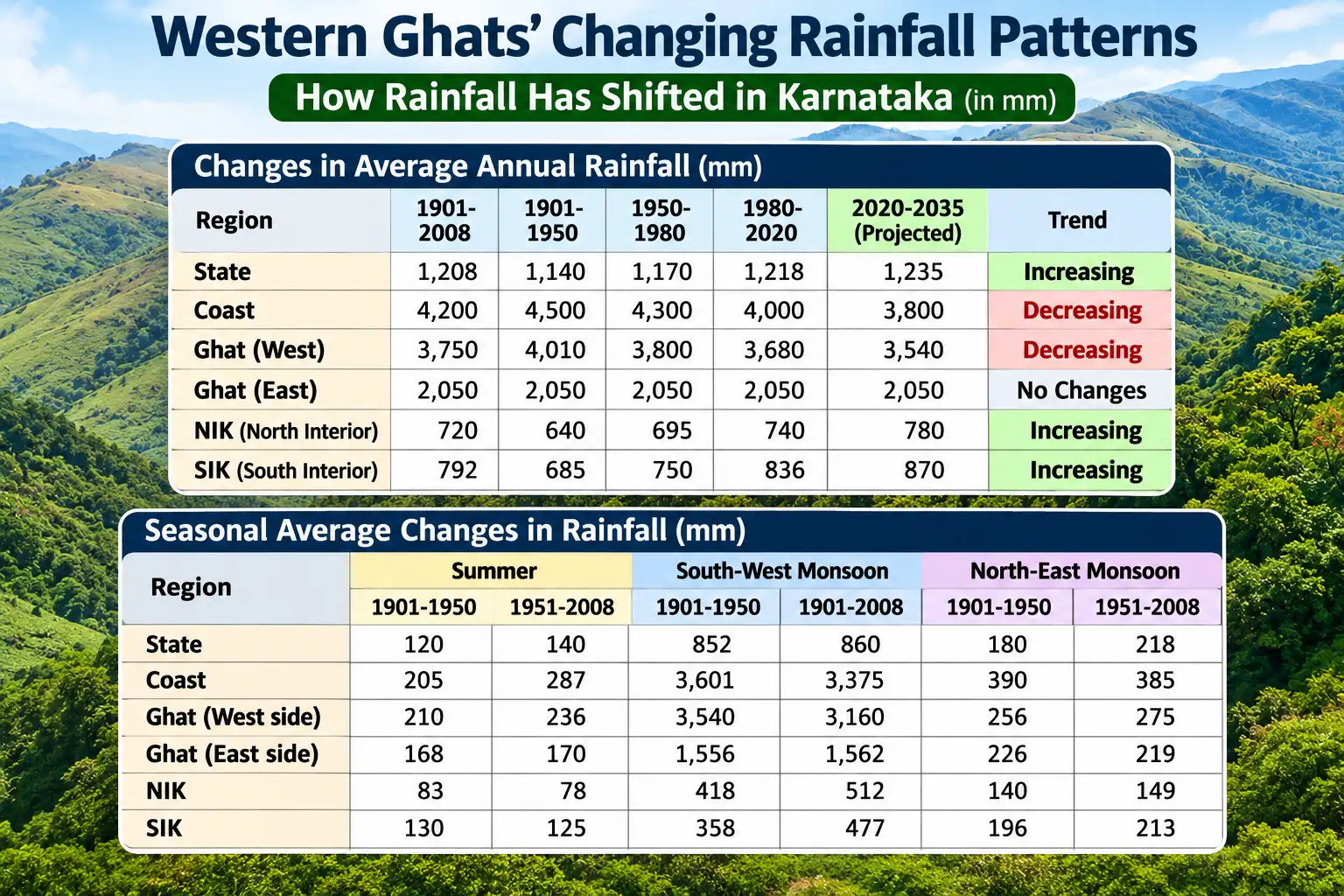
An analysis of rainfall data from 1901 to 2020, along with projected rainfall patterns up to 2035, by the former professor of Agrometeorology at the University of Agricultural Sciences (UAS), Gandhi Krishi Vigyan Kendra (GKVK), Bengaluru, has revealed a dramatic redistribution of monsoon showers across the state. Releasing the study report in Bengaluru, Prof Rajegowda said that Karnataka’s average annual rainfall has increased from 1,140 mm during 1900-1950 to 1,218 mm during 1980-2000 while pushing up the mercury levels by an average of 1.5 degrees Celsius. These areas have recorded a 10-15% decline in annual rainfall, while the interior districts have witnessed a significant rise in monsoon precipitation,” Prof Rajegowda explained. “Nearly 75% of the clouds originating over the Indian Ocean and entering the western coast through the Arabian Sea release their moisture over the coastal belt and the western slopes of the Ghats. The remaining 25% cross the mountain range and move towards the plains in the hinterland,” the study stated. A comparative look at changing rainfall patterns across Karnataka, showing regional and seasonal variations in average annual rainfall, historical trends and projections up to 2035. “The area under agriculture has nearly doubled, increasing from 50-60 lakh hectares in the 1950s to 100-105 lakh hectares in 2020. Agricultural production has surged from 40-50 million tonnes to 130-135 million tonnes during the same period,” the study revealed. Following a similar trend, horticulture has also witnessed a major expansion, with the area under cultivation reaching 22-24 lakh hectares and production touching 180-185 million tonnes in 2020.
Researchers believe this could reshape Karnataka’s agricultural landscape in the coming decades, with the Western Ghats acting as a crucial trigger for the shifting rainfall patterns. “The gain in rainfall has come at the expense of the coastal and western Ghat regions. The study attributes this gradual shift to the changing movement of moisture-laden monsoon clouds across the Western Ghats. Incidentally, the changing rainfall pattern has coincided with a considerable expansion of the state’s agricultural and horticultural sectors.
“Judicious harvesting and utilisation of the additional rainwater reaching the interior regions will be crucial to sustaining agricultural growth,” Prof Rajegowda said, stressing the need for micro-level research to understand the local impact of these evolving climatic patterns and plan accordingly. Agrometeorologists have cautioned the state govt that Karnataka must prepare to capitalise on this changing rainfall geography.